


10 Common Mistakes When Sourcing Custom Kitchen Cabinets from China

Sourcing custom kitchen cabinets from China can help overseas buyers access more design options, flexible customization and competitive pricing.
For villa, apartment, hotel, restaurant and commercial projects, kitchen cabinets are not simple standard products. They usually require accurate measurements, clear drawings, proper materials, reliable hardware, installation details, packaging protection and shipping coordination.
If any detail is wrong, the problem may only appear during installation, when it is already difficult and expensive to fix.
This guide explains 10 common mistakes overseas buyers should avoid when sourcing custom kitchen cabinets from China.
If you are still learning the general sourcing process, you may also read:🔗 How to Buy Building Materials from China: One-Stop Sourcing Guide.

1. Ordering Without Accurate Measurements
One of the biggest mistakes is starting production without final measurements.
Custom kitchen cabinets must match the actual kitchen layout, wall dimensions, ceiling height, plumbing position, electrical position and appliance size.
Before production, buyers should confirm:
- Kitchen wall length
- Ceiling height
- Cabinet height
- Cabinet depth
- Countertop size
- Appliance positions
- Sink position
- Plumbing and electrical locations
- Wall and corner conditions
If the measurements are wrong, cabinets may not fit the site properly.
For overseas buyers, final measurements should be confirmed by the local contractor or installer before production starts.
2. Not Providing Clear Drawings or Layouts
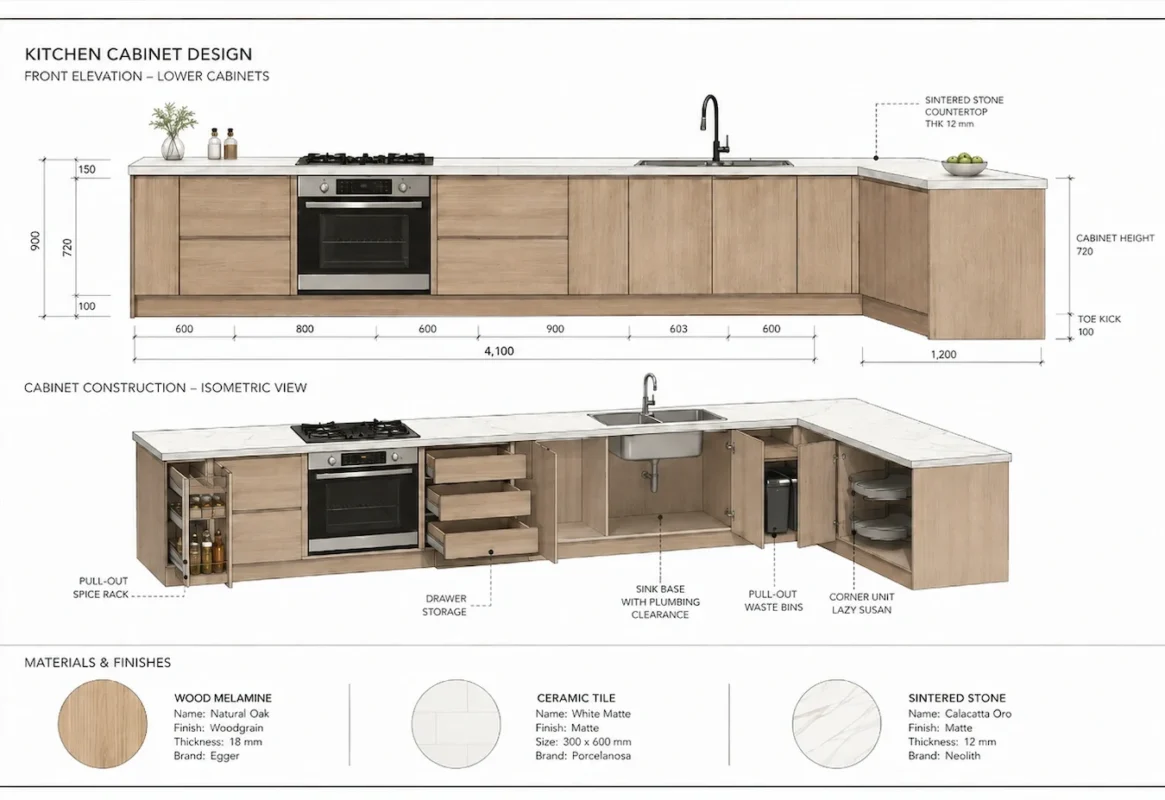
Custom kitchen cabinets require clear drawings.
A simple reference photo is not enough for accurate production.
Useful documents include:
- Kitchen layout
- Floor plan
- Elevation drawings
- Cabinet design drawings
- Appliance list
- Sink and faucet position
- Countertop drawing
- Door opening direction
- Hardware requirements
Without clear drawings, suppliers may misunderstand cabinet sizes, door panels, storage layout or installation requirements.
For project orders, drawings should be confirmed before quotation and before production.
3. Choosing Materials Only by Price
Cabinet materials can look similar in photos but perform very differently in real use.
Common cabinet materials include:
- Plywood
- MDF
- Particle board
- Solid wood
- Stainless steel
- PVC board
- Melamine board
- Lacquered panels
- Veneer panels
A lower price may come from weaker board material, thinner panels, poor edge banding or lower moisture resistance.
Before ordering, buyers should confirm cabinet body material, door panel material, surface finish, thickness and moisture resistance.
For kitchens, material selection is especially important because cabinets may face heat, water, humidity and daily use.
4. Ignoring Hardware Quality
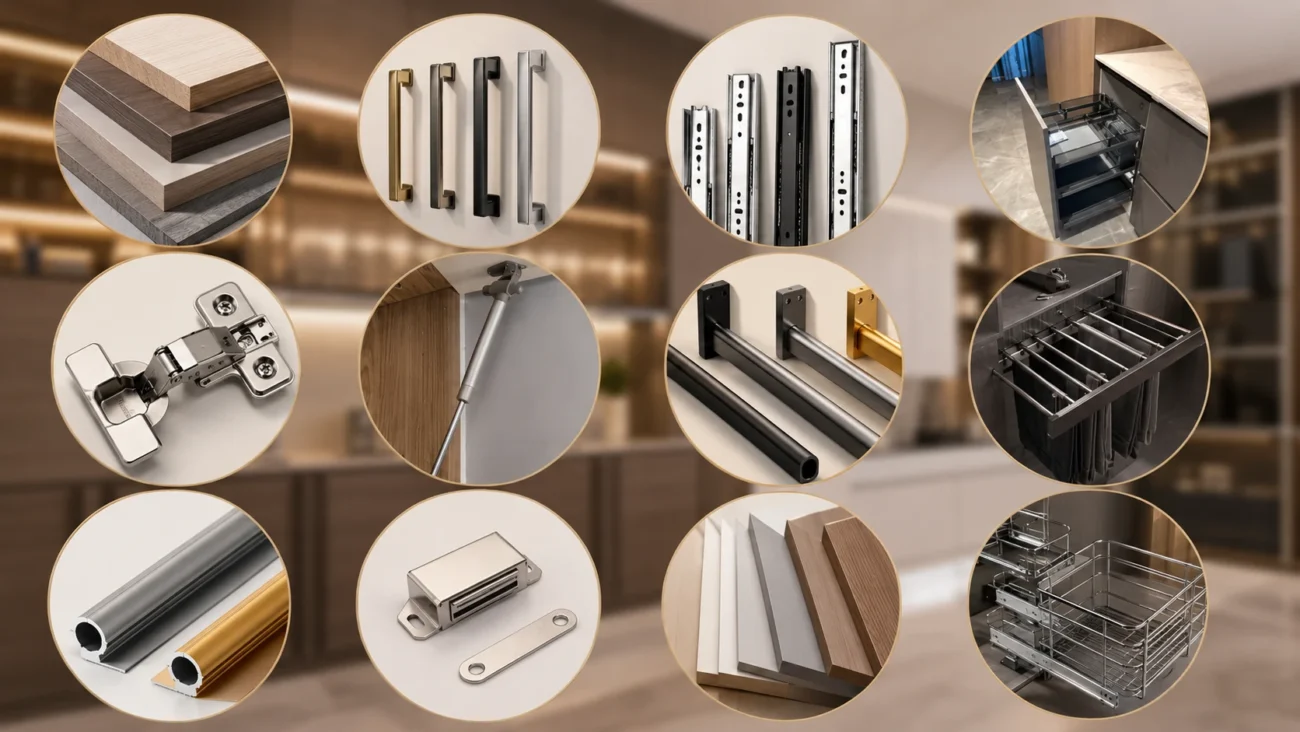
Hardware directly affects the user experience and long-term performance of kitchen cabinets.
Poor hardware may cause loose doors, noisy drawers, weak hinges or difficult opening.
Important hardware includes:
- Hinges
- Drawer slides
- Handles
- Pull-out baskets
- Soft-close systems
- Corner baskets
- Lift-up systems
- Screws and connectors
- Installation accessories
Buyers should confirm the hardware brand, quality level, material and quantity before production.
For high-use kitchens, hardware quality should not be ignored.
5. Not Confirming Countertop Details
Countertops are often sourced together with kitchen cabinets, but they need separate confirmation.
Common countertop options include:
- Quartz stone
- Sintered stone
- Artificial stone
- Granite
- Marble
- Stainless steel
Buyers should confirm countertop thickness, edge style, color, cut-out size, sink hole, faucet hole, joint position and packaging method.
Countertop mistakes can create serious installation problems, especially when sink, stove or appliance openings are not accurate.
6. Forgetting Appliance and Sink Compatibility
Kitchen cabinets must match appliances and sink sizes.
Before production, buyers should confirm:
- Refrigerator size
- Oven size
- Dishwasher size
- Microwave size
- Stove or cooktop size
- Range hood size
- Sink size
- Faucet position
- Built-in appliance requirements
If appliance sizes are not confirmed early, the cabinet structure may need modification later.
For villa, apartment and hotel projects, appliance compatibility should be checked before production.
7. Not Confirming Finish, Color and Door Style
Kitchen cabinets are highly visible in the final project, so color and finish should be confirmed carefully.
Buyers should confirm:
- Door style
- Cabinet color
- Surface finish
- Gloss level
- Handle style
- Interior color
- Edge banding color
- Sample or color swatch
Photos may look different under different lighting conditions, so physical samples or color boards are useful for important projects.
For larger orders, color consistency should be confirmed before mass production.
8. Skipping Quality Inspection Before Shipping
Some buyers only discover problems after the cabinets arrive at the project site.
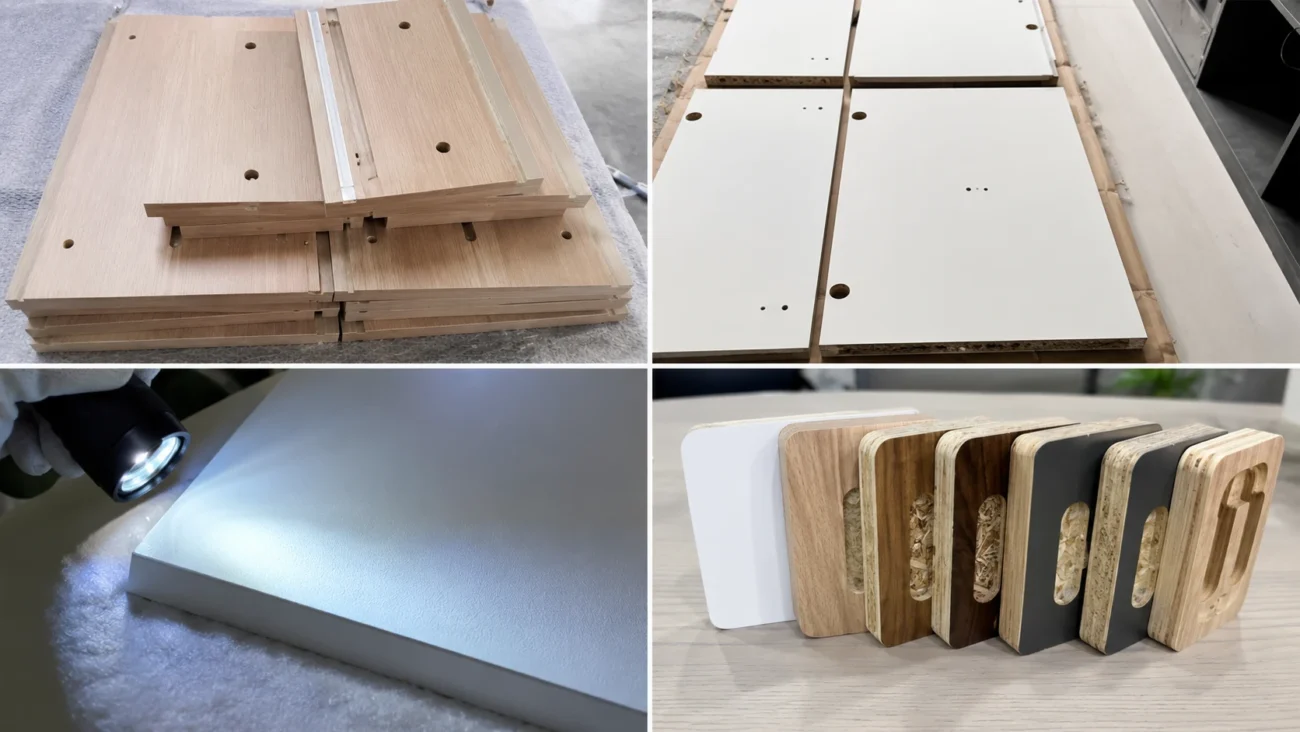
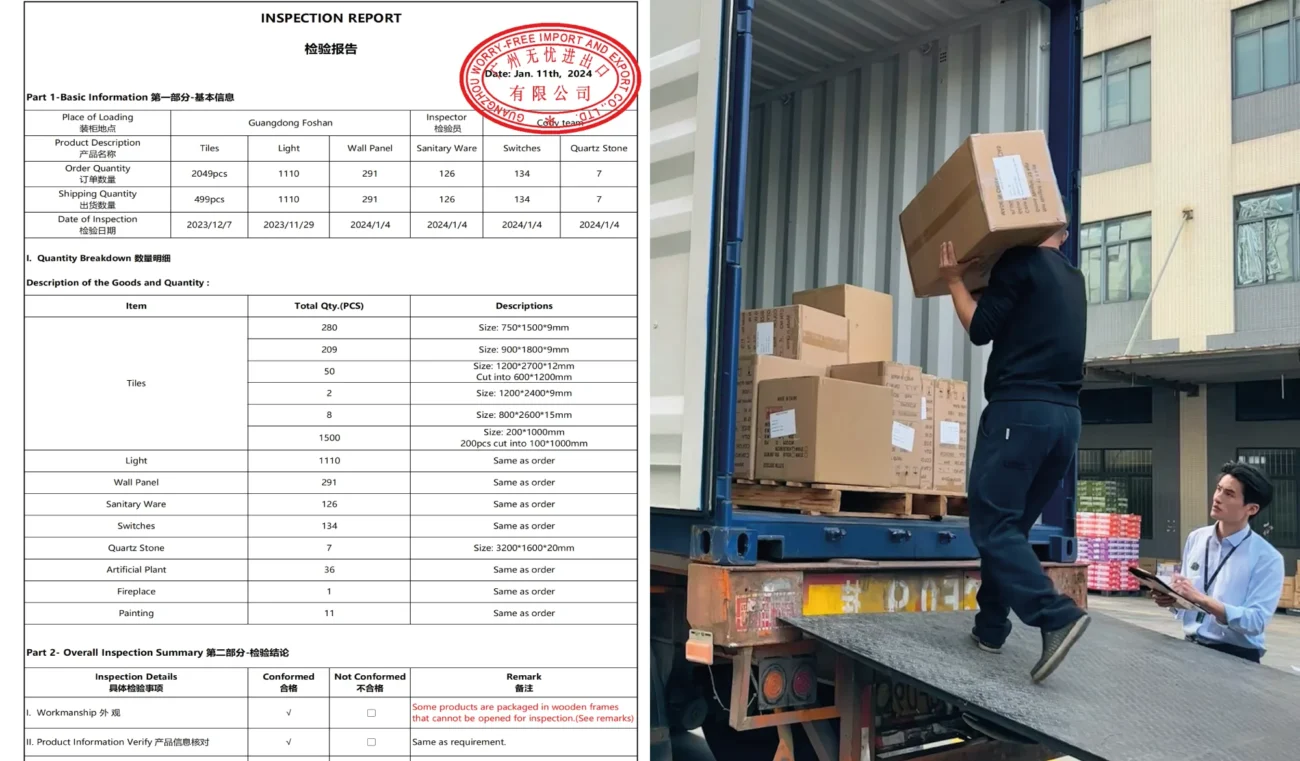
Pre-shipment inspection can help check visible and manageable issues before goods leave China.
Inspection may include:
- Quantity checking
- Size checking
- Panel checking
- Color checking
- Surface finish checking
- Hardware checking
- Countertop checking
- Packaging checking
- Label checking
- Accessory checking
Inspection cannot replace installation testing on site, but it can help reduce obvious mistakes before shipping.
For a full inspection process, read: 🔗How to Inspect Building Materials Before Shipping from China.
9. Underestimating Packaging and Shipping Risks
Kitchen cabinets can be damaged during international shipping if packaging is not strong enough.
Common shipping risks include:
- Scratched panels
- Damaged corners
- Broken countertops
- Missing hardware
- Mixed-up cabinet parts
- Weak cartons
- Poor labels
- Moisture damage
Buyers should confirm export packaging, carton labels, part numbers and protection methods before shipment.
For custom cabinets, each cabinet part should be clearly labeled to make installation easier after arrival.
10. Managing Cabinet Suppliers Separately from the Whole Project
For villa, apartment, hotel or commercial projects, kitchen cabinets are usually only one part of the full procurement plan.
If cabinets are managed separately from furniture, tiles, lighting, doors, windows and sanitary ware, buyers may face problems with design matching, delivery timing, warehouse consolidation and shipping coordination.
A China-based supply chain team can help with:
- Supplier comparison
- Drawing and size review
- Material and hardware confirmation
- Production follow-up
- Quality inspection
- Packaging review
- Warehouse consolidation
- Container loading supervision
- Shipping coordination
The value is not only finding cabinet suppliers. The real value is helping overseas buyers manage the China-side process before goods leave China.
To reduce supplier risks, you can also read: 🔗How to Avoid Supplier Risks When Buying Furniture and Building Materials from China.
Final Thoughts
Sourcing custom kitchen cabinets from China can be a good option for overseas villa, apartment, hotel and commercial projects.
China offers many cabinet materials, finishes, hardware options and customization solutions. But successful sourcing requires more than comparing prices.
Before placing an order, overseas buyers should confirm measurements, drawings, materials, hardware, countertop details, appliance compatibility, finish, packaging and inspection.
For project buyers, the goal is not only to buy cheaper cabinets. The goal is to make sure custom kitchen cabinets from China are correctly specified, properly produced, inspected, packed and shipped before they arrive at the project site.
