


Thermal Break vs Non-Thermal Break Aluminum Windows from China: Buyer Guide

Many overseas buyers sourcing aluminum windows from China ask the same question:
Do I really need thermal break aluminum windows, or is a non-thermal break system enough?
The answer depends on climate, project positioning, energy requirements, glass configuration, condensation risk, budget and installation conditions. It should not be decided only by the factory price.
Thermal break vs non-thermal break aluminum windows is not simply a question of “good” and “bad.” A thermal break profile can improve performance, but it does not make a window efficient by itself. A non-thermal break window may still be suitable for mild climates, simple applications or budget-sensitive projects when the buyer understands its limits.
This guide explains how global buyers can compare thermal break and non-thermal break aluminum windows from China, understand the real cost difference, choose the right specification for different markets, and avoid problems during production, inspection and shipping.
For a broader sourcing overview, read: 🔗Aluminum Door and Window Manufacturers in China.
Why This Choice Matters When Sourcing Aluminum Windows from China
When buyers compare aluminum windows from China, the first discussion often starts with profile thickness, color and unit price.
But the more important question is how the complete window system will perform after installation.
Aluminum is strong, lightweight and widely used for modern windows, sliding doors and large glass openings. However, aluminum also conducts heat easily. This means the frame can become a thermal bridge if the profile system is not designed for the local climate and building requirements.
In a cold climate, a poorly specified aluminum frame may feel cold from the inside, increase condensation risk and reduce comfort near the window. In a hot climate, the wrong combination of frame, glass and sealing can make cooling less efficient.
This does not mean every project must use thermal break windows. It means buyers should choose based on project conditions, not only on appearance.
A villa in Canada, a hotel in Europe, an apartment in a mild coastal city and a commercial project in the Middle East may all require different window decisions.
What Is a Thermal Break Aluminum Window?
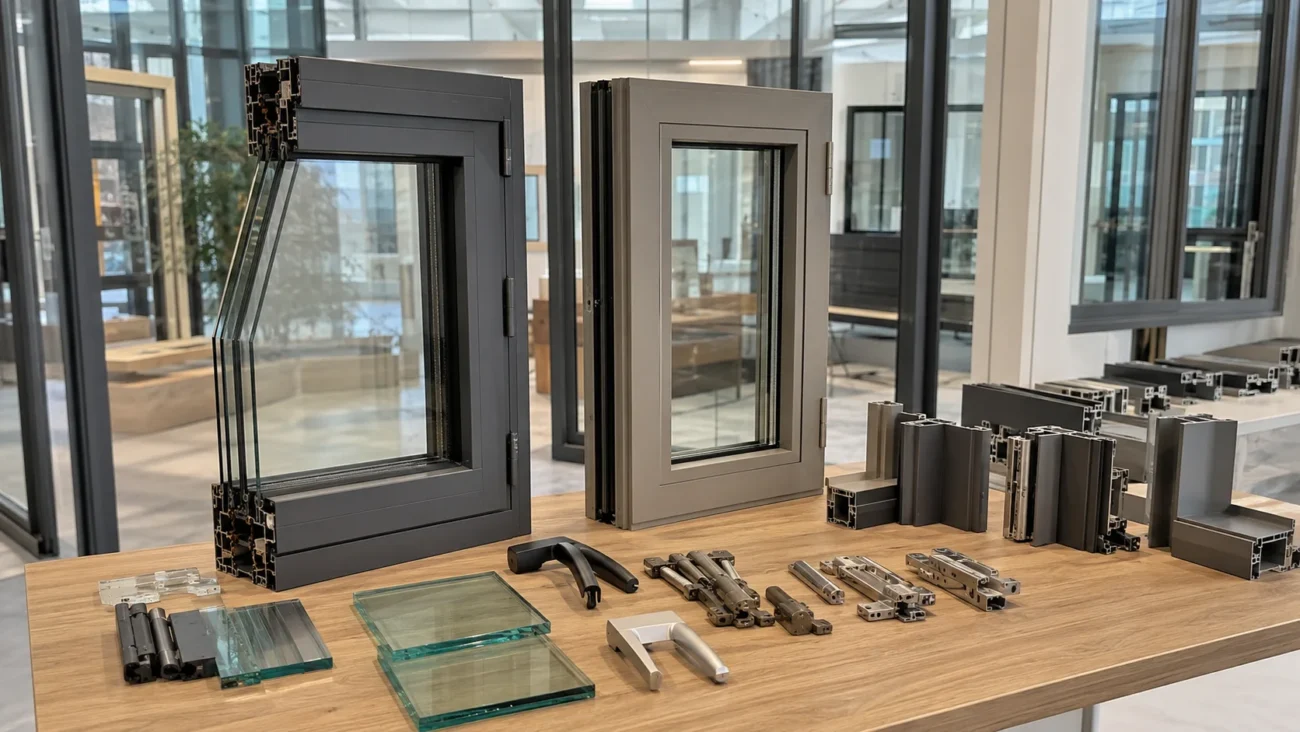
A thermal break aluminum window uses an insulating material between the interior and exterior aluminum sections of the frame. This creates a separation that helps reduce heat transfer through the metal profile.
In many systems, the insulating part is a polyamide strip or similar low-conductivity material. From the outside, the window may look similar to a non-thermal break window, but the cross-section of the frame is different.
The purpose is not only to make the window “more expensive.” The purpose is to reduce the thermal bridge through the aluminum frame and help improve the indoor surface temperature, comfort and whole-window performance.
However, buyers should avoid one misunderstanding:
Thermal break does not replace good glass, good sealing or good installation.
A thermal break profile with poor glass, weak gaskets, bad drainage or careless installation may still perform badly. The window should be evaluated as a complete system.
For official energy-performance references, buyers can review the 🔗ENERGY STAR residential windows, doors and skylights program and 🔗NFRC residential product certification.

Thermal Break vs Non-Thermal Break: Key Differences
The most visible difference is usually inside the profile structure, but the real difference appears in comfort, condensation risk, energy performance and cost.
| Area | Thermal Break Aluminum Windows | Non-Thermal Break Aluminum Windows |
|---|---|---|
| Frame Structure | Interior and exterior aluminum sections are separated by an insulating strip | Aluminum sections are more directly connected |
| Thermal Performance | Usually better when matched with proper glass and sealing | Lower, especially in cold or high-performance applications |
| Condensation Risk | Lower when specified and installed correctly | Higher in cold or humid conditions |
| Cost | Higher | Lower |
| Best For | Villas, residential projects, cold climates, premium renovations and energy-conscious markets | Mild climates, budget projects, simple applications and some interior or low-performance areas |
| Main Risk | Paying more but ignoring glass, hardware or installation | Saving upfront cost but creating comfort, condensation or performance problems |
This table is useful for quick comparison, but the final decision should still depend on the project.
A non-thermal break window is not automatically low quality. It may be reasonable for a mild climate, a simple balcony enclosure, a warehouse, an interior partition or a project without strict energy requirements.
A thermal break window is not automatically a high-performance window. It still needs the right glass, spacer, gasket, hardware, drainage and installation detail.
When Buyers Should Choose Thermal Break Windows
Thermal break aluminum windows are usually the safer choice when the project faces cold winters, hot summers, energy-code expectations or premium comfort requirements.
For residential projects, comfort matters. A homeowner may not understand all the technical details of U-factor or SHGC, but they will notice if the window area feels cold in winter, hot in summer or wet with condensation.
For high-end villas and hotel projects, thermal break is often part of the expected specification because buyers care about long-term comfort, not only purchase cost.
Thermal break windows are also more relevant when the window size is large. A large glass opening with aluminum frames can strongly affect indoor comfort if the system is not properly specified.
In some markets, thermal break may also be necessary because the project must meet energy-performance requirements or permit expectations. For the US market, whole-window values such as U-factor and SHGC can matter more than the supplier’s general description of “double glass” or “Low-E.”
A buyer should not assume that one window system is suitable for every climate zone. Cold regions, hot sunny regions and mixed climates may all require different glass and frame combinations.
When Non-Thermal Break Aluminum Windows May Still Be Suitable
Non-thermal break aluminum windows still have a place in the market.
They can be suitable for mild climates, budget-sensitive projects, interior areas, simple commercial spaces, warehouses or applications where energy performance is not the main concern.
For some buyers, the decision is also practical. If the project is located in a warm region with limited heating demand, and local regulations do not require high-performance windows, a non-thermal break system may be enough.
The key is honesty about performance expectations.
Problems usually happen when buyers choose non-thermal break windows only because the quote is cheaper, without considering climate, condensation, indoor comfort, glass choice or local code requirements.
A cheaper window may become more expensive later if the buyer faces complaints, installation adjustments, condensation issues or replacement pressure.
Non-thermal break is not wrong. Using it in the wrong project is the problem.
Glass, Spacer, Gasket and Hardware Also Matter
Many buyers believe the decision is mainly about the aluminum profile. In reality, the profile is only one part of the window system.
Glass configuration can change the performance and cost significantly.
A supplier may quote ordinary double glass, Low-E insulated glass, laminated safety glass, tempered glass, acoustic glass or even triple glazing. These options are not interchangeable.
Low-E glass can help control heat transfer and solar gain, but Low-E alone does not prove the whole window is suitable for a target market.
The spacer, air gap, gas filling, gasket pressure and frame design also affect the final result.
Hardware is another hidden difference.
A casement window needs hinges, handles and locking points that can maintain sealing pressure over time. A sliding window depends on rollers, tracks, locks and drainage design. If the hardware is weak, the window may become difficult to operate even when the profile and glass look acceptable.
For rainy or coastal areas, drainage and corrosion resistance should also be discussed early. A window that performs well in a dry showroom may face very different conditions when installed near the ocean or in a heavy-rain climate.

Why Chinese Factory Quotations Can Be Very Different
It is common for buyers to receive two very different quotations for what looks like the same black aluminum window.
At first, the buyer may think one factory is simply more expensive. But after checking the details, the difference may come from the profile series, thermal break strip, glass structure, hardware system, coating quality, packaging and export handling.
One supplier may quote a non-thermal break system with ordinary double glass and basic hardware. Another may quote a thermal break profile with Low-E insulated glass, stronger hinges, better gaskets and stronger packaging for international shipment.
These are not the same product.
Recent changes in aluminum-related export cost also remind buyers that China sourcing should not be judged only by old price expectations. Material cost, profile specification, glass configuration, labor, packaging and export policy can all affect the final quotation.
For serious projects, buyers should compare specifications line by line instead of asking suppliers to “match the same price.”
The goal is not always to buy the most expensive window. The goal is to avoid comparing two different systems as if they were the same.
US and Overseas Performance Requirements
For buyers in the United States, Canada, Europe, Australia and other regulated markets, energy performance should be checked before production.
In the US, the ENERGY STAR Version 7.0 specification for residential windows, doors and skylights took effect on October 23, 2023. NFRC ratings are also widely used to compare whole-product performance such as U-factor, SHGC, Visible Transmittance, Air Leakage and Condensation Index.
This matters because a Chinese supplier may say:
We can make double glazing with Low-E glass.
But the buyer may need to ask:
Is this exact window system suitable for the local energy requirement, permit process or project specification?
For Europe, buyers may also need to consider building-performance expectations, CE-related documentation and local installation standards.
For the Middle East, the issue may not be winter insulation. Large glass openings, solar heat gain, Low-E glass, frame color durability, dust sealing and strong sunlight can become more important.
For coastal markets, corrosion resistance and surface treatment may matter as much as thermal performance.
This article is not legal, customs or building-code advice. Buyers should confirm local requirements with architects, builders, energy consultants, inspectors or customs brokers before placing a large order.
A Realistic Buyer Consultation Scenario
A US homeowner may send a photo of slim black aluminum windows and ask whether a non-thermal break version can save cost.
At first, the question sounds simple. The buyer wants a similar look with a lower factory price from China.
But after reviewing the project, the discussion changes.
Where is the house located? How cold is the winter? Does the project need permit approval? What U-factor or SHGC is expected? Is the glass Low-E? Is condensation a concern? Are the windows large fixed panels, casement windows or sliding doors? Who will install them after arrival?
The buyer may still choose a non-thermal break system in some cases. But the decision becomes more informed.
For a Middle East villa project, the concern may be different. The buyer may not worry about winter condensation, but large openings, strong sun exposure, Low-E glass, dust sealing, drainage and powder-coating durability become more important.
This is why a real sourcing conversation should not start and end with profile price. It should connect the product to the climate, building use and installation environment.
Quality Inspection Before Shipping
Aluminum window inspection should not focus only on surface scratches.
The inspector should compare the final product with the confirmed specification. This includes profile type, thermal break structure, glass configuration, frame size, sash alignment, gasket condition, hardware operation, drainage holes and surface finish.
For thermal break windows, the profile structure should match the approved sample or drawing. For insulated glass, the glass thickness, spacer and Low-E requirement should be checked according to the order details.
Operation also matters.
A casement window should open and close smoothly with proper sealing pressure. A sliding window should move without abnormal resistance or shaking. A large panel should not feel unstable during handling.
For project orders, window numbers should match the opening schedule. A window may be well made, but it can still delay installation if the wrong unit is delivered to the wrong opening.
Inspection should happen before packaging is finalized. Once large windows are packed into wooden crates or loaded into a container, correction becomes much harder.
Packaging and Container Loading Risks
Aluminum windows are large, fragile and easy to damage during international shipping.
Frames can bend, corners can dent, glass can break and powder-coated surfaces can be scratched if packaging is too weak.
Thermal break windows and large glass systems may cost more than ordinary windows, so the packaging should match the product value.
Good packaging is not only about foam and wood frames. It is also about keeping each window, glass panel, screen and hardware package connected to the correct opening number.
For villa and hotel projects, numbering is extremely important. Frames, sashes, screens and accessories may be packed separately, but they must remain clearly matched.
In mixed containers, windows should not be crushed by heavy tiles, stone, cabinets or furniture. Loading sequence should consider both transportation protection and unloading order at the destination.
A window that arrives safely but cannot be matched to the correct room still creates a real project delay.

Where to Source Aluminum Windows in China
China has several aluminum window and door supply-chain areas. For many overseas buyers, Foshan Nanhai is especially relevant because of its aluminum profile, system window, showroom and building-material supply chain.
Foshan can be useful when buyers need to compare aluminum windows together with doors, tiles, cabinets, bathroom products, lighting and furniture for a villa or hotel project.
However, buyers should still identify the supplier type.
A profile factory may be strong in extrusion and surface treatment but may not manage complete window systems for export. A system window factory may be better for finished products, glass, hardware and project drawings. A showroom brand may be useful for product selection but still needs factory verification.
For performance-sensitive markets, the sourcing route should begin with the project requirement rather than the city name.
A practical order is:
Climate and project requirement → window performance target → profile system → glass configuration → hardware → factory verification → sample review → production inspection
The right supplier is the one that can match the required system, not simply the one with the lowest quotation.
How a China-Based Sourcing Team Helps
For aluminum window projects, a China-based sourcing team should do more than collect catalogues.
Useful support begins with understanding the buyer’s project location, climate, window type, drawings, glass requirement and budget range.
The team can help compare thermal break and non-thermal break options, check whether the quotations are based on the same specification, review samples, visit factories and follow production details.
For larger projects, local coordination becomes especially useful when windows, doors, tiles, cabinets and furniture need to be shipped together. The packaging and loading plan must protect fragile glass products while keeping each item matched to the project schedule.
Cody Sourcing works with door, window and building-material suppliers across South China and other manufacturing regions.
The goal is not simply to find an aluminum window supplier. It is to help buyers choose a system that fits the climate, project, budget, installation and shipping plan.
Common Mistakes to Avoid
Common mistakes when comparing thermal break and non-thermal break aluminum windows include:
- Choosing only by profile price
- Assuming thermal break alone guarantees performance
- Treating Low-E glass as proof of whole-window efficiency
- Ignoring climate and condensation risk
- Not checking U-factor, SHGC or local requirements when needed
- Comparing two quotations with different glass and hardware
- Ignoring drainage and sealing
- Forgetting installation opening and floor level details
- Using weak packaging for large glass panels
- Not matching window numbers with the project schedule
- Placing windows under heavy goods in a mixed container
- Skipping inspection before shipment
Most of these problems are not caused by one bad factory decision. They usually happen because the buyer, supplier and installer did not define the full window system before production.
Final Thoughts
Thermal break aluminum windows are often a better choice for cold climates, premium villas, energy-conscious projects and markets with performance requirements. They can help reduce heat transfer through the frame and improve comfort when used with the right glass, sealing, hardware and installation.
Non-thermal break aluminum windows can still be suitable for mild climates, simple applications and budget-sensitive projects. The key is to understand what performance is being accepted in exchange for a lower cost.
For overseas buyers sourcing from China, the safest decision is not simply choosing the cheapest window or automatically choosing the most expensive thermal break system.
The better decision is to match the window system to the project location, climate, building use, glass requirement, performance expectation, installation condition and shipping plan.
That is where real sourcing value appears.
