


French Château Renovation: How We Sourced Furniture and Building Materials from China

Renovating a château in Southern France is different from furnishing a newly built home. Every material, color, finish, and piece of furniture needs to complement the property’s existing architectural character.
For John and Marlene, who were renovating a private château in Southern France, sourcing furniture and building materials locally presented two challenges: finding products that matched the property’s traditional style and keeping the overall purchasing budget manageable.
They decided to explore China as an alternative.
Working with Cody Sourcing, they completed a five-day sourcing trip across Guangdong, selected furniture, lighting, tiles, bathroom products, doors, carpets, and customized interior items, and continued managing the project remotely after returning to France.
The project was eventually completed and delivered, with a total purchasing and shipping cost of approximately USD 90,453.
This case study shows how China sourcing can support a complex renovation project, from supplier selection and product customization to production follow-up, quality inspections, and international delivery.

The Project: Renovating a Château in Southern France
John and Marlene were renovating a château they had purchased for their own use.
Unlike a typical modern residential project, their home required furniture and materials that complemented its existing architectural character.
They were looking for natural wood finishes, traditional furniture designs, French-style lighting, brass details, carefully selected tiles, and customized carpets.
The challenge was not simply purchasing individual products. It was bringing different product categories together into one coordinated renovation project.
Project Overview
| Project Detail | Information |
|---|---|
| Project | Private Château Renovation |
| Location | Southern France |
| Clients | John and Marlene |
| China Sourcing Trip | 5 days |
| Sourcing Locations | Guangzhou, Foshan, Zhongshan, Dongguan |
| Products | Furniture, sofas, lighting, tiles, bathroom products, doors, carpets and interior items |
| Total Project Cost | Approximately USD 90,453, including shipping |
| Shipping | One consolidated container via Rotterdam, Netherlands |
| Project Status | Completed and delivered |
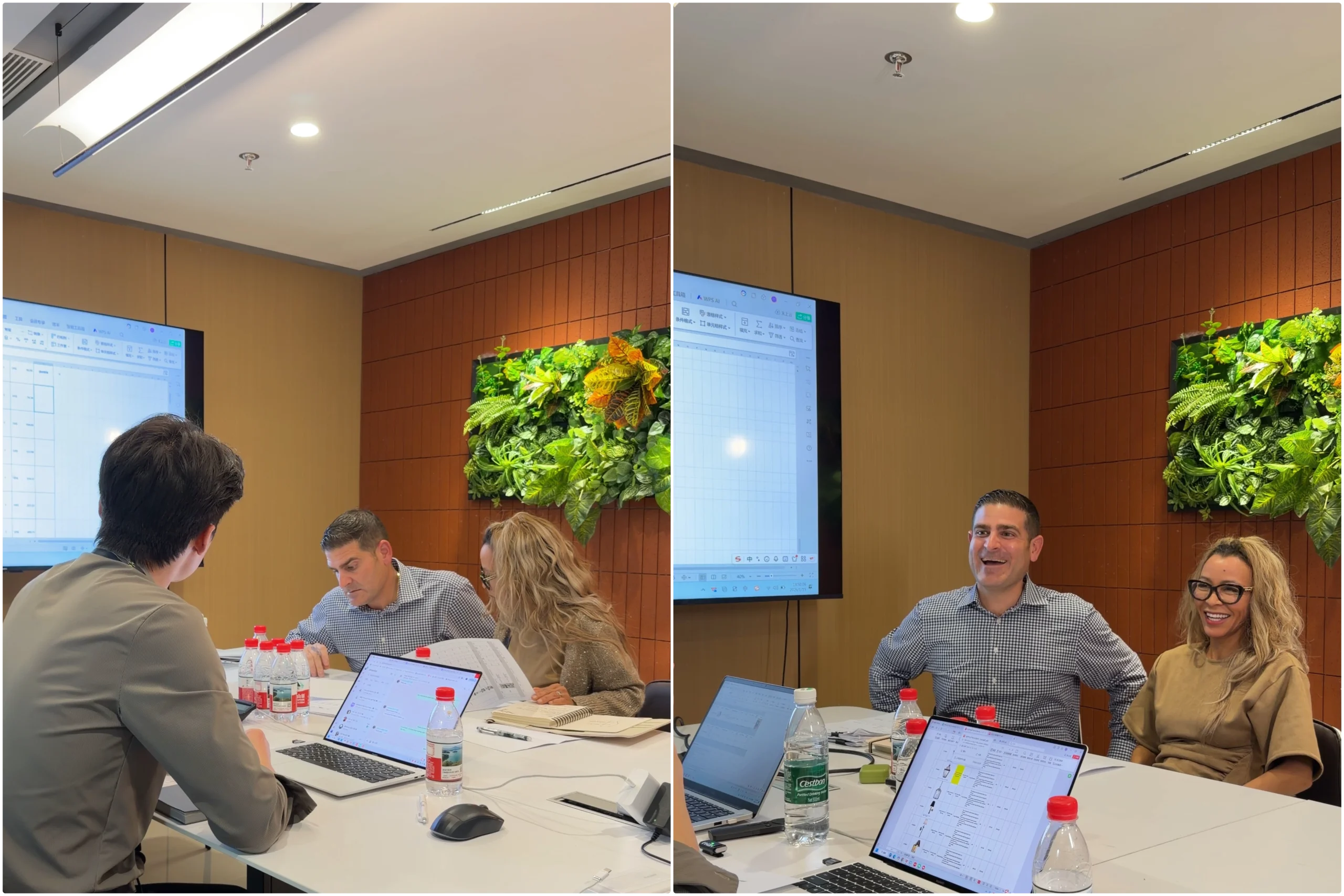
John and Marlene first discovered Cody Sourcing through Facebook. Before traveling to China, they spent time communicating with our team, reviewing previous project experience, and discussing their renovation requirements.
Establishing that confidence was important. They were planning to purchase products from multiple Chinese suppliers for a property thousands of kilometers away.
Why They Considered Sourcing Their Château Renovation from China
For this renovation, purchasing everything in France would have been expensive, particularly when customization was involved.
However, price was only part of the decision.
The clients needed access to suppliers capable of producing products that matched an established interior style.
A modern sofa, a standard lighting fixture, or a commonly available tile might be perfectly suitable for a new apartment but feel out of place inside a traditional French château.
China offered the opportunity to compare different manufacturers, materials, finishes, and customization possibilities across several product categories.
The objective was not to buy the cheapest available products. It was to achieve the desired appearance and quality within a workable overall project budget.
There was also a practical advantage to managing these purchases as one project.
Instead of separately negotiating with numerous factories, monitoring different production schedules, and arranging individual international shipments, the clients could work with one China-based team to coordinate the process.
That coordination became particularly important after their sourcing trip ended.
Five Days in China: Finding the Right Furniture and Building Materials
A five-day sourcing trip sounds short for a project involving so many categories.
But the trip did not begin when the clients arrived at the airport.
Before their visit, our team had already discussed their requirements, considered suitable product categories, identified sourcing locations, and planned a practical route.
This preparation allowed the clients to spend more time comparing actual products and less time looking for suitable suppliers.
Foshan: Furniture, Tiles and Bathroom Products
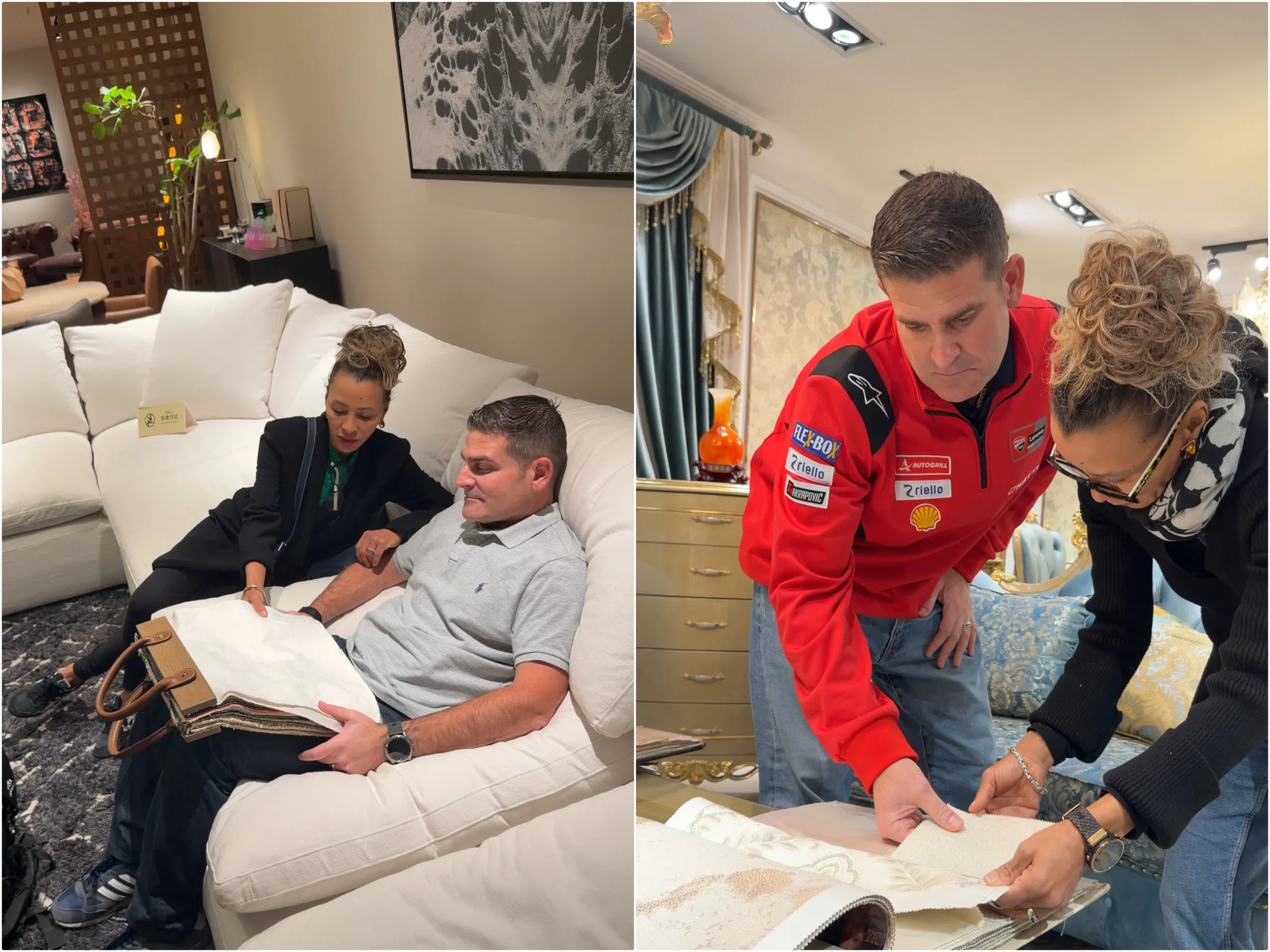
Foshan was one of the primary sourcing locations for the renovation.
The clients explored furniture, sofas, tiles, building materials, and bathroom-related products.
For furniture, appearance was especially important.
The clients were not only looking at individual designs. They were considering how wood colors, fabrics, proportions, and finishes would work inside the château.
For building materials, the focus included finding styles that complemented the property’s existing interior rather than selecting conventional modern finishes.
Zhongshan: French-Style Lighting
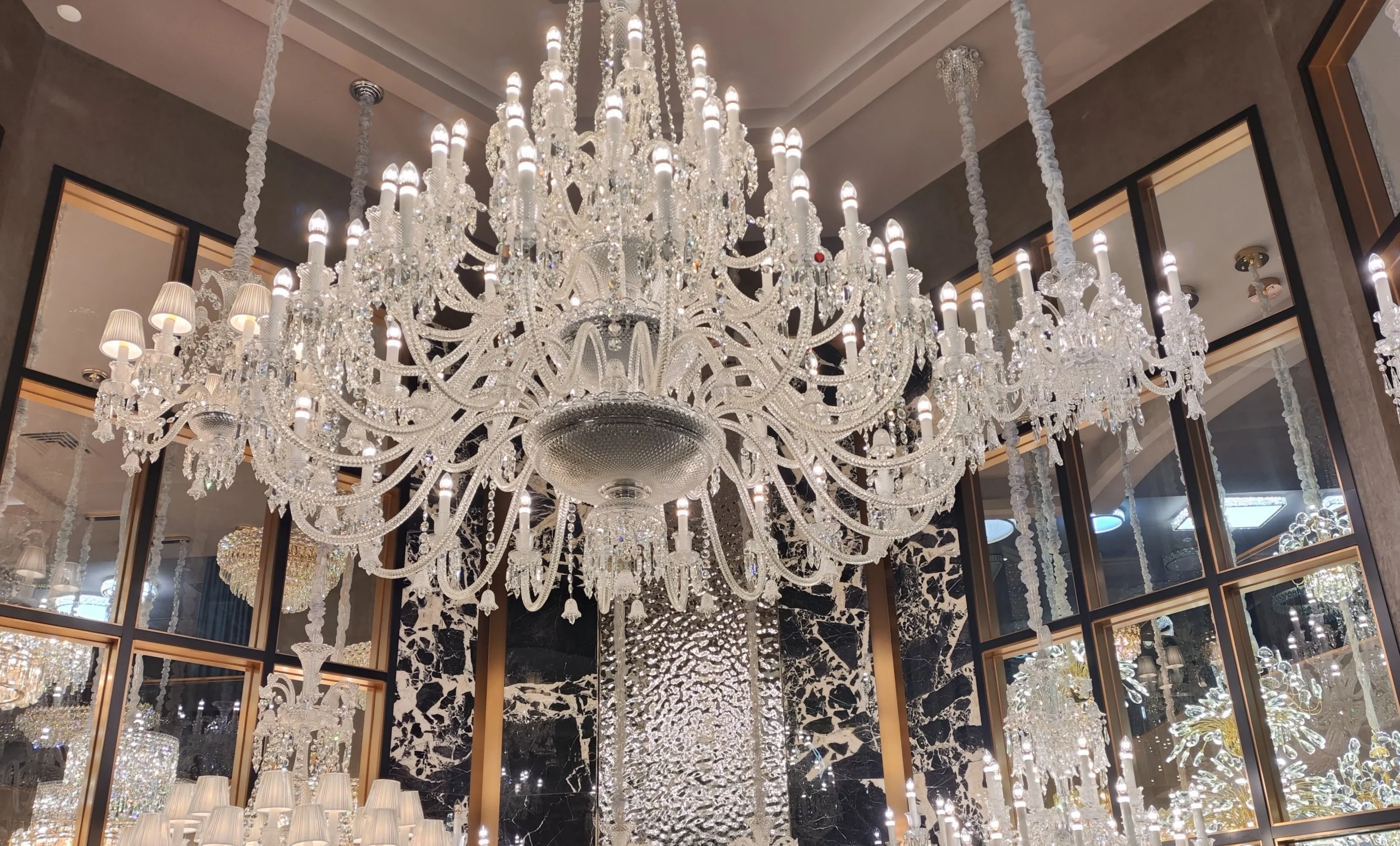
Lighting played an important role in defining the atmosphere of the property.
In Zhongshan, the sourcing focused on decorative and French-style lighting, including fixtures with metal and brass-style details.
The products needed to suit the existing château character while meeting the client’s design preferences.
Some lighting products required customization rather than simply selecting standard catalog models.
Dongguan: Furniture and Customized Interior Products
Dongguan was another sourcing location, particularly for furniture, carpets, and customized interior items.
For a property with a distinctive design identity, carpets can be more than decorative accessories. Their patterns, colors, and proportions contribute to how a room feels as a whole.
Some carpets in this project were customized according to the client’s preferred patterns and interior design.
Guangzhou also served as a base for the trip and overall project coordination.
By concentrating the itinerary around relevant sourcing locations in Guangdong, the clients could compare multiple categories without having to plan every supplier visit independently.
The five-day trip was the product-selection stage, not the entire production and delivery period. Manufacturing, inspection, consolidation, and shipping continued afterward.
The Biggest Challenge: Keeping the Natural Wood Color
One of the most revealing problems in this project involved wooden furniture.
John and Marlene wanted a natural wood appearance that would complement the château interior.
Wood finishing is especially sensitive in this kind of project. Two pieces of furniture may use similar-looking wood samples but appear noticeably different once their full finishing processes are completed.
When the Approved Color Changed During Production
During the sourcing process, color samples had been confirmed.
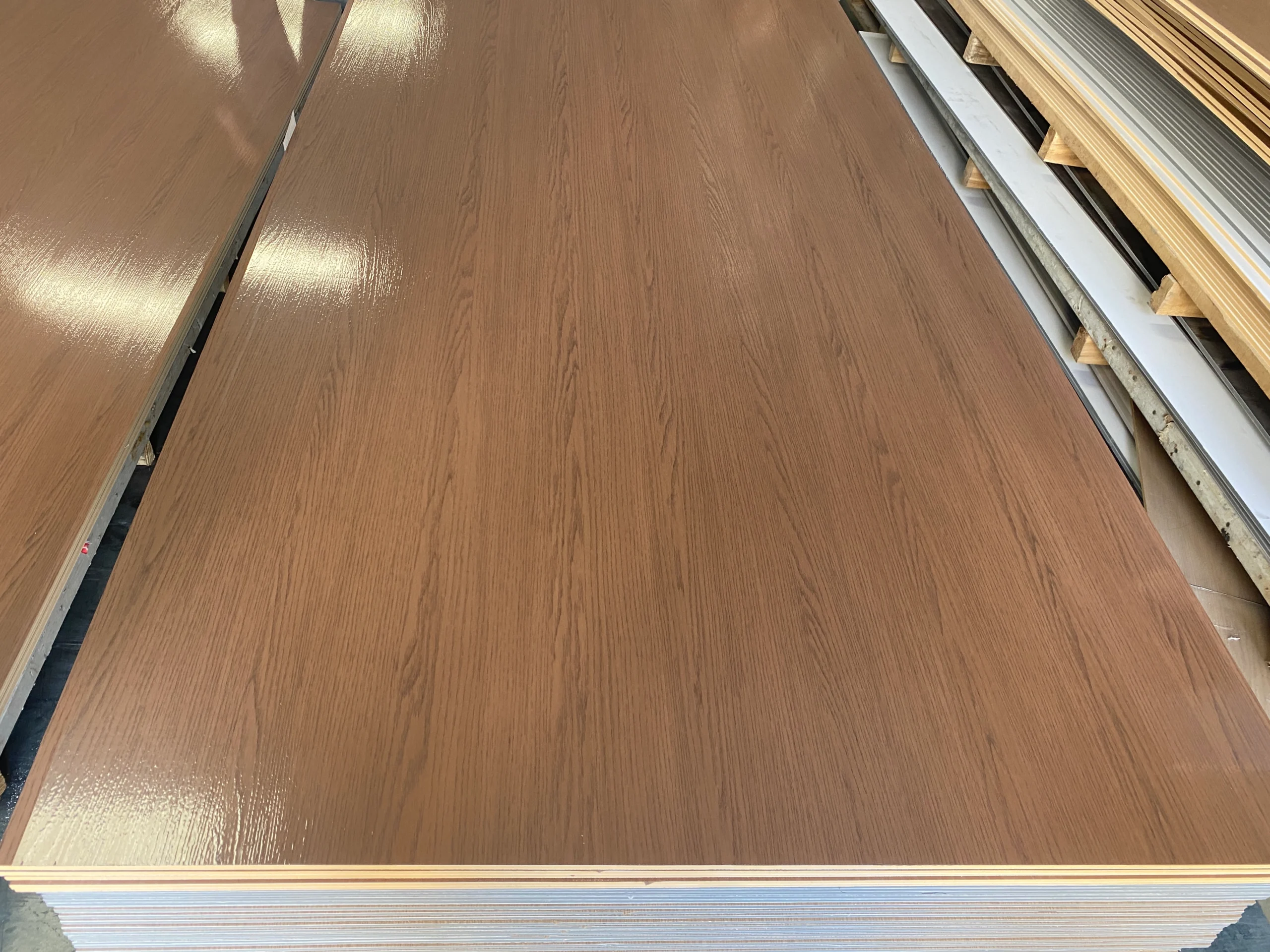
However, when the actual furniture went through its full finishing process, the wood appeared darker than the clients expected.
The multiple finishing layers had changed the natural appearance of the material.
This created a problem because the furniture was intended to match an existing interior aesthetic.
A darker finish could change the overall visual effect, even if the furniture’s shape, dimensions, and construction were otherwise acceptable.
The clients had already returned to France when the issue was identified.
Solving the Problem While the Clients Were in France
Our team discussed the problem with the clients remotely and coordinated further adjustments with the supplier.
Different finishing approaches were considered and tested.
The final solution was to use a single layer of clear protective coating, with the aim of protecting the wood while minimizing the change to its natural color.
The revised approach was confirmed with the clients through remote communication before completion.
This was not simply a matter of asking the factory to make the furniture lighter.
The objective was to find a workable finish that preserved the natural appearance the clients wanted while providing protection to the wood.
What This Taught Us About Custom Furniture Sourcing
The important lesson was that approving a material or color sample does not automatically guarantee the same appearance after full production.
Finishing processes, coating layers, and material characteristics can all affect the final result.
For overseas buyers ordering custom furniture from China, this is one reason production follow-up matters.
A sourcing project does not end when the buyer selects a product and pays the deposit.
Someone still needs to follow the approved specifications, communicate with the factory, identify deviations, and coordinate corrective action when the finished product does not match expectations.
In this case, the clients did not need to return to China to resolve the issue.
Finding Château-Style Tiles, Lighting and Customized Carpets
The wood finishing issue was not the only area requiring careful attention.
Several product categories needed more targeted sourcing because the clients were renovating a property with an established traditional style.
Tiles That Matched the Property
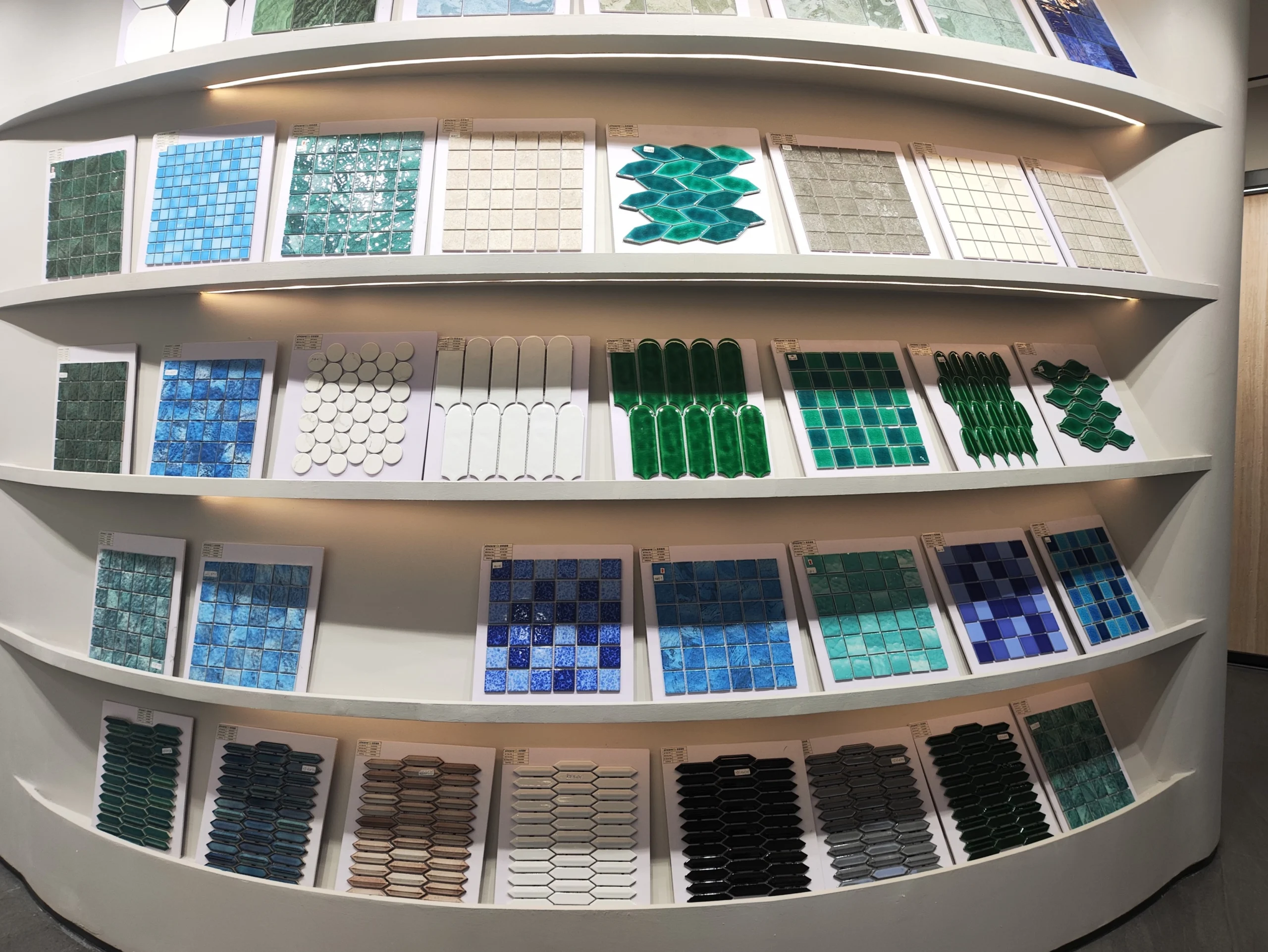
The clients wanted château-style tiles rather than commonly available modern designs.
Finding suitable products required a more focused supplier search.
A supplier offering a large selection of tiles was not necessarily the right supplier for this project. The important consideration was whether the available designs and finishes suited the specific renovation.
This distinction matters when sourcing for historic or traditional properties.
Product availability alone does not establish design compatibility.
Lighting with Traditional Character
The lighting selection included French-style fixtures with metal and brass-style details.
Rather than treating lighting as an isolated purchase, the clients needed products that worked with their furniture choices and the existing architectural style.
Customization helped address some of these requirements.
Carpets Made to Suit the Interior
Some carpet designs were customized according to the clients’ preferences.
This provided greater flexibility over patterns and overall visual coordination than relying entirely on standard products.
Across these categories, the same principle applied: the supplier had to be suitable for the design requirements, not merely capable of supplying a product in the same general category.
Managing Multiple Chinese Suppliers After the Clients Returned Home
After the five-day trip, John and Marlene returned to France.
The next stage of the project continued in China.
Products selected from different suppliers still needed to be manufactured, checked, prepared, and coordinated for shipment.
This is often where a multi-category renovation becomes more complicated than individual product purchasing.
Different suppliers may operate on different schedules, use different materials, and have different production and packaging requirements.
For this château project, Cody Sourcing continued managing supplier communication and the production process after the clients left China.
The work included:
- Following production progress and supplier coordination
- Confirming relevant product specifications, materials and finishes
- Communicating about adjustments during production
- Arranging quality inspections and packaging checks
- Preparing products for consolidation and international shipping
The natural wood finishing issue was one example of why this ongoing coordination was necessary.
The client could make decisions remotely while the China-based team communicated with the supplier and followed the corrective process.
Quality Control Before Shipping
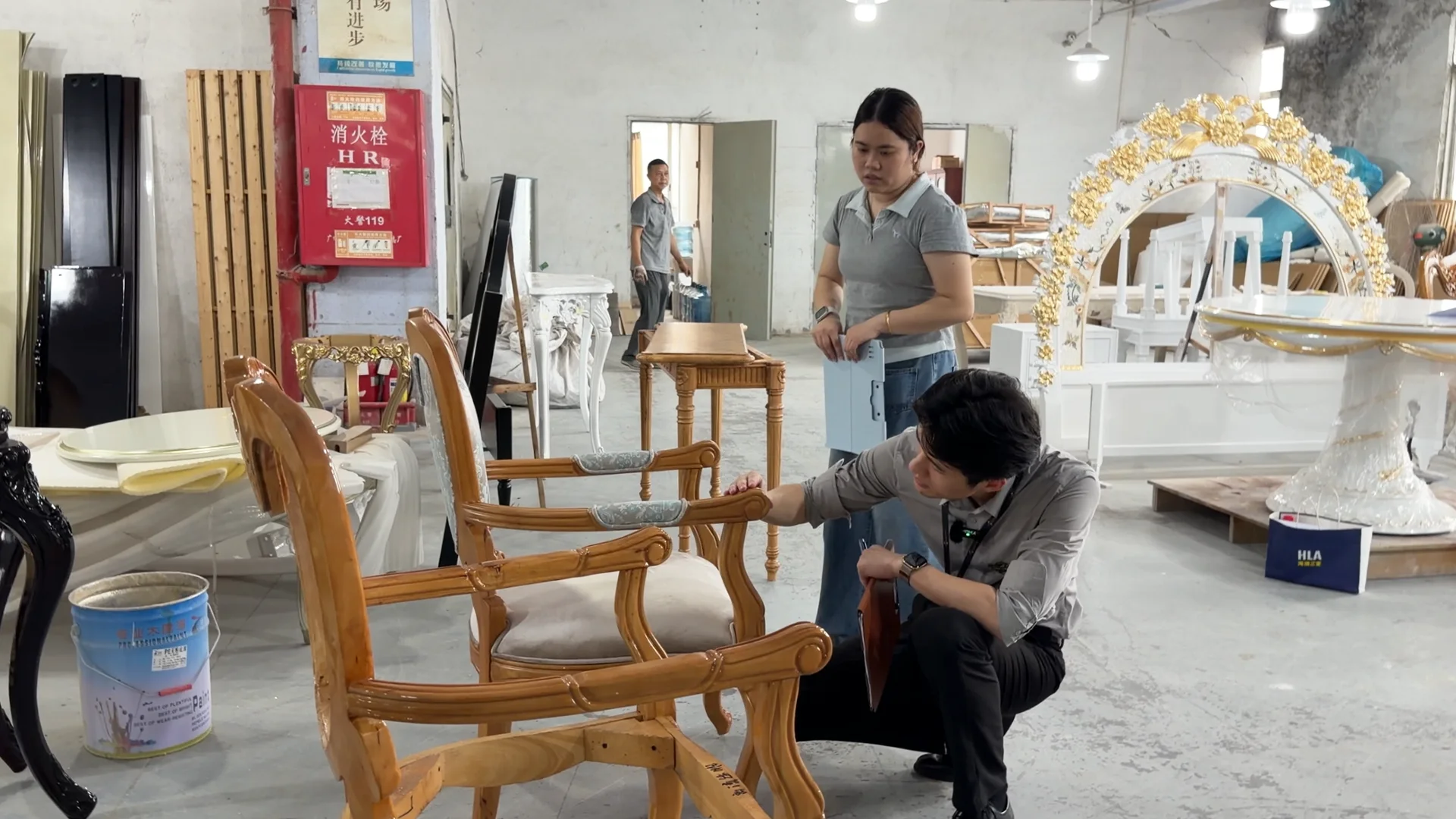
Quality control was another important part of the project.
Products from different factories needed to be checked against the relevant order requirements before shipment.
For furniture and customized interior products, this can involve specifications, appearance, finishes, accessories, and packaging.
In this project, production follow-up and quality inspections were completed before the goods were shipped.
There was also consideration of potential damage or replacement needs.
For certain products, additional samples, spare parts, or extra pieces were included in the shipment.
This provided backup for possible transportation damage, installation damage, or future replacement requirements.
It was a practical risk-control measure for a renovation project located far from the manufacturing suppliers.
Shipping Furniture and Building Materials from China to France
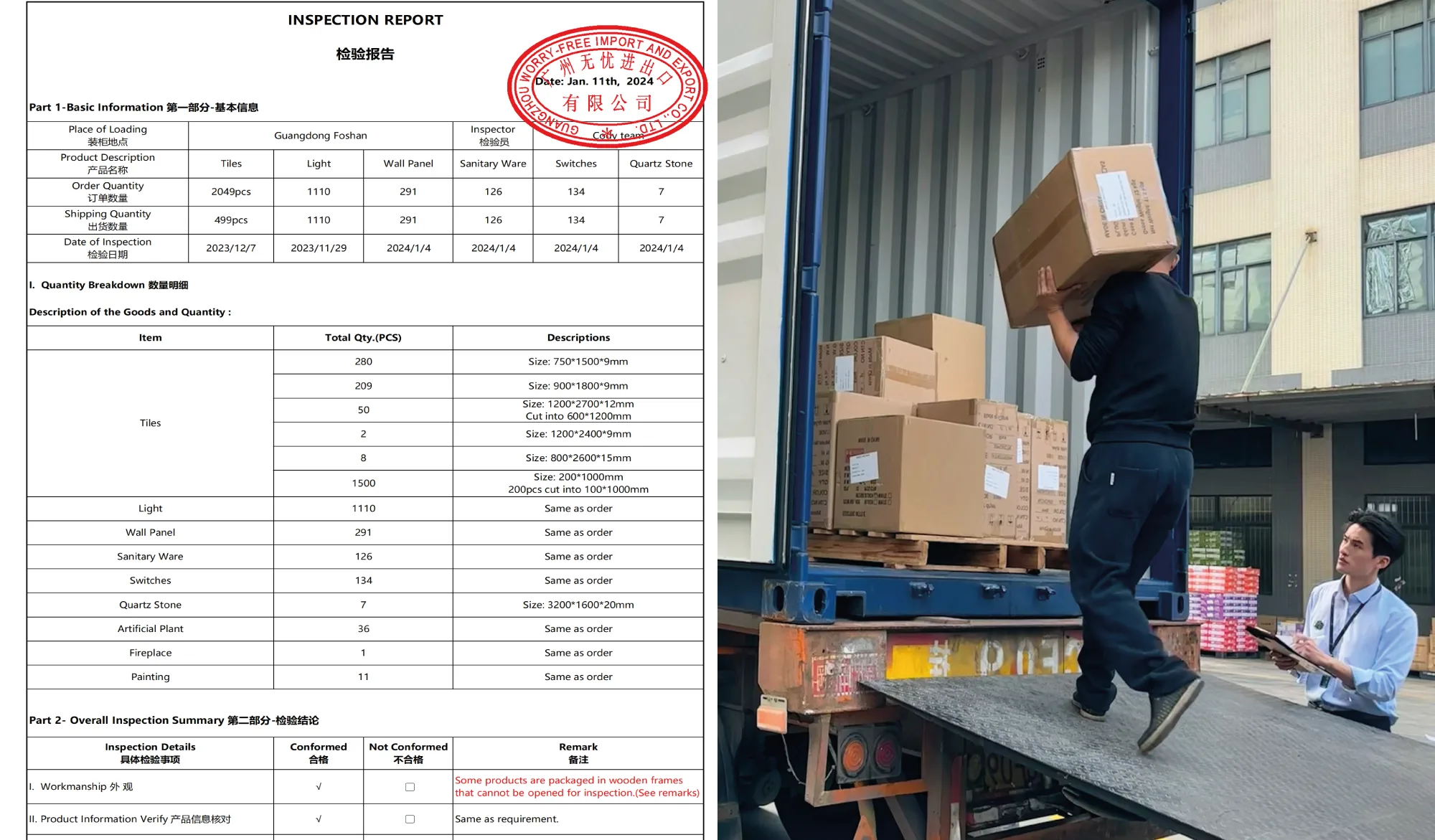
Once the products were ready, they were consolidated into one container for international shipping.
Instead of treating each supplier’s order as a separate international shipment, the project brought the different product categories together into a coordinated shipment.
The final cargo filled one container.
Why the Shipment Went Through Rotterdam
For this project, the selected logistics route was:
China → Rotterdam, Netherlands → Customs Clearance → Inland Transportation → France
The goods entered Europe through Rotterdam, where customs clearance was arranged, before continuing overland to France.
At the time of this shipment, this route was considered more practical and cost-efficient for the project’s available logistics arrangements than direct customs clearance in France.
However, this was a project-specific decision.
It does not mean that Rotterdam is always the cheapest or easiest customs-clearance location for furniture or building materials going to France.
Import arrangements depend on the actual products, shipping terms, customs requirements, available logistics services, and destination.
The relevant lesson is that international shipping should be evaluated as part of the sourcing project rather than treated as an unrelated final step.
The Total Project Cost
The total recorded cost for this château sourcing project, including shipping, was approximately USD 90,453.
This covered the multi-category purchasing and international shipping arrangements recorded for the project.
It should not be interpreted as a standard budget for every château or villa renovation.
The cost of a similar project would depend on the property’s size, the selected product categories, quantities, specifications, customization requirements, and delivery arrangements.
The Final Result: A Completed Château Sourcing Project
The project was completed, and the goods were successfully delivered.
John and Marlene had sourced multiple categories of furniture, lighting, tiles, bathroom products, doors, carpets, and customized interior items during a five-day China trip, with the remaining sourcing and supply chain work managed after they returned to France.
The final outcome included:
- A completed multi-category sourcing project
- Customized furniture and interior products
- Production follow-up and quality inspections
- Resolution of the natural wood finishing issue
- Consolidated container shipping
- Successful delivery to France
The clients were satisfied with the cooperation.
After the project, they expressed interest in returning to China for further sourcing and introduced Cody Sourcing to friends who were also considering renovation-related purchases.
For our team, this was a meaningful result because the cooperation went beyond completing an individual order.
The clients had entrusted us with a complex project involving multiple suppliers, design requirements, production decisions, and international delivery.

What Overseas Homeowners Can Learn from This Château Renovation
The most useful lessons from this project apply beyond French châteaux.
Villa owners, builders, and residential renovation clients considering China sourcing often face similar decisions.
Start with the Design Requirements, Not the Supplier Catalog
For properties with an existing design identity, selecting products only because they look attractive in a showroom can create inconsistencies.
Materials, dimensions, colors, and finishes need to be considered in the context of the property.
Plan the Sourcing Trip Before Arriving in China
Five days can be productive when suppliers and product categories have already been organized.
Without preparation, a short trip may be spent moving between unsuitable showrooms instead of confirming products.
Treat Production Follow-Up as Part of the Purchase
The natural wood finishing problem showed that differences can emerge after sample approval.
Supplier communication and production monitoring are important when custom products must match specific requirements.
Coordinate Shipping Before Every Product Is Finished
When buying from multiple suppliers, consolidation and shipping need to be considered early.
The final logistics plan should reflect the different product categories, packaging requirements, and destination arrangements.
Choose the Right Level of Sourcing Support
Not every home renovation requires a sourcing company.
If a buyer is purchasing one standard product from a reliable supplier, direct purchasing may be appropriate.
However, when a project includes numerous suppliers, customized products, quality inspections, different production schedules, and consolidated international shipping, local supply chain management can reduce the amount of coordination the overseas buyer must handle personally.
That was the main value of the arrangement in this château project.
Planning a Villa or Château Renovation with Products from China?
If you are renovating a villa, château, or other residential property, sourcing from China may provide access to a wider range of furniture, building materials, and customized products.
The important part is ensuring that the selected products suit your project and that the suppliers, production, quality control, and shipping are managed properly.
At Cody Sourcing, we help overseas homeowners, builders, and contractors coordinate complex China sourcing projects, including supplier selection, factory visits, customization, production follow-up, inspection, consolidation, and international logistics.
Our French château project is one example of how this process can work in practice.
If you are planning a residential renovation and already have drawings, reference images, or a purchasing list, you can share your requirements with our team to discuss a suitable sourcing approach.
Explore our sourcing services at 🔗foreasyhome.com.
