


Window Manufacturers in China: Aluminum, uPVC and High-Performance Window Systems

Window manufacturers in China can supply many types of windows, from standard aluminum windows and uPVC windows to thermal break systems, Low-E insulated glass units and higher-performance project windows.
But for overseas buyers, the difficult part is rarely finding a supplier.
The difficult part is understanding which window system is actually suitable for the project.
A buyer may start with a simple request: “I need black windows from China.” But once the sourcing process begins, the real questions become more specific. Is the project in a cold climate or hot climate? Should the buyer choose aluminum or uPVC? Is thermal break necessary? What glass performance is required? Does the local builder need NFRC, CE or other documents? Who will install the windows after arrival?
Windows should not be sourced as simple frames. They should be sourced as complete systems based on frame material, profile design, glass, hardware, sealing, drainage, performance requirements, packaging and installation conditions.
This guide explains how global buyers can compare window manufacturers in China, understand aluminum and uPVC window options, evaluate high-performance systems and reduce common sourcing risks before production and shipping.
For aluminum window details, read: 🔗Aluminum Door and Window Manufacturers in China.

Why Buyers Should Define the Window System Before Choosing a Factory
Many buyers want to find the “best window factory” first.
In real sourcing, this order is often wrong.
Before comparing factories, buyers should define what kind of window system the project needs. A factory that is strong in aluminum sliding windows may not be the right supplier for uPVC residential windows. A showroom brand with beautiful samples may not have strong export packaging. A profile factory may control the material well but may not be suitable for complete project windows with glass, hardware and installation details.
The better starting point is the project itself.
A villa in Canada, a coastal home in Australia, a hotel in the Middle East and an apartment renovation in Europe will not require the same window system. The climate, local building expectations, glass area, room function and installation method all influence the final choice.
This is why serious buyers should not ask only for a catalogue.
They should ask whether the supplier can match the complete system required by the building.
Aluminum Window Manufacturers in China
Aluminum windows are one of the strongest categories in China’s window supply chain.
They are popular for modern homes, villas, hotels, apartments, commercial spaces, sliding doors, large glass openings and black-frame window designs.
The advantage of aluminum is clear. It is strong, slim, durable and suitable for many modern architectural styles. It can support larger glass areas than many basic frame systems, and China has a mature supply chain for aluminum profiles, surface finishes, glass processing, hardware and finished window assembly.
However, aluminum windows should not be judged only by frame color or profile thickness.
A standard non-thermal break aluminum window and a thermal break aluminum window are not the same product. A slim black frame may look attractive in a showroom, but the final performance also depends on the glass, gasket, hardware, drainage and installation.
For cold climates or performance-sensitive residential projects, thermal break aluminum may be important. For hot sunny regions, Low-E glass, solar control, powder-coating durability and sealing may matter more. For coastal areas, corrosion resistance and surface treatment should be discussed early.
This is why aluminum window sourcing should begin with project requirements instead of only a photo.
For more detail on this decision, read: 🔗Thermal Break vs Non-Thermal Break Aluminum Windows from China.
uPVC Window Manufacturers in China
uPVC windows are often misunderstood.
Some buyers think uPVC is simply a cheaper alternative to aluminum. That is not always true. In many residential markets, uPVC windows are valued because they can offer practical thermal performance, lower maintenance and good everyday usability when the profile and fabrication quality are reliable.
For homes, apartments and energy-conscious projects, uPVC can be a sensible option.
The key is to check the details behind the profile.
A good uPVC window should have suitable profile formulation, wall thickness, steel reinforcement, corner welding, gasket quality, glass bead design and hardware compatibility. These details affect strength, sealing, color stability and long-term performance.
Climate is especially important.
In strong sunlight or hot regions, buyers should pay attention to UV resistance, color stability and deformation risk. In colder regions, reinforcement, gasket pressure and glass configuration become important. A low-cost uPVC profile may look acceptable at first, but weak formulation or poor welding can create problems after installation.
uPVC windows can be a practical choice, but only when the supplier understands both material quality and project application.
What High-Performance Window Systems Really Mean
High-performance windows are not defined by one material name.
A high-performance window system may use thermal break aluminum, quality uPVC, aluminum-clad wood, Low-E insulated glass, triple glazing, warm edge spacers, multi-point locking, better gaskets, stronger air tightness, improved acoustic glass or higher wind and water resistance.
The important word is “system.”
A supplier may say a window is high-performance because it uses Low-E glass. But Low-E glass alone does not prove the whole window performs well. The frame, spacer, gasket, hardware, air leakage, installation and tested product configuration still matter.
For the US market, buyers often need to understand performance values such as U-factor, SHGC, Visible Transmittance and Air Leakage. For Europe, buyers may care about CE-related documentation, airtightness, insulation and local project requirements. For the Middle East, solar heat gain, large openings, glass performance and coating durability can be more important than winter insulation.
High-performance windows usually cost more, but the cost should come from real specification differences.
Paying more for a label without understanding the system is not a good sourcing decision.
Aluminum vs uPVC Windows: How Buyers Should Compare
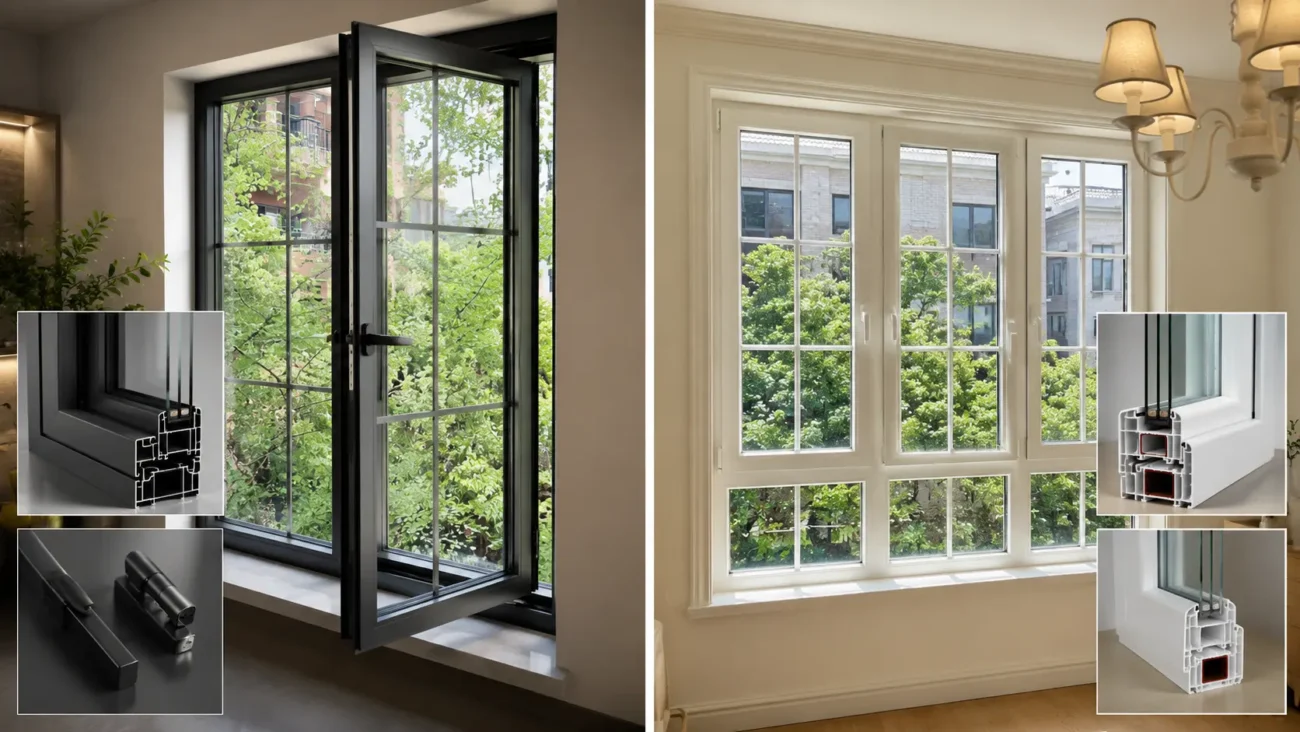
Aluminum and uPVC windows solve different problems.
| Area | Aluminum Windows | uPVC Windows | High-Performance Systems |
|---|---|---|---|
| Main Strength | Strong, slim and suitable for large openings | Practical thermal performance and lower maintenance | Based on tested whole-window performance |
| Common Use | Villas, hotels, sliding doors and modern facades | Residential windows, apartments and energy-conscious homes | Premium homes, cold climates and regulated markets |
| Key Risk | Heat transfer without thermal break, weak hardware or coating issues | UV aging, weak reinforcement or poor welding | Paying more without verified performance |
| What to Check | Profile system, thermal break, glass, hardware and coating | Profile formulation, reinforcement, welding, gasket and hardware | U-factor, SHGC, air leakage, glass, frame and installation |
This comparison should not be used to choose one material for every project.
A modern villa may use aluminum sliding doors for large openings, uPVC windows for certain bedrooms, and high-performance fixed glass in selected areas. A hotel may prefer aluminum for durability and appearance, while a residential development may prefer uPVC for cost and insulation.
The right choice depends on the building, climate, budget and user expectation.
Glass, Hardware, Sealing and Drainage Matter More Than Buyers Think
Frame material is important, but it is not the whole window.
Glass can change the cost and performance dramatically. Ordinary double glass, Low-E insulated glass, laminated glass, tempered glass, acoustic glass and triple glazing all serve different needs.
Hardware also affects daily use.
Sliding windows depend on rollers, tracks and locks. Casement windows depend on hinges, handles and locking points. Tilt-and-turn windows depend on a more complex hardware system that must operate smoothly and stay aligned over time.
For a comparison of opening styles, read: Sliding vs Casement vs Tilt-and-Turn Windows from China.
Sealing and drainage are just as important.
A window may look good in a factory photo, but if the gasket pressure is weak or the drainage design is poor, the buyer may face air leakage, water leakage or noise after installation. This is especially important in rainy regions, coastal markets and large villa openings.
A reliable window manufacturer should be able to explain how the frame, glass, hardware, gasket and drainage work together.
US, EU and Overseas Performance Requirements
Overseas buyers should confirm local requirements before ordering windows from China.
In the US, ENERGY STAR and NFRC-related performance values are commonly discussed for residential windows, doors and skylights. Buyers may need to review U-factor, SHGC, Visible Transmittance, Air Leakage and other product data depending on the project.
For EU buyers, CE-related requirements, Declaration of Performance, local building rules and installation practices may affect the final decision.
For the UK, Australia, Canada and other markets, project requirements can also vary by climate zone, building type and local approval process.
This is why suppliers should not only say:
We can make double glass with Low-E.
The buyer needs to know whether the exact window system is suitable for the local project requirement.
A performance claim should be connected to a specific product, glass configuration, frame system and test or certification document. General marketing words are not enough for regulated or high-value projects.
This article is not legal, customs or building-code advice. Buyers should confirm requirements with their architect, builder, energy consultant, inspector or customs broker before placing a large order.
A Realistic Overseas Buyer Consultation Scenario
A buyer may first contact a sourcing team after seeing black aluminum windows on Instagram.
At the beginning, the request sounds simple: find a similar window from China at a better price.
But after reviewing the project, the conversation usually becomes more practical.
Where is the house located? Is the climate cold, hot, humid or coastal? Does the project require thermal break aluminum? Would uPVC be more suitable for some rooms? What glass configuration is needed? Are the windows sliding, casement, tilt-and-turn or fixed? Does the builder need specific performance documents? Who will install and adjust the windows after arrival?
For a villa or hotel project, windows are rarely purchased alone. They may be selected together with doors, tiles, cabinets, bathroom products, lighting and furniture.
In this situation, window sourcing must also consider shipping sequence, warehouse consolidation, container loading and whether fragile glass products can be protected in a mixed shipment.
The final decision is no longer only about which factory has the lowest price.
It becomes a project decision involving design, climate, comfort, compliance, installation and logistics.
Quality Inspection Before Shipping
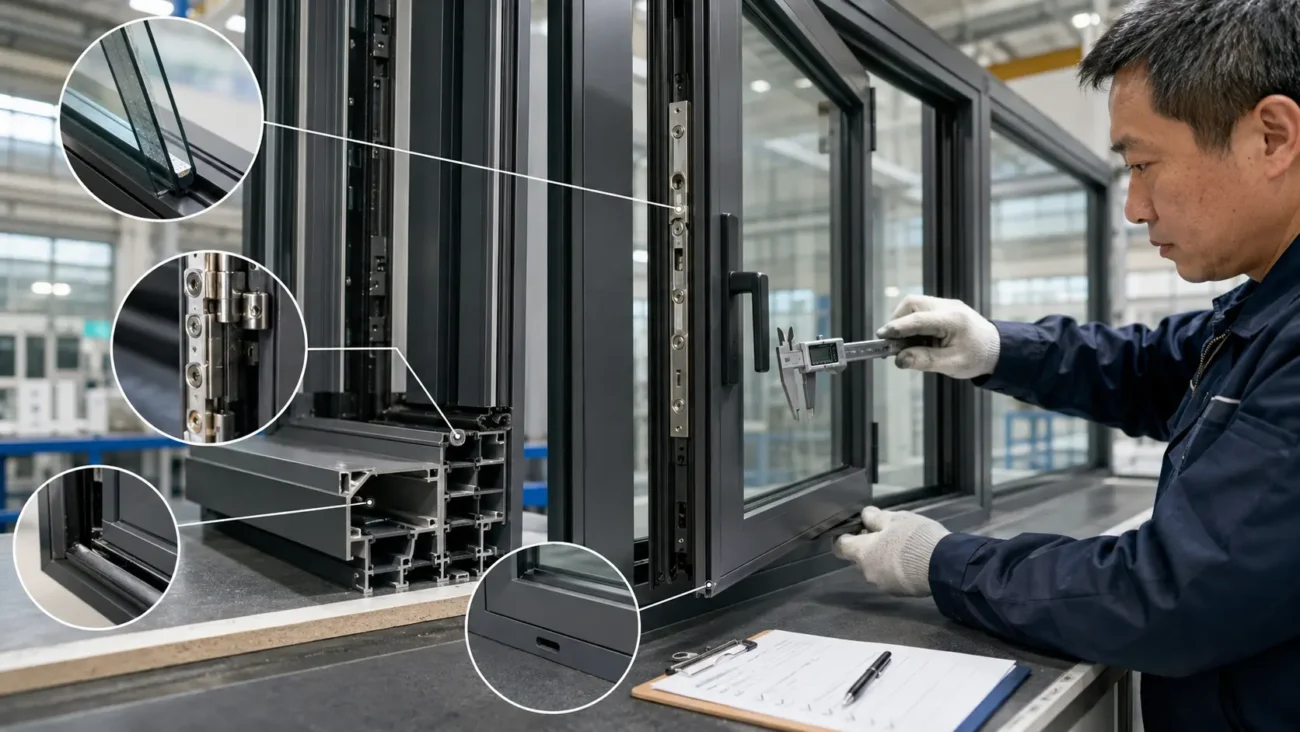
Window inspection should focus on how the product will perform after installation.
For aluminum windows, the inspection should check profile system, thermal break structure where required, frame squareness, glass specification, coating, hardware, drainage and opening operation.
For uPVC windows, inspectors should pay attention to profile quality, reinforcement, welding corners, gasket fit, hardware position and surface condition.
For high-performance windows, the inspection should confirm that the final product matches the approved drawings, samples and glass configuration. Labels, window numbers and project schedules should also be checked.
The window should open, close and lock smoothly. Sliding systems should move without abnormal resistance. Casement windows should close evenly against the gasket. Tilt-and-turn windows should be tested in both positions.
A photo of finished windows is not enough for serious project orders.
The buyer needs to know whether the units match the confirmed specification before they are packed and loaded.
Packaging, Numbering and Container Loading Risks
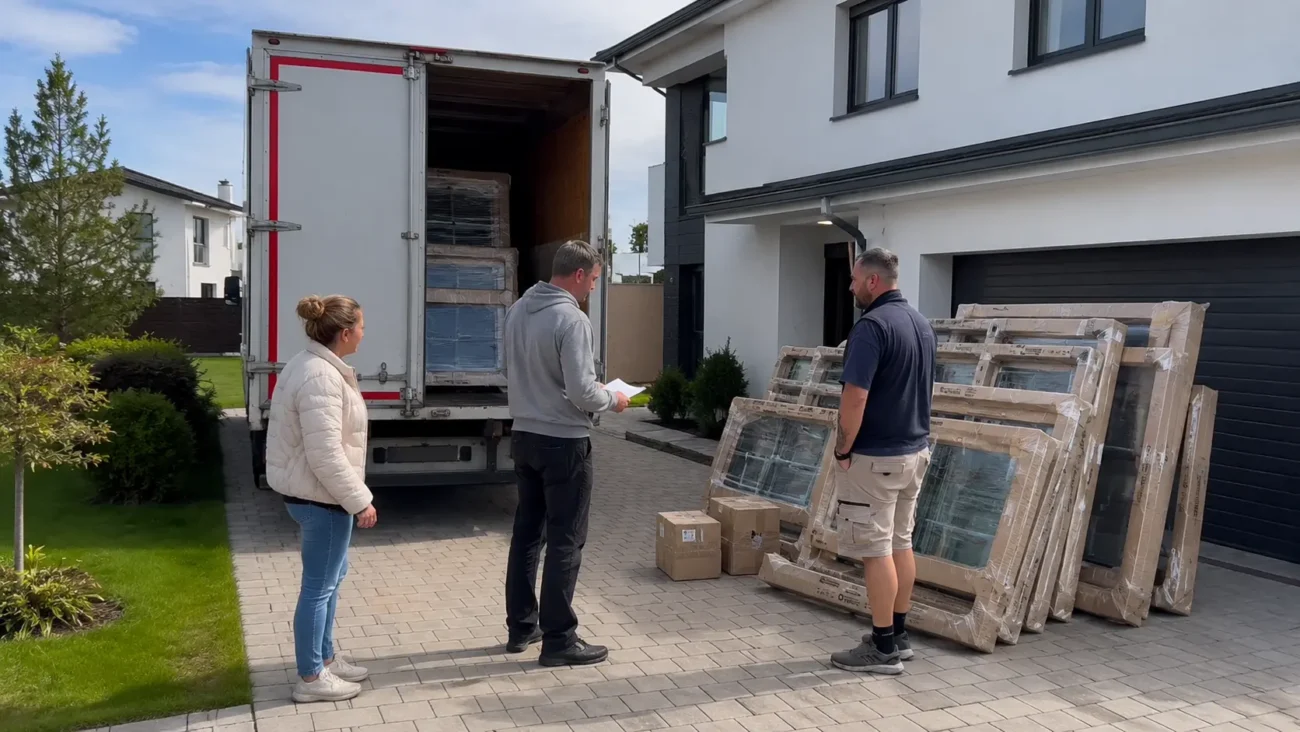
Windows are among the easiest building materials to damage during international shipping.
Frames can bend. Glass can break. Corners can dent. Powder-coated surfaces can scratch. Accessories can be lost. Screens can be packed separately and become difficult to match later.
For project orders, packaging is also about organization.
Each window should be connected to the correct opening number, room number, floor, glass type, hardware pack and installation position. This matters for villas, hotels, apartments and commercial projects with many window sizes.
In a mixed container, windows should not be crushed by heavy tiles, stone, cabinets or furniture. Large glass panels and slim frames need stable support during loading.
Good packaging cannot fix a bad product, but weak packaging can destroy a good product before it reaches the site.
For overseas buyers, packaging and container loading should be part of the sourcing conversation from the beginning, not something discussed only after production is finished.
Where to Source Window Manufacturers in China
China has several window manufacturing and building-material supply-chain regions.
Foshan Nanhai is especially relevant for aluminum profiles, system windows, showrooms and building-material project selection. It is useful for buyers who want to compare windows together with doors, cabinets, tiles, bathroom products, lighting and furniture.
However, buyers should still identify the supplier type.
A profile factory may be strong in material production but may not manage finished windows and export packaging. A finished window factory may be better for cutting, assembly, glass, hardware and project drawings. A showroom brand may be useful for selection, but the actual production factory still needs to be verified.
For uPVC windows, buyers may need to look beyond showroom appearance and focus on profile formulation, welding quality, reinforcement and export experience.
For high-performance systems, the sourcing route should begin with performance requirements instead of the city name.
A practical sequence is:
Project location → climate and building requirement → frame material → glass system → opening style → supplier verification → sample review → inspection → packaging and shipment
The best window manufacturer is not simply the one with the largest showroom.
It is the supplier that can produce the right system for the project and control the details before shipment.
How a China-Based Sourcing Team Helps
A China-based sourcing team should not only collect window catalogues.
Useful support starts with understanding the buyer’s project location, drawings, climate, room function, performance needs and budget range.
The team can help compare aluminum, uPVC and high-performance window options based on the project instead of only the product photo.
It can also help identify whether a supplier is a profile factory, finished window factory, showroom brand or export trading supplier. For serious orders, factory visits, sample review, production follow-up, inspection, packaging checks and container loading control are all important.
Cody Sourcing works with door, window and building-material suppliers across South China and other manufacturing regions.
For window projects, the value is not simply finding a low-price supplier. It is helping buyers connect the project requirement, supplier capability, quality control, packaging and shipping plan into one manageable process.
Common Mistakes to Avoid
One common mistake is choosing windows only by appearance.
Another mistake is comparing aluminum and uPVC quotations without understanding that the frame material, glass, hardware and performance level may be completely different.
Some buyers also assume that Low-E glass automatically means the whole window is high-performance. In reality, the complete system still matters.
Other problems often appear when buyers ignore local code requirements, installation conditions, packaging, labeling or unloading.
Many of these mistakes are not caused by one factory being dishonest. They happen because the buyer, supplier and installer never defined the complete window system clearly before production.
For China sourcing, the best results usually come when the buyer starts with the project requirement and then chooses the supplier.
Final Thoughts
Window manufacturers in China can offer strong supply-chain advantages for aluminum windows, uPVC windows and high-performance window systems.
But the safest sourcing decision is not always the cheapest quotation or the most impressive showroom sample.
Aluminum windows may be ideal for modern designs and large openings. uPVC windows may be practical for residential thermal performance and lower maintenance. High-performance systems may be necessary for premium homes, cold climates or regulated markets.
The right choice depends on the project location, climate, building type, glass requirement, hardware, installation condition and shipping plan.
For overseas buyers, real sourcing value appears when the window is treated as a complete system—not just a frame, a glass panel or a factory price.
