Managing Supplier Delays in China: A Hotel Procurement Case Study

An important confirmation had already been communicated to the bedding supplier. But inside the factory, that information was not passed on or handled correctly.
Production fell more than ten days behind the agreed schedule.
The order was intended for a hotel-opening project in Vietnam, making the delay particularly sensitive. The client needed the bedding as part of its opening preparations, and the supplier initially resisted accepting compensation.
This China supplier delay solution case study explains how Cody Sourcing investigated the cause, negotiated against the signed agreement, and secured compensation through a reduction in the supplier’s remaining balance.
It also examines what changed afterward. Resolving the payment issue addressed the immediate dispute; improving the supplier’s confirmation process addressed the cause.
Case Overview
| Item | Details |
|---|---|
| Client | Singapore-based group operating hotels in Vietnam |
| Product category | Hotel bedding |
| Order purpose | Supply for a hotel-opening schedule |
| Problem | Production delayed by more than ten days |
| Recorded cause | Internal supplier communication and confirmation failure |
| Agreed resolution | Compensation equal to 2% of the order value |
| Settlement method | Deduction from the supplier’s remaining balance |
| Client response | Accepted the solution |
| Follow-up | Supplier communication process addressed; the same type of problem did not recur in later cooperation |
The 2% compensation applied to this particular signed contract. It is not a standard compensation rate for every supplier, delay, or future order.

A Bedding Order Within an Ongoing Hotel Supply Relationship
The client is a Singapore-based group with hotel operations in Vietnam.
Our cooperation involves recurring purchasing for different hotel properties, including products for new openings and existing operations. This incident concerned one bedding order within that broader relationship.
For this order, the production and delivery schedule mattered because the goods were connected to a hotel opening.
Hotel preparation involves several activities progressing together. Rooms need to be equipped, operating supplies need to be available, and staff need time to prepare the property for guests.
A delay in an essential category can put pressure on that wider schedule.
The supplier agreement therefore included delivery requirements and responsibility for delays before production began.

What Caused the Production Delay?
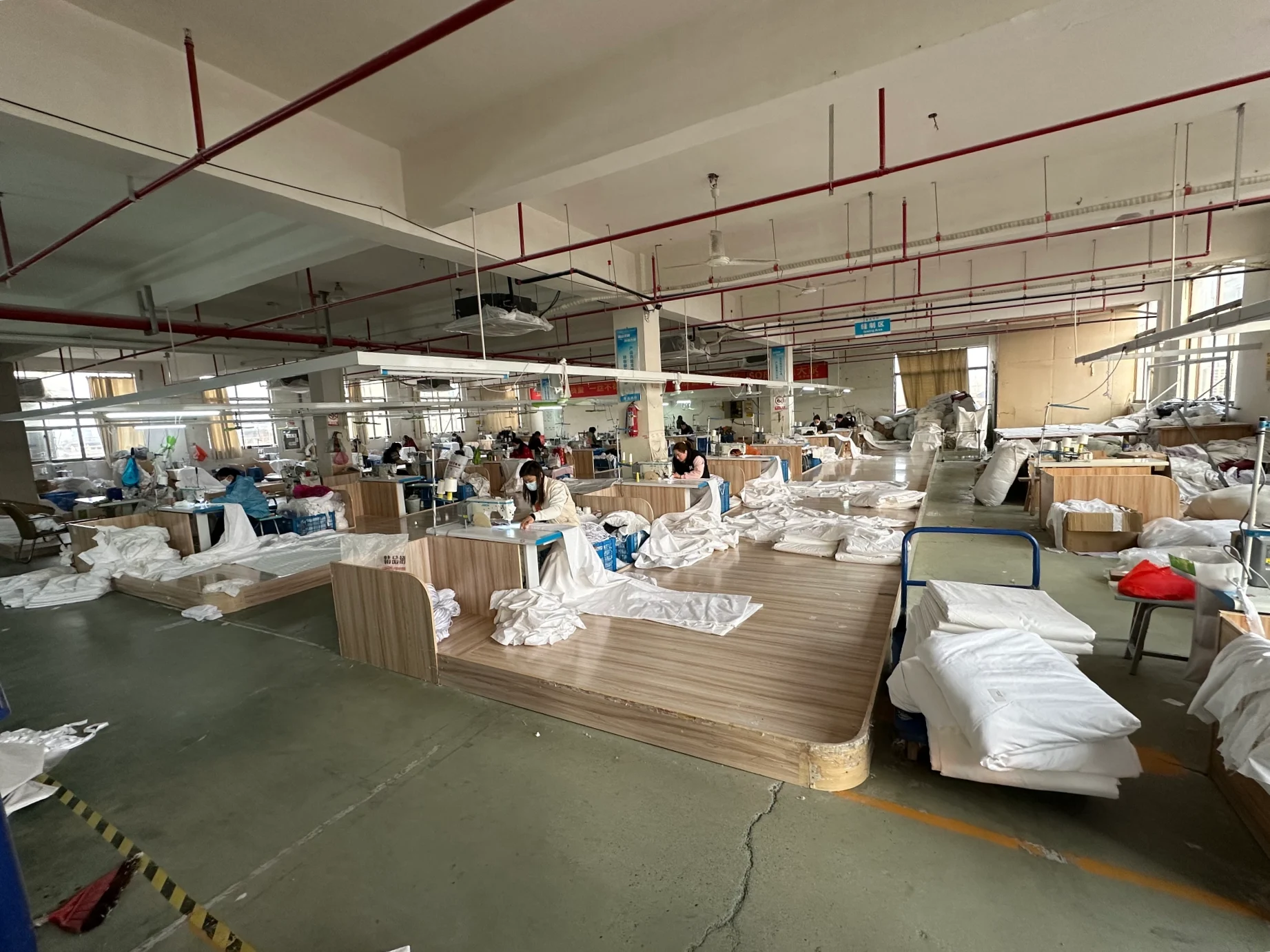
When the order fell behind schedule, we investigated the reason with the supplier.
The supplier explained that an important confirmation had already been communicated but had not been passed on or handled correctly within its organization.
As a result, production did not proceed according to the agreed schedule.
The recorded cause was an internal communication and confirmation-management problem. The case did not establish production capacity as the main cause.
That distinction shaped the follow-up. Asking the factory to produce faster would not, by itself, address why an instruction had failed to reach the people responsible for acting on it.
The supplier’s internal handling of confirmations needed attention.
Why the Written Agreement Mattered
Before production, the supplier had signed an agreement defining responsibility for delays.
For this particular order, the applicable terms provided the basis for compensation equal to 2% of the order value.
That gave the discussion a clear commercial reference when the delay occurred.
We could compare the agreed schedule with what had happened and refer to the responsibility already accepted by the supplier. The compensation request was grounded in that order’s signed terms.
A written agreement did not prevent the communication failure. It helped define how the resulting dispute would be addressed.

Negotiating With a Supplier That Initially Resisted
The supplier initially did not want to accept the compensation.
Our team discussed the delay and its cause with the factory, referring back to the delivery requirement and responsibility recorded before production.
The client also expected the supplier to fulfill its agreed obligations.
After negotiation, the supplier accepted compensation equal to 2% of the order value.
The outcome was a negotiated application of the signed commercial agreement. This case does not involve a reported court judgment or establish that the same outcome would apply to a different contract.
How the Compensation Reached the Client
The compensation was deducted directly from the supplier’s remaining balance.
This reduced the final amount payable to the supplier, passing the benefit to the client through the payment adjustment. The client accepted that solution.
The settlement method was an important part of resolving the dispute. Agreement on a percentage alone would have left a further question about how and when it would be applied.
In this order, the agreed deduction made the financial resolution concrete.
| Resolution Stage | What Happened |
|---|---|
| Cause review | The supplier identified an internal communication failure |
| Responsibility discussion | Our team referred to the signed delay terms |
| Negotiation | The supplier ultimately accepted 2% compensation |
| Settlement | The amount was deducted from the remaining supplier balance |
| Client confirmation | The client accepted the solution |

Compensation Did Not Replace the Need for Schedule Control
For a hotel preparing to open, having essential goods available is generally more useful than receiving a small financial adjustment after a delay.
The compensation addressed supplier responsibility in this case. It did not recover the elapsed production time.
The available record also does not confirm the hotel’s final opening date or establish that every effect of the delay was eliminated.
The practical lesson is to manage schedule risk throughout production while keeping agreed remedies available if a supplier fails to meet its obligations.
In our broader production-management process, this means reviewing the current production stage, the reason for a delay, the work remaining, and any implications for inspection, collection, or shipment.
Those reviews help determine which responses are practical for the particular order.
Addressing the Supplier’s Confirmation Process
After resolving the compensation issue, we continued discussing the cause with the supplier.
The problem involved information that had been communicated but had not been acted on correctly inside the organization.
We required the supplier to improve its internal communication and confirmation process.
The purpose was to reduce the chance of the same failure recurring in later orders. In subsequent cooperation, we did not experience the same type of communication-related delay.
That result is specific to the later cooperation recorded in this case. It does not mean the supplier became immune to every kind of production delay.

What Hotel Procurement Teams Can Learn From This Case
Confirmations Need to Reach Production
Sending an approval to a supplier is one step. The relevant information also needs to reach the people scheduling and carrying out the work.
This incident showed how an internal handover failure could affect the production timeline even after an important confirmation had been communicated.
For repeat purchasing, it is useful to understand how the supplier records approvals and passes instructions into production.
Agree Delivery Responsibilities Before Production
This order’s signed terms gave the negotiation a defined basis.
For future orders, the appropriate delivery requirements and delay remedies need to reflect the product, schedule, supplier agreement, and circumstances.
The 2% figure from this case should not be copied automatically into unrelated orders.
Investigate the Cause Before Assigning Responsibility
The supplier’s internal communication failure was central to this incident.
Other orders may involve different causes, including changes to requirements, outstanding approvals, material availability, or production problems. The response should follow the actual circumstances and agreed responsibilities.
A clear account of what happened helps keep the discussion focused.
Specify How an Agreed Adjustment Will Be Applied
The financial resolution was implemented through the supplier’s remaining balance.
For this order, that provided a straightforward settlement after negotiation. Other arrangements may require a different agreed method.
Recording the amount and settlement method helps avoid leaving a compensation agreement unresolved in practice.
Follow the Issue Beyond the Immediate Dispute
The follow-up addressed the supplier’s internal handling of confirmations.
That mattered in a continuing hotel supply relationship. A financial adjustment could close one dispute while leaving the same operational weakness in place for the next order.
A Case-Specific China Supplier Delay Solution
This bedding order was delayed by more than ten days because an important confirmation was not handled correctly inside the supplier’s organization.
Cody Sourcing investigated the cause, negotiated with the supplier using the signed agreement, and secured compensation equal to 2% of the order value. The amount was deducted from the supplier’s remaining balance, and the client accepted the settlement.
The supplier’s communication process was then addressed, and the same type of issue did not recur in later cooperation.
The case demonstrates how production follow-up, documented responsibilities, supplier negotiation, and payment coordination can work together when an order falls behind.
If your hotel project has a fixed preparation schedule, share your product requirements, supplier status, and required arrival dates with Cody Sourcing. We can review the production coordination and China-side follow-up your procurement needs.