


5-Day China Sourcing Trip for an Australian Villa Project

The first cabinet supplier was already on the clients’ shortlist before they arrived in China. But during the visit, glue marks, visible gaps, and finishing problems gave them reasons to reconsider.
An alternative supplier offered noticeably better workmanship and more design choices. For the cabinet options compared in this project, the price difference was approximately AUD 1,000-plus.
That decision became one of the most useful moments in this five-day China sourcing trip for a villa project. The Australian couple could compare what they had seen online with the actual products—and decide where spending more made sense.
Over five days, we helped them review cabinets, wardrobes, furniture, surface materials, lighting, and a large custom aquarium. The trip combined their existing supplier contacts with additional options selected around the villa’s requirements.
The sourcing visit was completed, while detailed design confirmation and subsequent work on customized products continued afterward.
Project Overview
| Item | Project Details |
|---|---|
| Clients | Australian couple |
| Property | Residential villa |
| Purchasing objective | Balance quality, design, customization, and price |
| Sourcing duration | Five days |
| Main locations | Foshan, Zhongshan, and surrounding Guangdong sourcing areas |
| Categories reviewed | Cabinets, wardrobes, furniture, tiles, sintered stone, wall panels, mosaics, lighting, and a custom aquarium |
| Documented outcome | Supplier comparisons completed, samples collected, cabinet supplier selected, and cabinet deposit paid |
| Project status | Ongoing, with detailed cabinet design confirmation continuing |
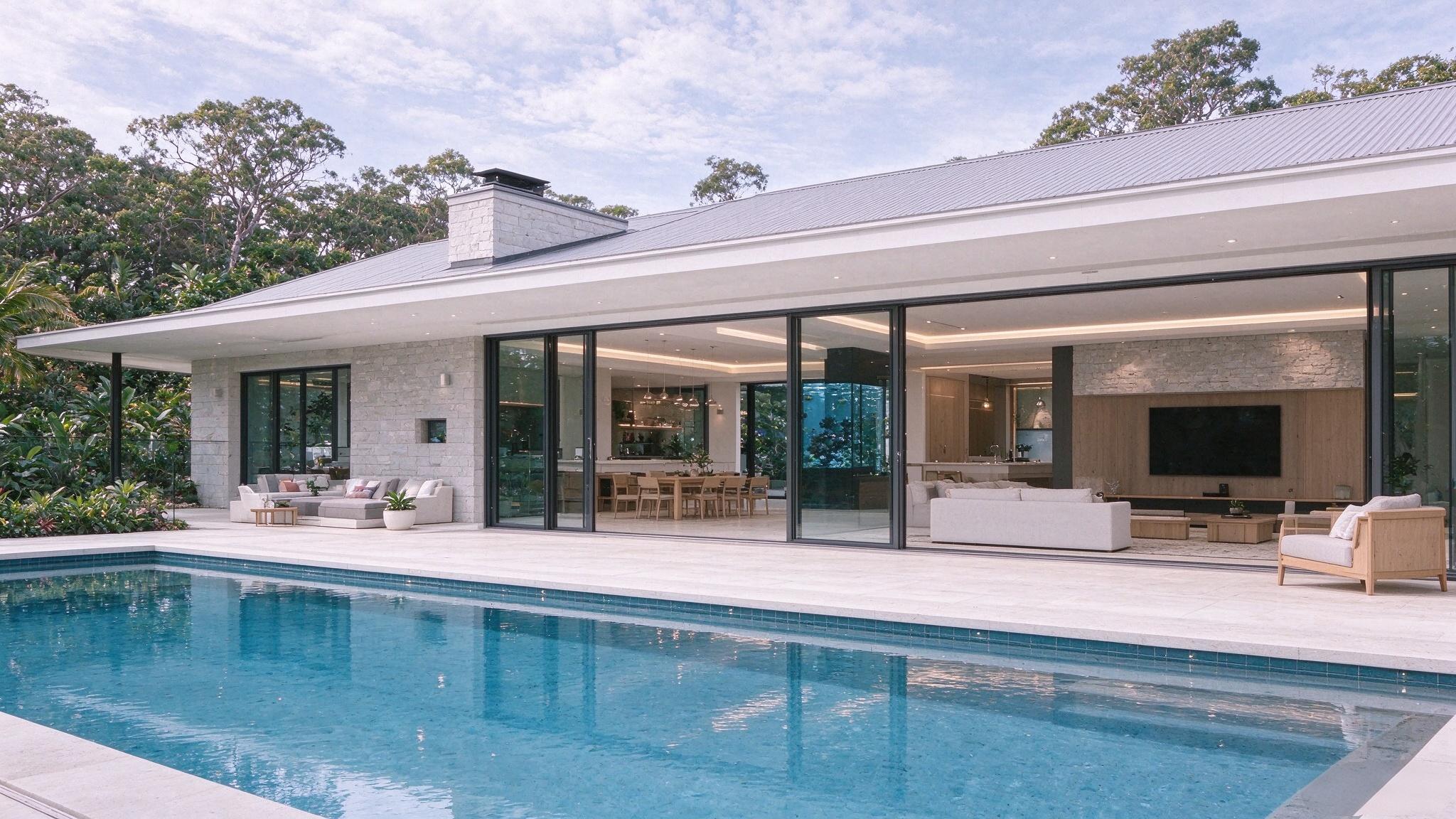
The clients indicated that they might live in the property initially and potentially sell it later. Their choices therefore needed to suit their own preferences while also considering the property’s future appeal.
They were looking for a sensible balance between quality and cost across different categories.
Preparing the China Sourcing Trip for a Villa Project
Before the clients arrived, we collected their product categories, preferred styles, reference images, existing supplier contacts, and purchasing priorities.
That information helped us decide which products deserved the most attention during the visit.
Cabinetry was a priority because it involved customization, material selection, and a longer decision process. Other products that could be discussed or confirmed remotely later received less time in the physical itinerary.
We also grouped visits by product category and location. Where possible, we contacted suppliers beforehand to check whether relevant styles, colors, or samples would be available to view.
For the sintered-stone visits, for example, we checked whether suppliers had products close to the clients’ preferred colors and material direction. This gave each visit a clearer purpose.
The five-day itinerary followed this structure:
| Day | Main Focus | Purpose |
|---|---|---|
| Day 1 | Kitchen cabinets and wardrobes | Evaluate existing suppliers and compare an alternative |
| Day 2 | Tiles, sintered stone, wall panels, and mosaics | Review surface materials and specialized options |
| Day 3 | Furniture in Foshan | Compare comfort, materials, workmanship, and price levels |
| Day 4 | Lighting and custom aquarium | Review lighting options and discuss specialist customization |
| Day 5 | Return visits and confirmation | Refine selections, collect samples, and confirm next steps |
Day 1: Comparing Kitchen Cabinet and Wardrobe Suppliers
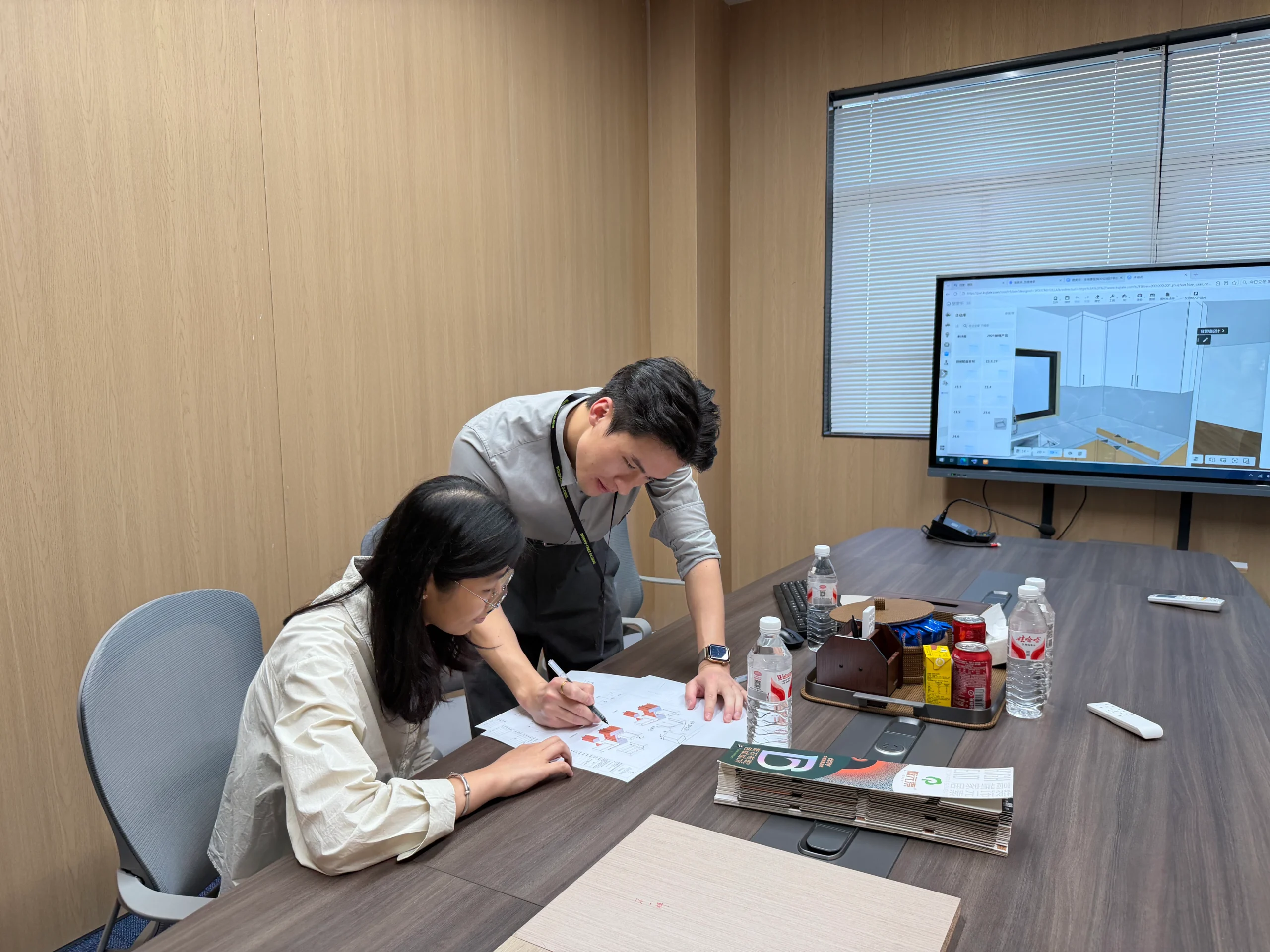
The clients had already found cabinet suppliers before coming to China. Some had prepared preliminary designs.
We included those suppliers in the itinerary so the clients could see the factories and products themselves.
During the first visit, we observed workmanship issues including glue overflow, visible gaps between components, and paint or finishing problems. The supplier’s scale and showroom presentation were also relatively limited.
These observations gave the clients information that had been difficult to judge from online photographs.
Small gaps, edge finishing, glue marks, and surface imperfections can be much easier to assess when the product is directly in front of you.
Introducing Another Cabinet Option
After reviewing the first supplier, we arranged a visit to an alternative cabinet factory that had previously worked on Australian projects.
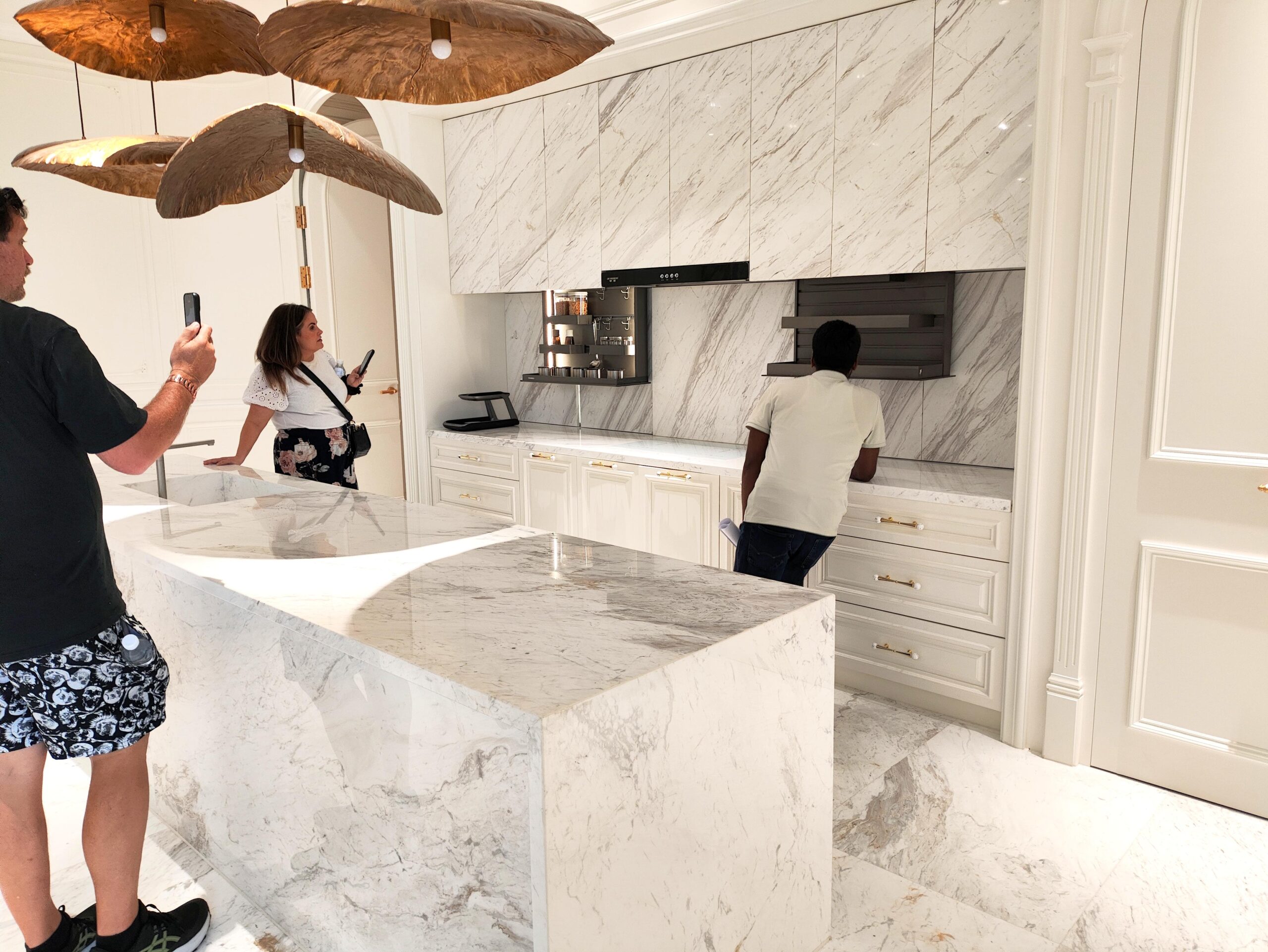
This supplier offered a larger showroom, more complete kitchen displays, more styles, and visibly better workmanship.
For the relevant cabinet comparison, the alternative was approximately AUD 1,000-plus more expensive.
That figure relates specifically to the options compared during this project. It does not represent a standard price difference between Chinese cabinet suppliers.
For these clients, the additional cost needed to be weighed against the improvement they could see in finishing, workmanship, and available choices.
The visit changed the purchasing decision by making those differences tangible.
Day 2: Tiles, Sintered Stone, Wall Panels, and Mosaics
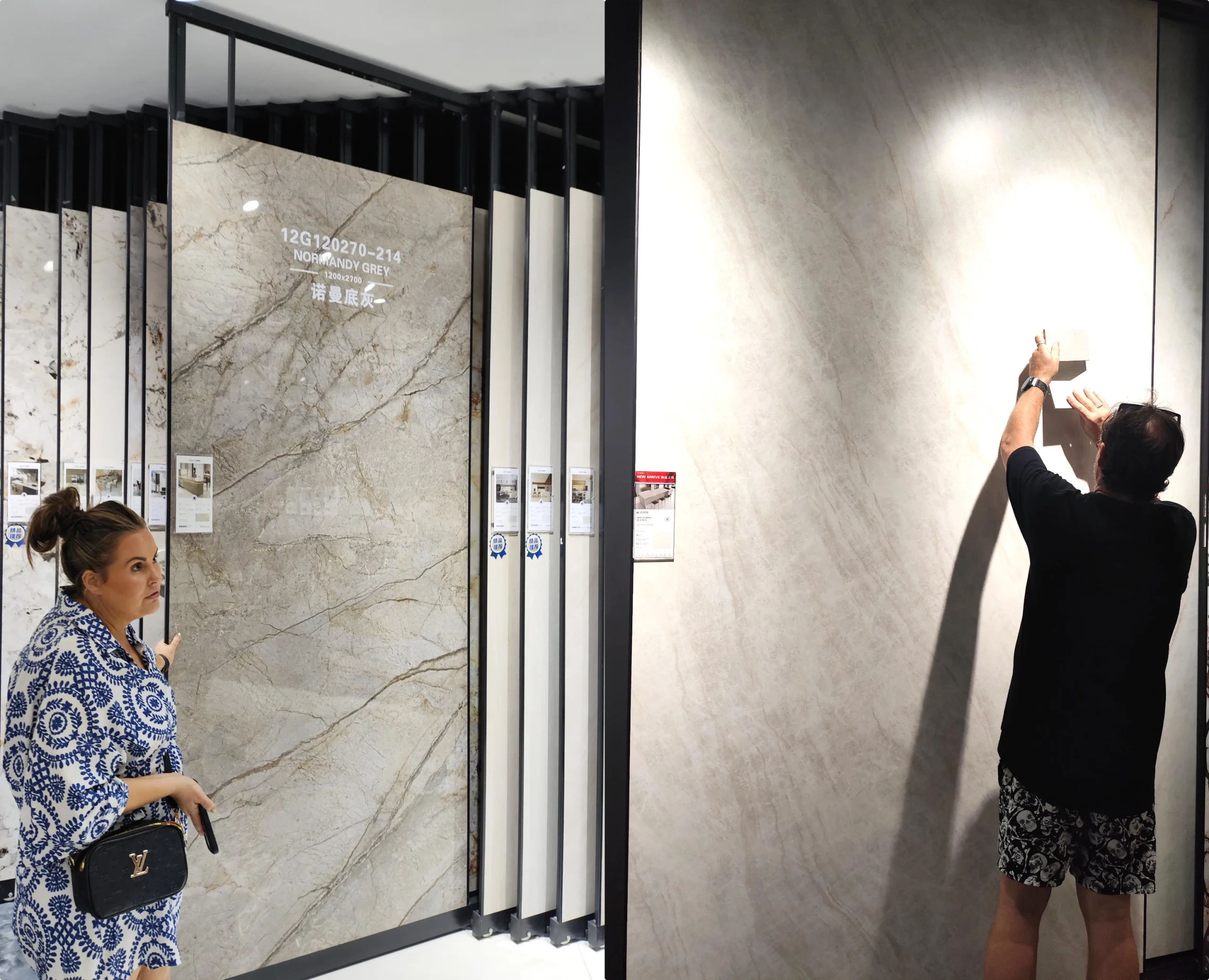
The second day focused on surface materials.
Grouping tiles, sintered stone, wall panels, and mosaics together helped the clients concentrate on related finishes without repeatedly switching between unrelated product categories.
Before the visits, we had checked the availability of relevant styles with suppliers. This was particularly useful for sintered stone, where the clients already had preferred colors and material directions.
The objective was to see suitable options in person, examine their appearance, and narrow the choices.
Taking a Specialized Mosaic Requirement to a Specialist
The villa also required a specific mosaic product.
We arranged a visit to a supplier specializing in mosaics, giving the clients access to a more focused selection of patterns, designs, and materials.
This was a different purchasing task from choosing standard tiles. A specialist supplier made it easier to explore the particular product the project required.
The same approach would later apply to the custom aquarium: the supplier search followed the requirement.
Day 3: Finding the Right Furniture Level in Foshan
The third day focused on furniture in Foshan.
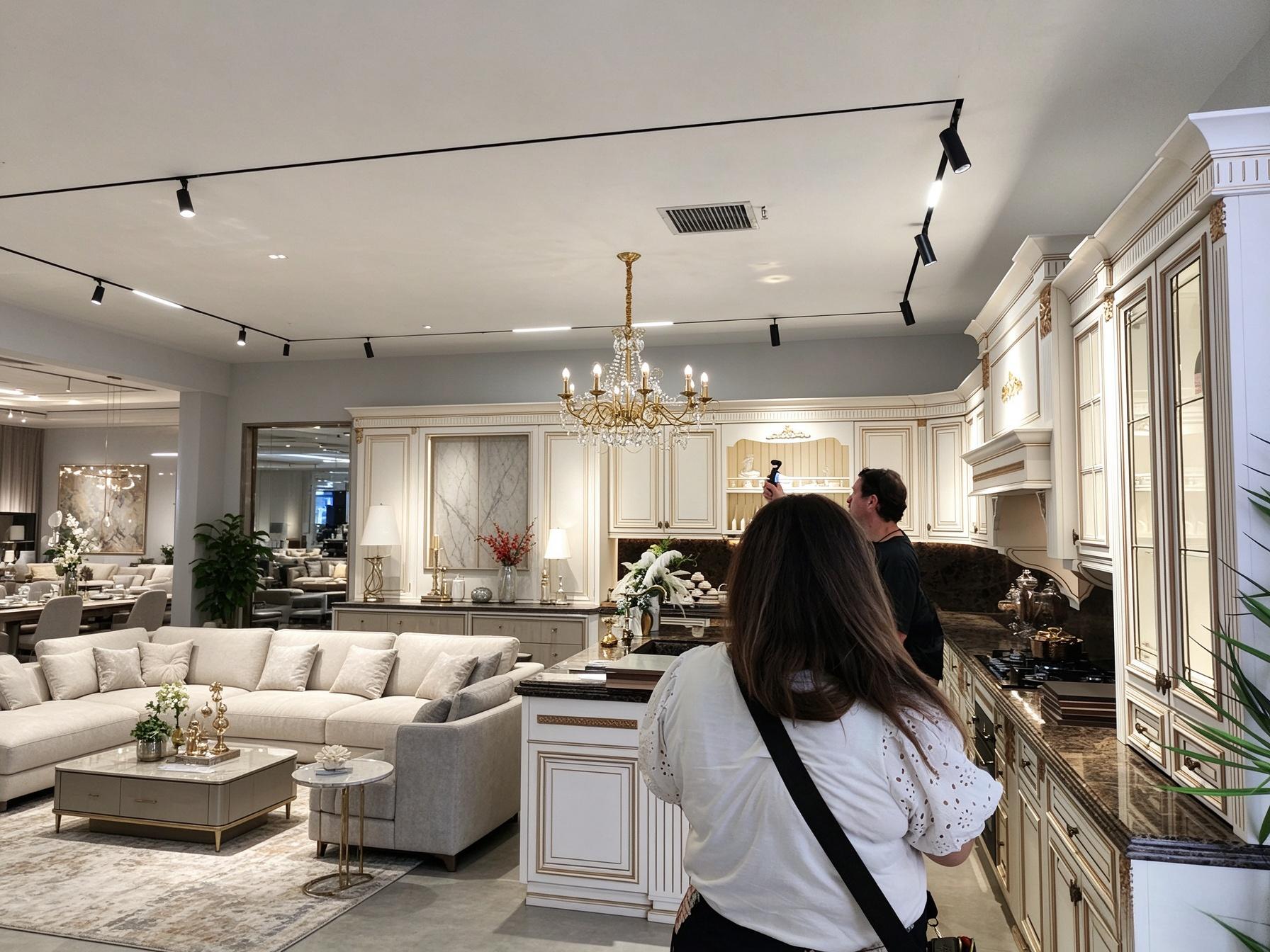
The clients visited a combination of furniture markets, suppliers, and custom furniture factories. This let them compare different pricing and quality levels before deciding which segment suited the villa.
Some lower-priced options were more oriented toward wholesale and price-sensitive purchasing. Differences could be seen in materials, construction, hardware, finishing, and overall workmanship.
The clients also considered higher-end options, including products available through the Louvre furniture complex.
Their eventual preference was a custom residential furniture supplier that offered a suitable middle ground between price and quality.
For the particular options compared during the trip, this supplier’s pricing was approximately half that of some higher-end Louvre options under consideration. The products were different options, so this should not be interpreted as an identical-product discount or a project-wide savings percentage.
What the Clients Could Assess in Person
Furniture selection involved more than comparing photographs.
The clients could sit on products, feel fabrics and leather, examine stitching, compare finishes, and look at construction details.
Those checks helped them decide which differences mattered to their own use of the property.
A sofa may have the right appearance online but feel different when someone sits on it. A finish may look suitable on a screen but appear less convincing beside another option in the showroom.
The physical comparisons helped the clients narrow their choices with a clearer understanding of what they were buying.
Day 4: Zhongshan Lighting and a Custom Aquarium
The fourth day focused on lighting in Zhongshan.
The clients visited a major lighting sourcing complex and relevant suppliers to review decorative lighting, residential fixtures, downlights, and customized options.
Seeing the products together made it easier to compare finishes, proportions, and light effects.
For customized lighting, the discussions covered size, design, materials, finish, and technical configuration. Supplier capability for the Australian market was also considered during selection.
A Personalized Requirement: The Aquarium
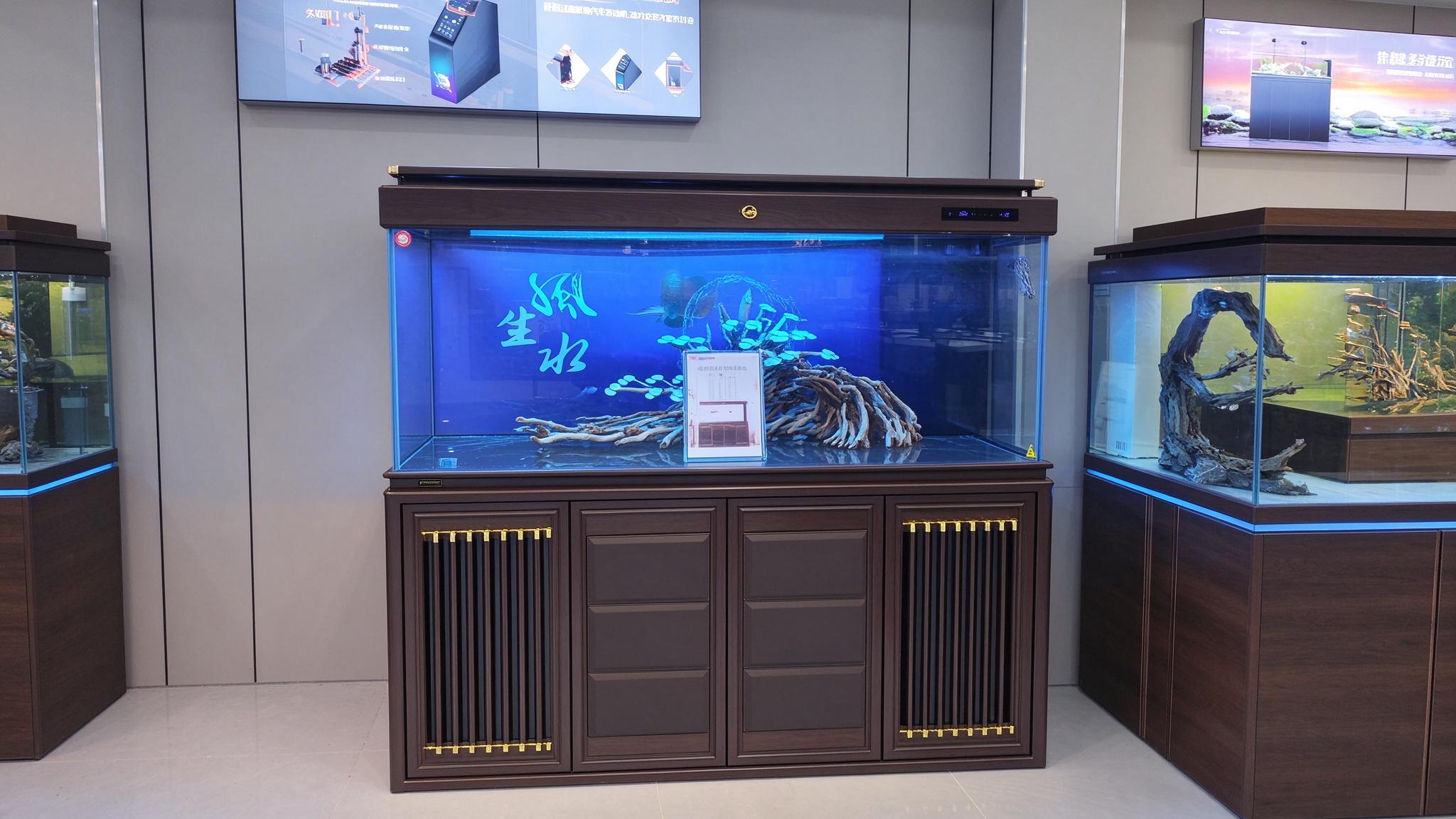
The villa’s purchasing list included a large customized aquarium.
One of the clients enjoys keeping fish, making this an important personal feature of the property.
We arranged a visit to a specialized aquarium manufacturer during the Zhongshan trip. The clients could discuss size, design, structure, customization, and installation considerations directly with the manufacturer.
This visit served a different purpose from browsing furniture or lighting displays. It created an opportunity to discuss a product that needed to be developed around the clients’ specific requirements.
Day 5: Returning to Important Suppliers
The final day was reserved for reviewing and confirming important choices.
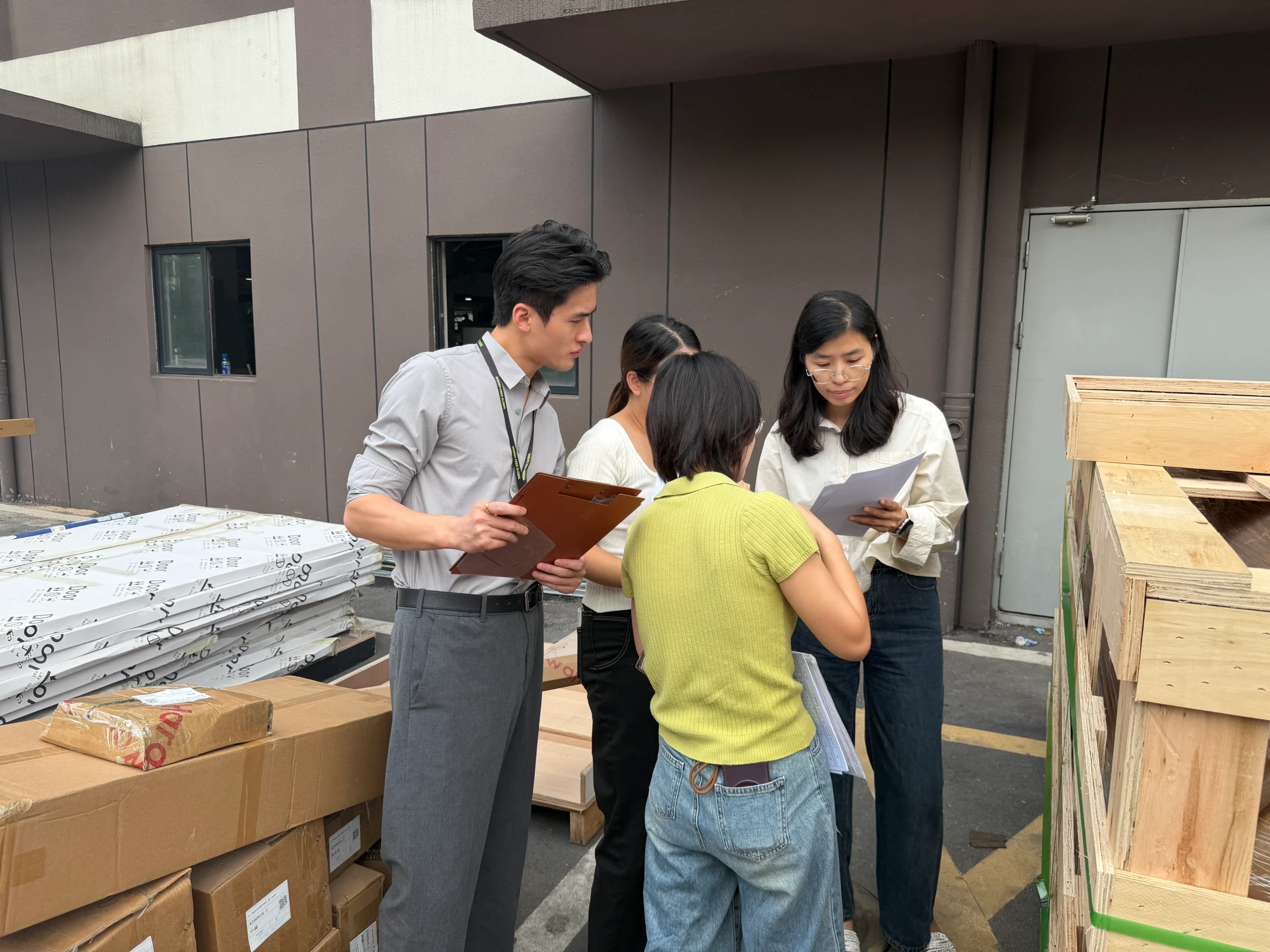
The clients returned to priority suppliers, including the cabinet factory and sintered-stone supplier, to refine materials, colors, specifications, samples, and next steps.
This return time was useful because some decisions benefited from seeing other options first.
The clients also collected physical samples for later reference. These provided a tangible record of selected materials and finishes as the project continued.
Cabinet Deposit and Detailed Design
After comparing cabinet options, the clients selected a supplier and paid a deposit.
The supplier then moved into detailed design work.
The recorded next steps were detailed drawings, client review, final design confirmation, contract confirmation, and production.
This distinction matters when assessing what a five-day sourcing trip can achieve. A supplier can be selected and design development can begin during the visit, while further approvals are still required before full production.
For this project, detailed cabinet design confirmation continued after the sourcing trip.
Why the Five Days Were Productive
The itinerary worked because preparation had already answered several practical questions: what the clients wanted to buy, which products mattered most, which suppliers they had found, and which decisions required physical evaluation.
Each day then had a defined purchasing objective.
Cabinetry received early attention. Surface materials were grouped together. Furniture comparisons had a dedicated day, and lighting visits were organized around Zhongshan.
Where possible, visits were kept within one city or area to reduce unnecessary travel.
The trip also combined markets and factories according to the task.
Markets helped the clients see styles and compare available options. Factory visits supported more detailed discussions about customization, materials, and production capability.
The fifth day left room to return to important suppliers rather than filling every available hour with a new stop.
What Was Completed—and What Continued Afterward?
By the end of the five-day sourcing program, the clients had compared key suppliers, reviewed multiple product categories, collected physical samples, selected a cabinet supplier, and paid the cabinet deposit.
They were satisfied with the sourcing trip and planned additional time to experience Guangzhou and surrounding areas afterward.
The wider procurement project remained ongoing.
Detailed cabinet drawings and design confirmation were still being developed. Other customized products also required further confirmation and subsequent production work.
The completed result was therefore a sourcing trip with meaningful supplier decisions and clear next steps. It was not a fully manufactured and delivered villa package.
In our broader project workflow, approved selections are followed by order coordination, production follow-up, quality control, consolidation, and shipping preparation as the relevant stages are reached.

What This Trip Shows Overseas Villa Buyers
This project demonstrates how a short sourcing visit can support decisions that are difficult to make remotely.
The cabinet comparison revealed workmanship differences that had not been clear from photographs. Furniture visits helped the clients find an appropriate price and quality level. Specialist visits addressed the mosaic and aquarium requirements.
Five days gave these clients time to make progress across many categories because the itinerary was built around their actual requirements and existing research.
Another project may need a different schedule. The time required will depend on the product list, customization, supplier locations, and the decisions still outstanding.
If you are preparing a villa sourcing trip to China, send Cody Sourcing your product list, style references, existing supplier contacts, and project timeline. We can review which decisions should be prioritized during the visit and which can continue remotely afterward.
