


Villa Renovation Sourcing from China: Complete Guide for Overseas Homeowners

From Furniture and Building Materials to Supplier Selection, Quality Control, and International Delivery
Planning a villa renovation involves far more than choosing furniture and building materials. You may need kitchen cabinets, wardrobes, flooring, tiles, lighting, bathroom products, doors, windows, outdoor furniture, and dozens of customized items—all from different suppliers.
For overseas homeowners, buying these products from China can offer access to a wider range of manufacturers, more customization options, and competitive pricing. However, the challenge is not simply finding factories. It is making sure that the products match your design, suppliers can meet your requirements, production stays on track, and everything arrives at your property in the right condition.
So, is it practical to source an entire villa renovation from China?
In many cases, yes. But it requires a different approach from ordinary product purchasing.
At Cody Sourcing, we have supported residential projects in France, the United States, and Australia. These projects have involved different budgets, design requirements, supplier arrangements, and sourcing methods. Through this experience, we have learned that successful villa sourcing depends on planning and coordination just as much as product selection.
This guide explains how to approach villa renovation sourcing from China, from the first purchasing list to supplier selection, production, quality inspection, and international delivery.

1. Is China Sourcing Right for Your Villa Renovation Project?
China sourcing is not automatically the best option for every renovation.
It tends to make more sense when a project involves several product categories, customized requirements, or enough purchasing volume to justify coordinating multiple manufacturers and international shipments.
For example, a villa owner may need:
- Custom kitchen cabinets and wardrobes
- Bedroom and living room furniture
- Floor and wall tiles
- Sintered stone and decorative wall panels
- Interior and exterior doors
- Windows and related hardware
- Bathroom vanities, toilets, basins, and faucets
- Decorative and functional lighting
- Outdoor furniture and garden products
Buying these products individually from different local retailers can be time-consuming. China offers another option: compare suppliers across several manufacturing categories and coordinate the purchases as one project.
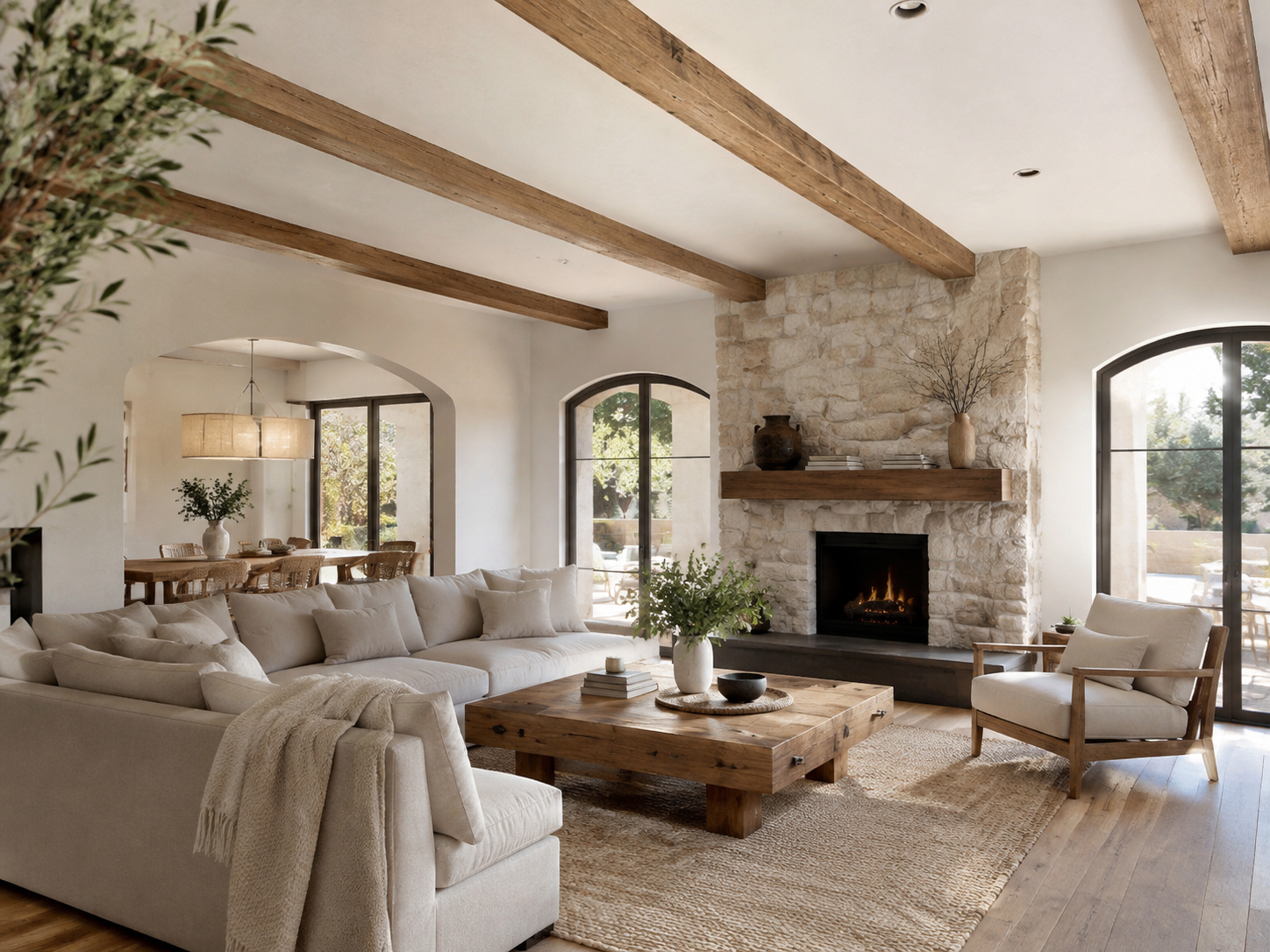
When Does China Sourcing Make Sense?
It is particularly worth considering when:
You have multiple product categories.
Instead of arranging separate sourcing and shipping processes for furniture, tiles, lighting, and bathroom products, you can coordinate them through one China-based procurement process.
You need customized products.
Many Chinese manufacturers can adjust dimensions, materials, colors, finishes, and product configurations according to project requirements.
You want to compare different supplier levels.
You can evaluate different factories and showrooms before deciding where to place your orders. This is useful when you are not sure whether a low quotation represents good value.
You have sufficient time to plan production and shipping.
Customized furniture, cabinets, doors, and other products may require design confirmation and manufacturing time before they are ready to ship.
On the other hand, buying a single inexpensive product or something you need urgently may not justify international sourcing.
The right decision should be based on the complete landed cost, not simply the factory quotation.
Compare the Total Cost, Not Just the Factory Price
When calculating the cost of sourcing from China, remember to consider:
| Cost Item | What to Consider |
|---|---|
| Product cost | Factory quotation and confirmed specifications |
| Customization | Special materials, finishes, dimensions, and designs |
| Domestic transportation | Delivery from suppliers to the warehouse or loading location |
| Packaging | Export packaging and additional protection |
| Inspection | Quality inspection or third-party testing where required |
| Consolidation | Warehouse handling and coordination |
| International freight | Sea, air, rail, or other suitable transportation |
| Import costs | Customs clearance, duties, taxes, and applicable fees |
| Local installation | Unloading, installation, adjustments, and local labour |
Some products may be significantly more economical to source from China, while others may be better purchased locally once transportation and installation costs are included.
The goal is to find the most suitable purchasing arrangement for the whole project, not to import everything simply because it is available in China.
2. What Can You Source from China for a Villa Renovation?
One advantage of working with China’s manufacturing supply chain is the variety of product categories available.
However, different products require different supplier capabilities and technical checks. A furniture factory, for example, may not be the right place to source specialized lighting or customized stone products.
Here are the main categories commonly considered for villa projects.
Furniture and Home Furnishings
Furniture is one of the largest categories in many villa sourcing projects.
Products may include:
- Sofas and armchairs
- Beds and bedside tables
- Dining tables and chairs
- Coffee tables and side tables
- TV cabinets and storage furniture
- Study and office furniture
- Outdoor furniture
- Custom-made furniture
When comparing furniture suppliers, do not focus only on the appearance of the showroom models.
Pay attention to the frame construction, upholstery, foam, fabrics, leather, hardware, finishing, dimensions, and packaging.
Two sofas may look almost identical in photographs but have very different construction and material quality.
For custom furniture, physical samples and clear material specifications are especially useful.

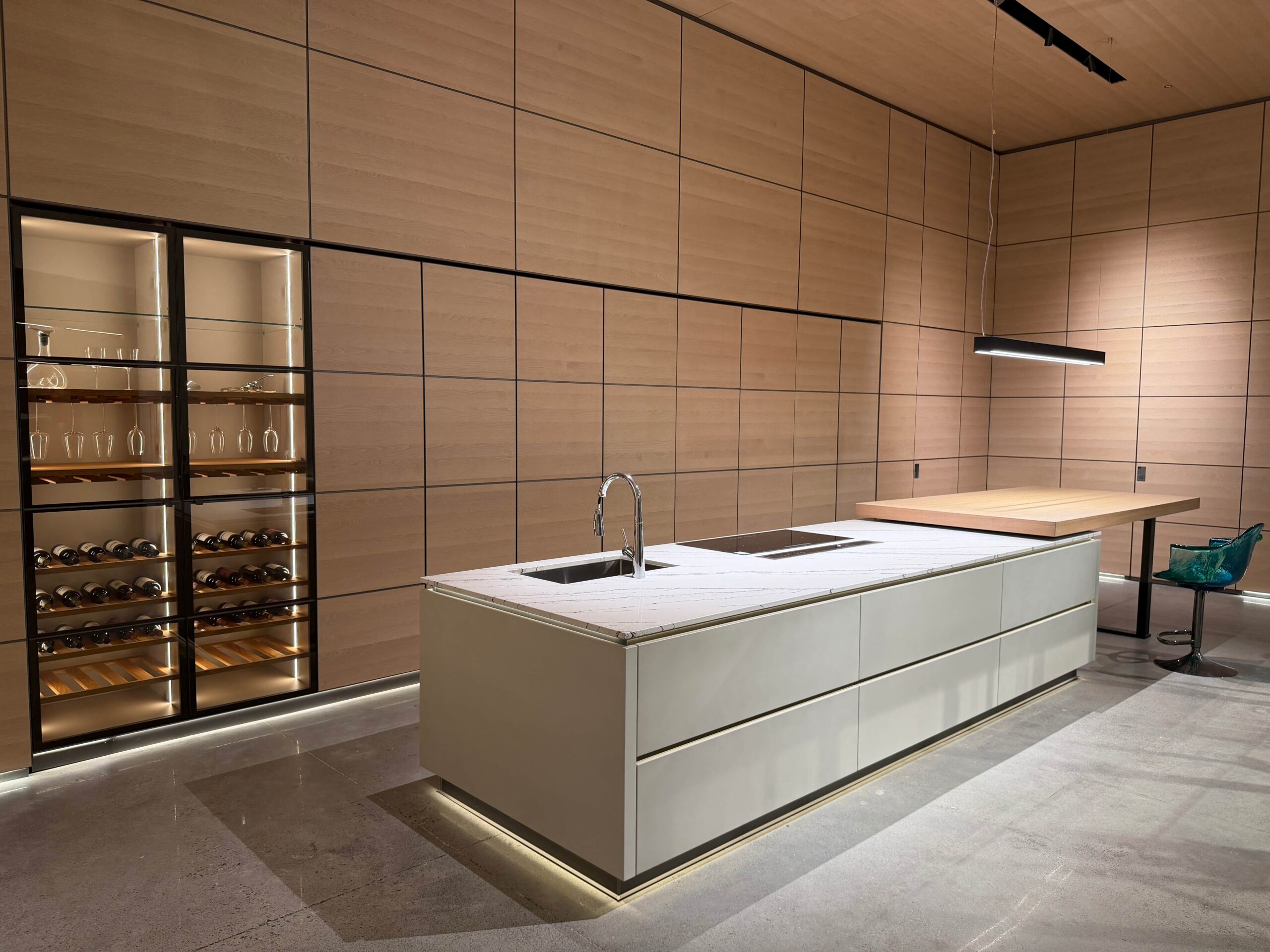
Kitchen Cabinets, Wardrobes, and Built-In Furniture
Cabinetry requires more detailed coordination than many standard furniture purchases.
A villa may need:
- Kitchen cabinets
- Kitchen islands
- Walk-in wardrobes
- Bedroom wardrobes
- Bathroom vanities
- Laundry cabinets
- Storage cabinets
- Built-in TV units
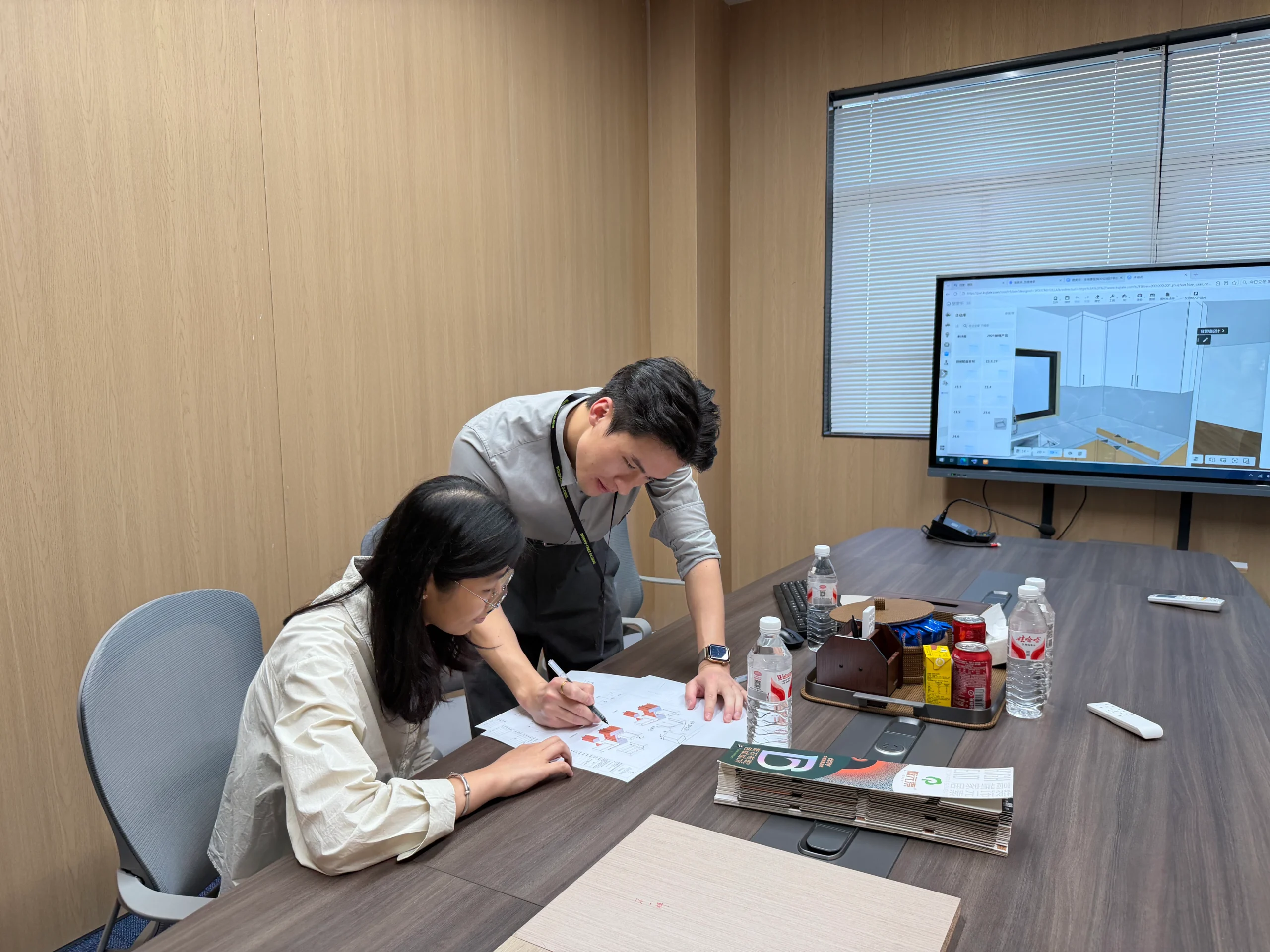
The biggest risk is often not the cabinet factory itself, but incomplete design information.
Before production, buyers should confirm:
- Final dimensions and site measurements
- Cabinet layout and drawings
- Board and surface materials
- Door styles and finishes
- Hinges, drawer systems, and hardware
- Appliance dimensions and openings
- Countertop and sink positions
- Plumbing and electrical requirements
- Packaging and installation details
For a more detailed explanation, see our guide: How to Source Custom Cabinets from China for Villa Renovation Projects.
Tiles, Flooring, and Surface Materials
Surface materials influence the overall appearance of a villa.
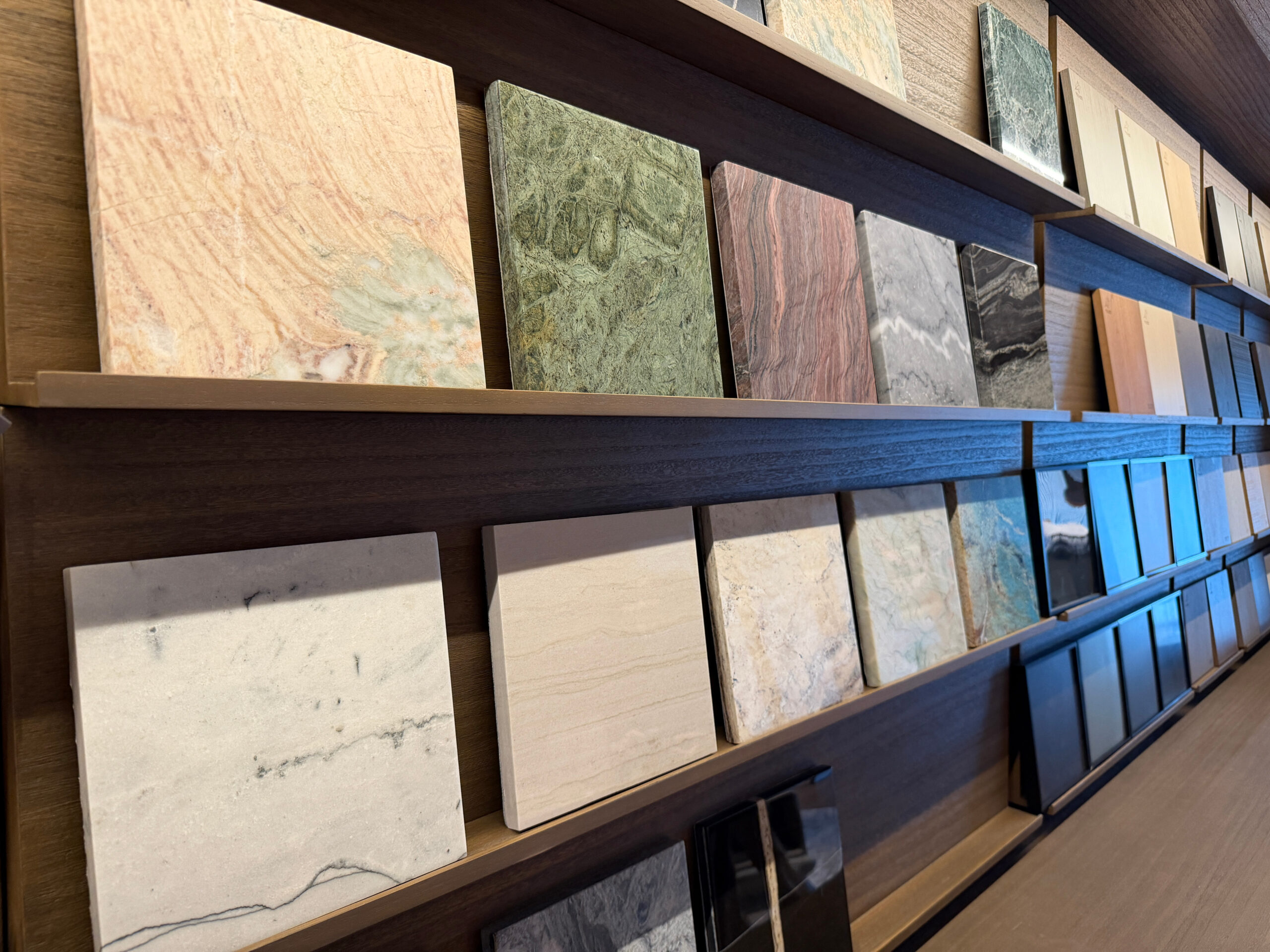
Common sourcing categories include:
- Porcelain and ceramic tiles
- Marble-look tiles
- Natural stone
- Sintered stone slabs
- Mosaic tiles
- Engineered flooring
- Decorative wall panels
- Stair and other surface materials
For these products, confirm dimensions, thickness, finish, color, batch consistency, intended application, and required technical performance.
For example, a tile selected for a bathroom floor may need different surface characteristics from one intended for a decorative living-room wall.
It is also important to calculate quantities carefully. The order should account for the actual installation area, cutting requirements, and reasonable wastage.
Doors and Windows
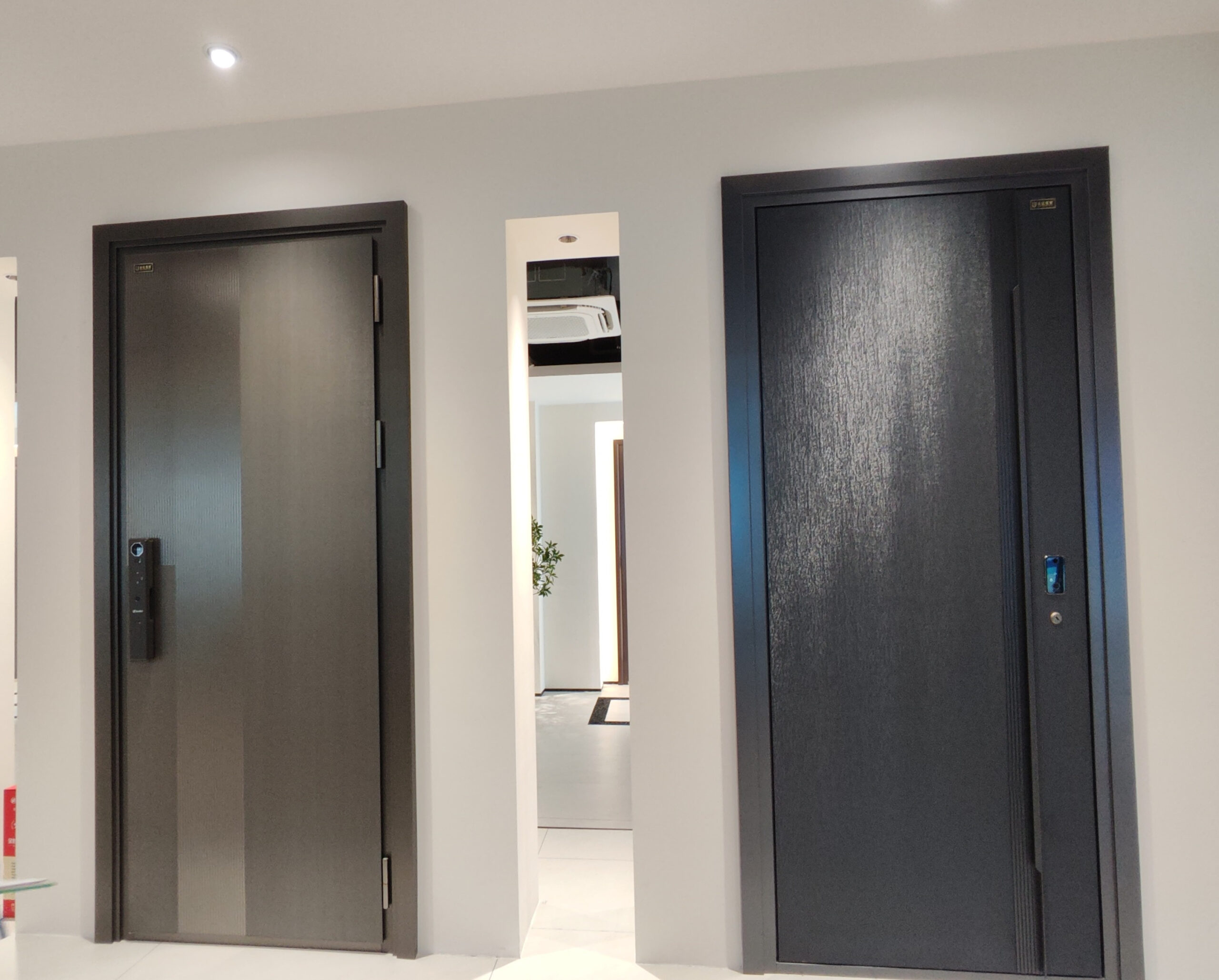
Depending on the project, Chinese suppliers can provide:
- Interior doors
- Exterior doors
- Wooden doors
- Aluminum doors
- Aluminum windows
- Sliding doors
- Hardware and accessories
Doors and windows need particular attention because incorrect measurements can affect installation.
Confirm the opening dimensions, wall thickness, frame configuration, glass specifications, hardware, opening direction, and installation method.
Your local architect, contractor, or installer should also verify applicable building and performance requirements before production.
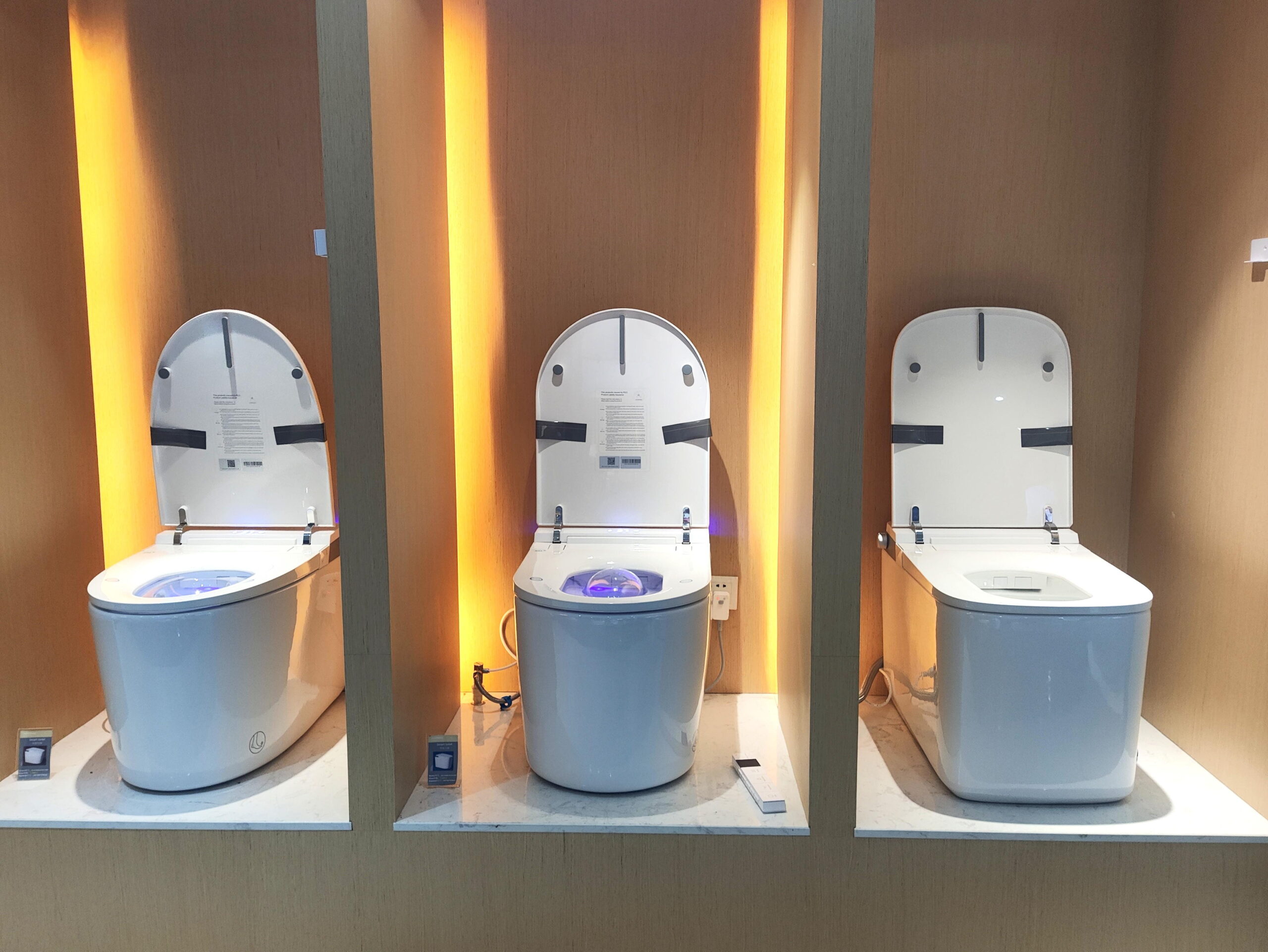
Bathroom Products
Bathroom products may include:
- Toilets and smart toilets
- Basins
- Bathroom vanities
- Faucets and mixers
- Shower systems
- Bathtubs
- Shower enclosures
- Bathroom accessories
These products need to match the property’s plumbing, drainage, water pressure, dimensions, and installation arrangements.
For electrical bathroom products, destination-market electrical requirements should also be checked.
Lighting and Electrical Products
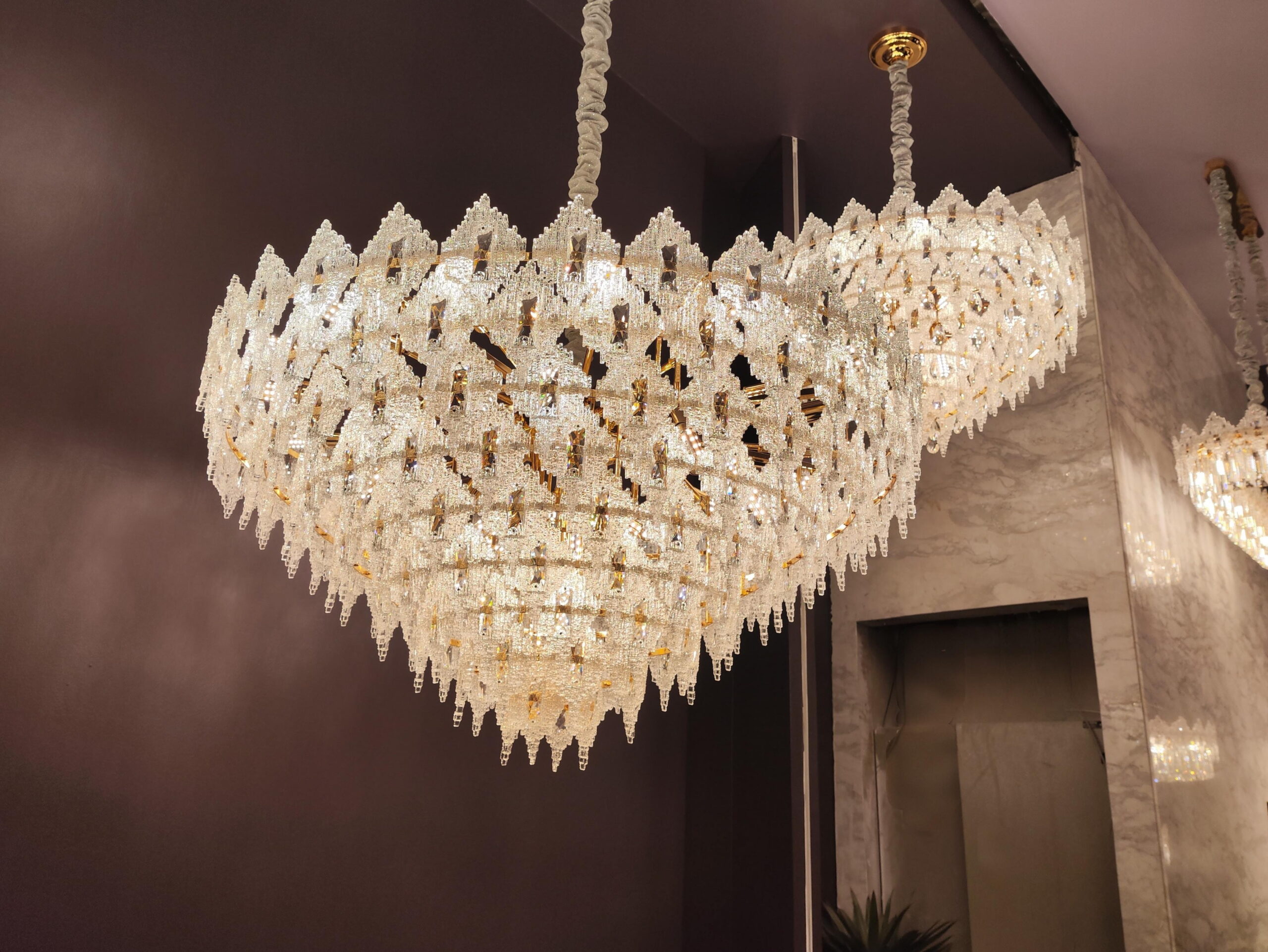
Lighting is both a functional and decorative category.
Products may include:
- Chandeliers
- Pendant lights
- Ceiling lights
- Wall lamps
- Downlights
- Outdoor lighting
- Customized lighting fixtures
- Smart lighting products
For electrical products, confirm voltage, frequency, drivers, dimming compatibility, control systems, plugs, and applicable destination-market certifications.
Do not assume that a supplier’s previous export experience automatically means every product meets your country’s requirements.
Outdoor Products
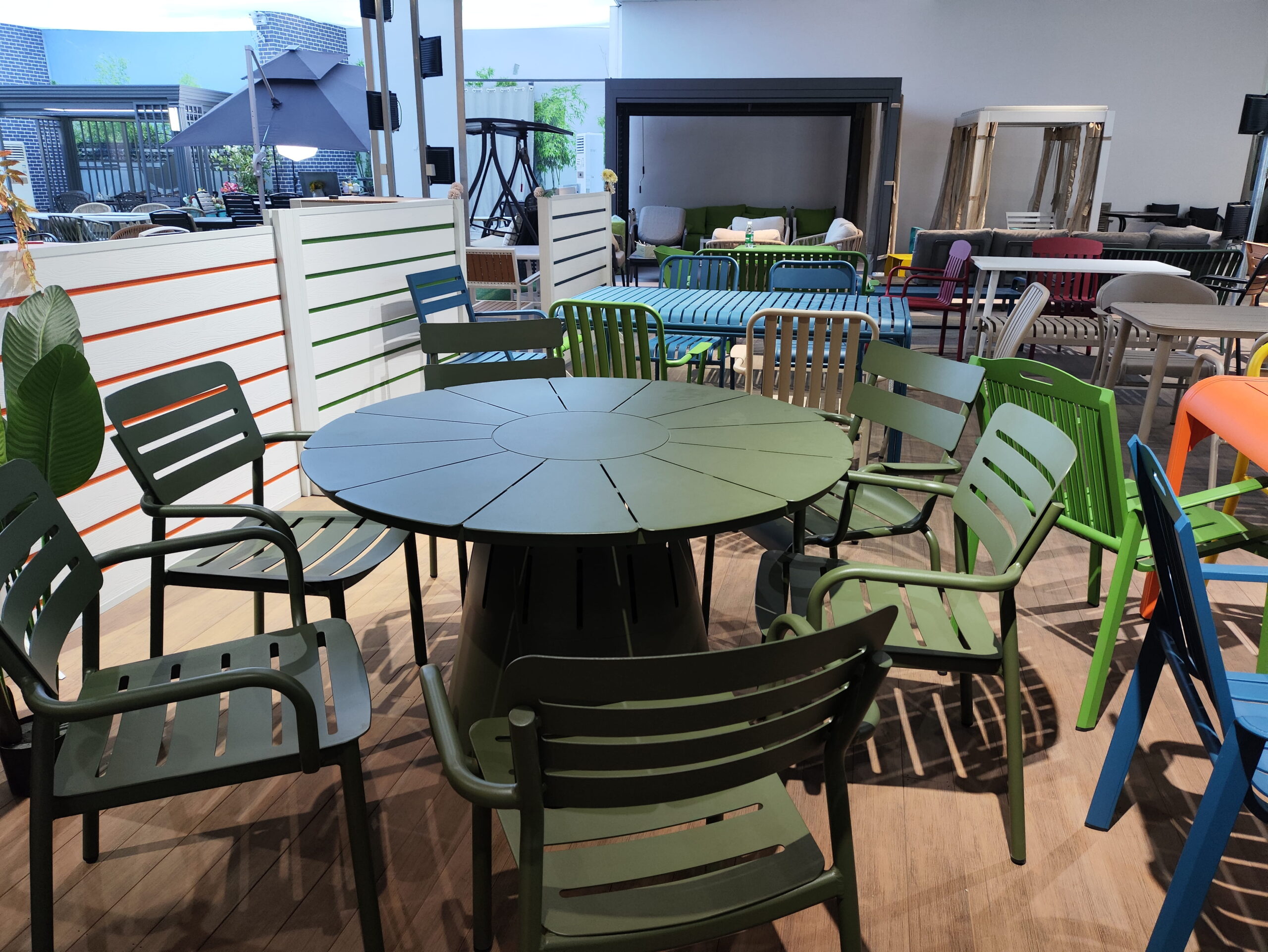
Outdoor areas may require:
- Garden furniture
- Outdoor dining tables and chairs
- Lounge seating
- Outdoor kitchens
- Pergolas
- Decorative products
- Garden lighting
Materials and construction should suit the property’s climate and intended use.
For example, outdoor furniture in a coastal environment may need greater attention to corrosion resistance, while products exposed to strong sunlight may require suitable UV resistance.
3. Prepare Your Villa Project Before Contacting Suppliers
This is one of the most important stages, and it is often underestimated.
Many buyers start by sending a few photographs to suppliers and asking for prices. That may work for standard products, but it is rarely enough for a complete villa renovation.
The more project information you prepare, the easier it becomes to identify suitable suppliers and obtain meaningful quotations.
(1) Project Information
Start with the basic details:
- Project country and city
- New villa or renovation
- Total property size
- Number of floors and rooms
- Current construction or renovation stage
- Expected completion date
- Target purchasing budget
These details help establish the project’s scale and priorities.
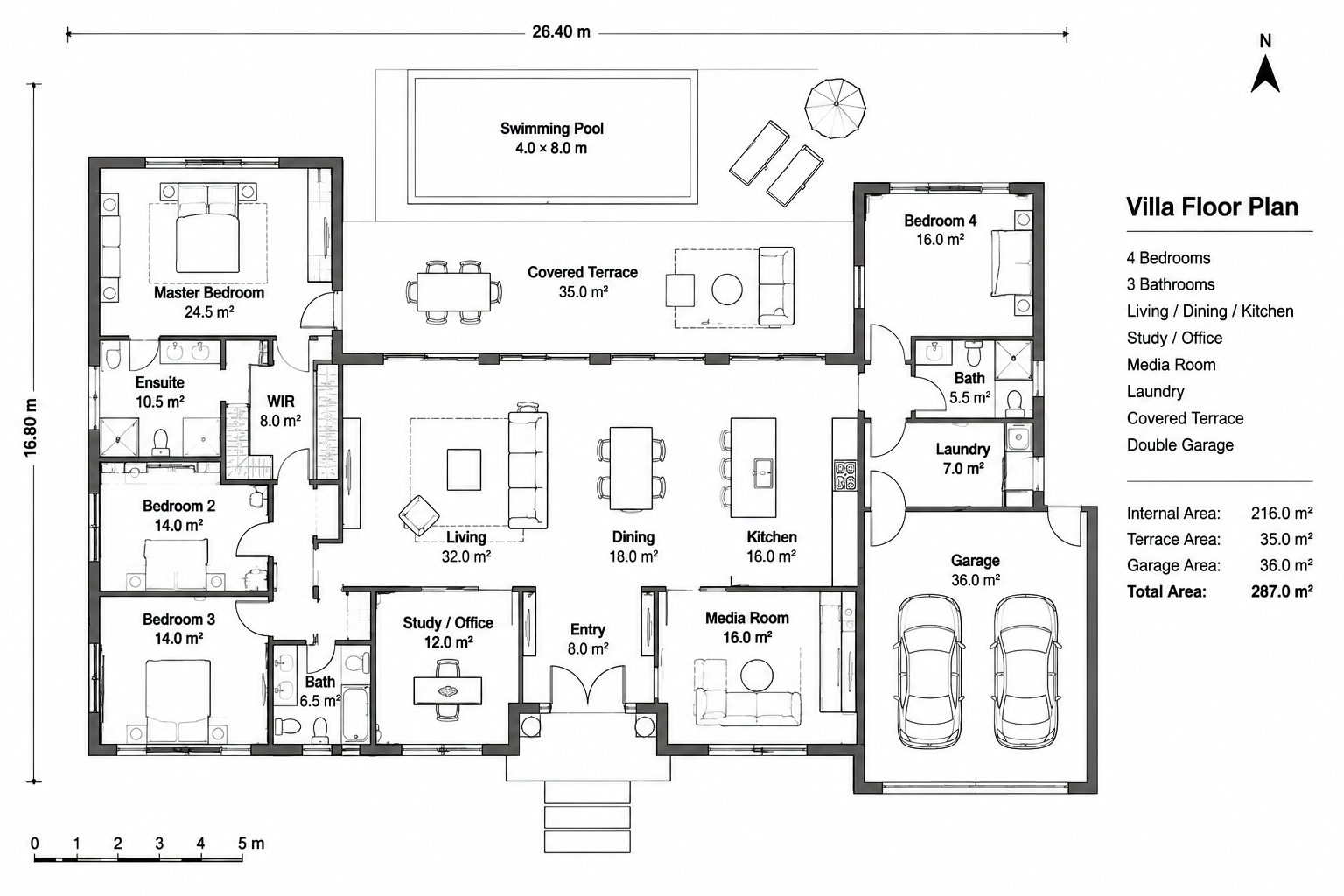
(2) Floor Plans and Technical Drawings
If available, prepare:
- Architectural floor plans
- Room layouts
- Kitchen drawings
- Bathroom layouts
- Door and window schedules
- Electrical and lighting plans
- Cabinet drawings
- Elevations and relevant construction details
Not every product needs final drawings at the beginning.
However, customized products such as cabinets, wardrobes, doors, and windows should not enter final production until their relevant dimensions and technical details have been confirmed.
(3) Product List or BOQ
A purchasing list or Bill of Quantities (BOQ) is extremely useful.
It should ideally include:
| Information | Example |
|---|---|
| Product | Dining chair |
| Reference image | Product photo or design reference |
| Quantity | 12 pieces |
| Dimensions | Width, depth, height |
| Material | Solid wood, metal, fabric, etc. |
| Colour | Selected colour or reference |
| Customization | Special requirements |
| Budget | Target price or category budget |
| Priority | High, medium, or low |
If you do not have a complete list, start with the products you already know you need.
You can develop the remaining details during the planning process.
For a more detailed preparation checklist, see How to Buy Villa Building Materials from China: What Overseas Buyers Should Prepare.
(4) Reference Images and Design Style
Reference images help suppliers understand your expectations.
They may include:
- Interior design renderings
- Furniture references
- Material samples
- Tile and flooring references
- Lighting designs
- Cabinet styles
- Bathroom concepts
- Outdoor area designs
However, a reference image is not a complete technical specification.
A photograph can show the general appearance of a product, but the actual materials, dimensions, finishes, and construction details still need to be confirmed.
(5) Budget and Quality Expectations
It is helpful to divide your budget by product category.
For example, you may want to invest more in kitchen cabinets and living-room furniture while selecting more economical options for certain decorative products.
There is no need to choose the highest-priced supplier for every item.
The objective is to find the right balance between product quality, design, durability, and overall project cost.
4. How to Find and Compare Reliable Chinese Suppliers
Finding suppliers is relatively easy. Finding suppliers that are genuinely suitable for your project is a different matter.
A supplier may have attractive photographs, a large online catalogue, and a competitive quotation but still lack the manufacturing capability or quality level you need.
We recommend comparing suppliers across several areas.
Check Their Actual Business and Production Capability
Depending on the project, consider:
- Company registration and business scope
- Whether the supplier is a manufacturer or trading company
- Factory location and operating condition
- Relevant production equipment
- Production capacity
- Experience with similar products
- Export experience
- Quality-control procedures
- Communication and project-management ability
A trading company is not automatically a bad choice, just as a manufacturer is not automatically a good one.
The important question is whether the supplier can meet your requirements and take responsibility for the order.
Compare the Same Product Specifications
When comparing quotations, make sure the suppliers are quoting comparable products.
For example, a kitchen cabinet quotation may differ because of:
- Board material
- Thickness
- Surface finish
- Hardware brand
- Drawer systems
- Door construction
- Countertop material
- Accessories
- Packaging
If these details are different, comparing only the final prices can lead to the wrong decision.
You Can Use Your Own Suppliers
You do not have to use only suppliers recommended by a sourcing company.
Some clients have already found factories through Alibaba, Google, exhibitions, or personal recommendations before contacting us.
We can work with client-selected suppliers as well as suppliers identified through our own network.
The important thing is to evaluate all options objectively.
Real Example: An American Luxury Villa Builder
One of our US clients specializes in luxury villa construction and renovation.
Before contacting us, the client had already researched Chinese factories, collected quotations, reviewed product catalogues, and identified several suppliers to visit.
The project involved approximately USD 200,000 in product purchases, covering furniture, lighting, kitchen cabinets, wardrobes, tiles, wall panels, doors, and customized metal products.
The original sourcing trip was planned for around five days but was extended to seven days to allow more time for supplier comparison and decision-making.
We evaluated both the client’s existing suppliers and additional suppliers recommended by our team.
The client was not required to abandon their own supplier choices.
The project then moved into production follow-up. At the stage documented in our case study, production coordination was still ongoing, so it would be incorrect to describe the project as fully delivered.
Read the complete case: 🔗How a US Luxury Villa Builder Sourced Custom Interior Products from China.
This is an important point for builders: a sourcing partner should help you make better purchasing decisions, not restrict your choices to a particular supplier network.

5. Why Visiting Factories in China Can Make a Difference
Online research is useful for identifying potential suppliers, but some product differences are difficult to evaluate through photographs.
During a factory or showroom visit, buyers can examine materials, workmanship, finishes, product construction, and actual production conditions.
This can be especially valuable for:
- Custom furniture
- Kitchen cabinets
- Wardrobes
- Tiles and stone
- Lighting
- Customized interior products
Real Example: An Australian Villa Sourcing Trip
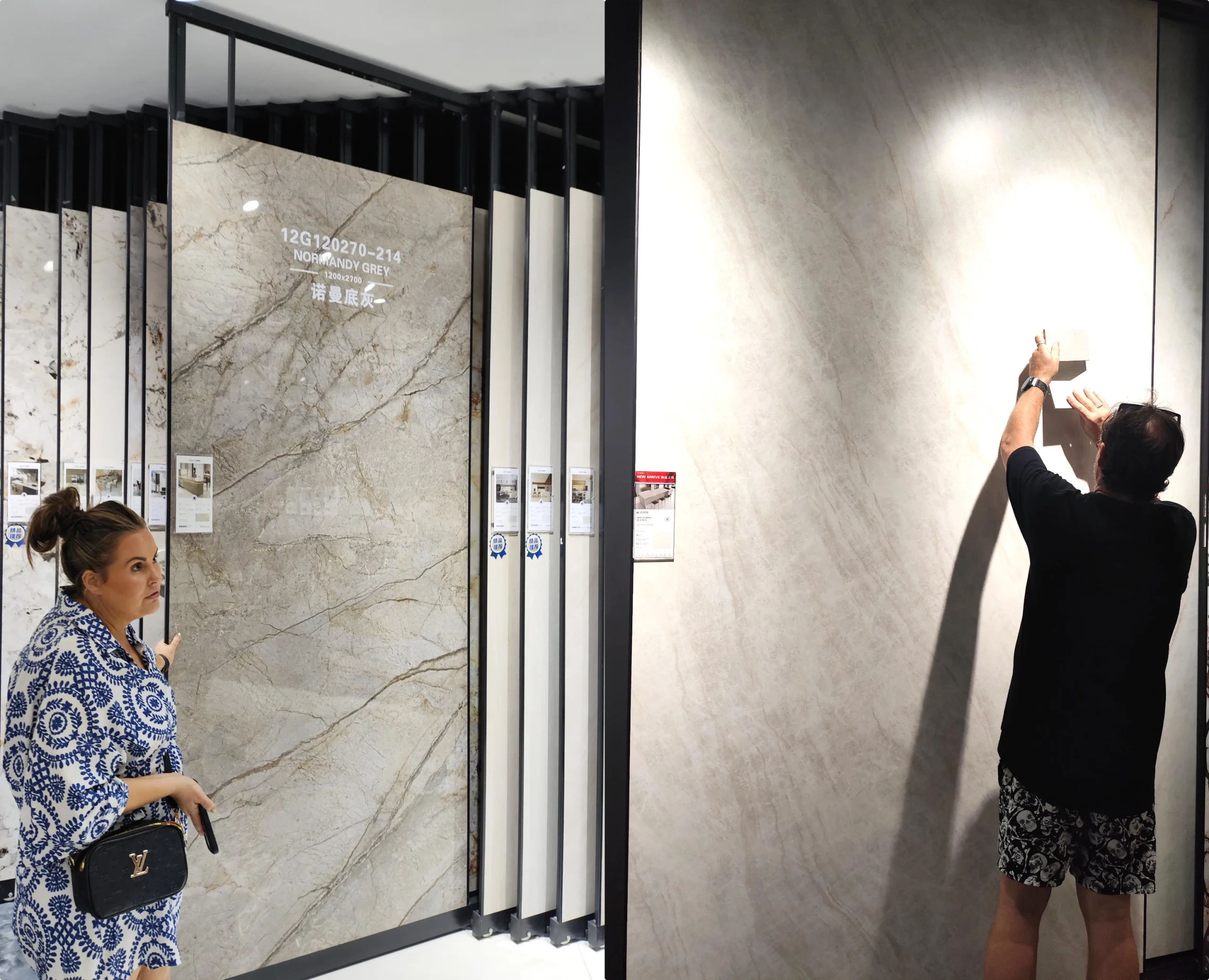
We recently supported an Australian couple during a five-day sourcing trip for their villa project.
They had already identified some cabinet suppliers before arriving in China.
During the first cabinet supplier visit, we observed several workmanship issues, including glue overflow, visible gaps between cabinet components, and paint or finishing problems.
The supplier’s showroom and overall presentation were also relatively limited.
We then arranged a visit to an alternative cabinet factory.
The second supplier offered a larger showroom, more complete kitchen displays, more design options, and visibly better workmanship.
For the particular cabinet options compared, the price difference was approximately AUD 1,000+.
This gave the clients a clearer basis for deciding whether the improvement in quality justified the additional cost.
The trip also covered tiles, sintered stone, wall panels, mosaics, furniture, lighting, and a customized aquarium.
The five-day sourcing visit was completed, while detailed cabinet design confirmation and subsequent production work continued afterward.
Read the case study:🔗 5-Day China Sourcing Trip for an Australian Villa Project.
The lesson is simple: sometimes a small price difference can represent a meaningful difference in workmanship. You need to see what you are comparing before making that decision.
6. Where Should You Go in China for Villa Sourcing?
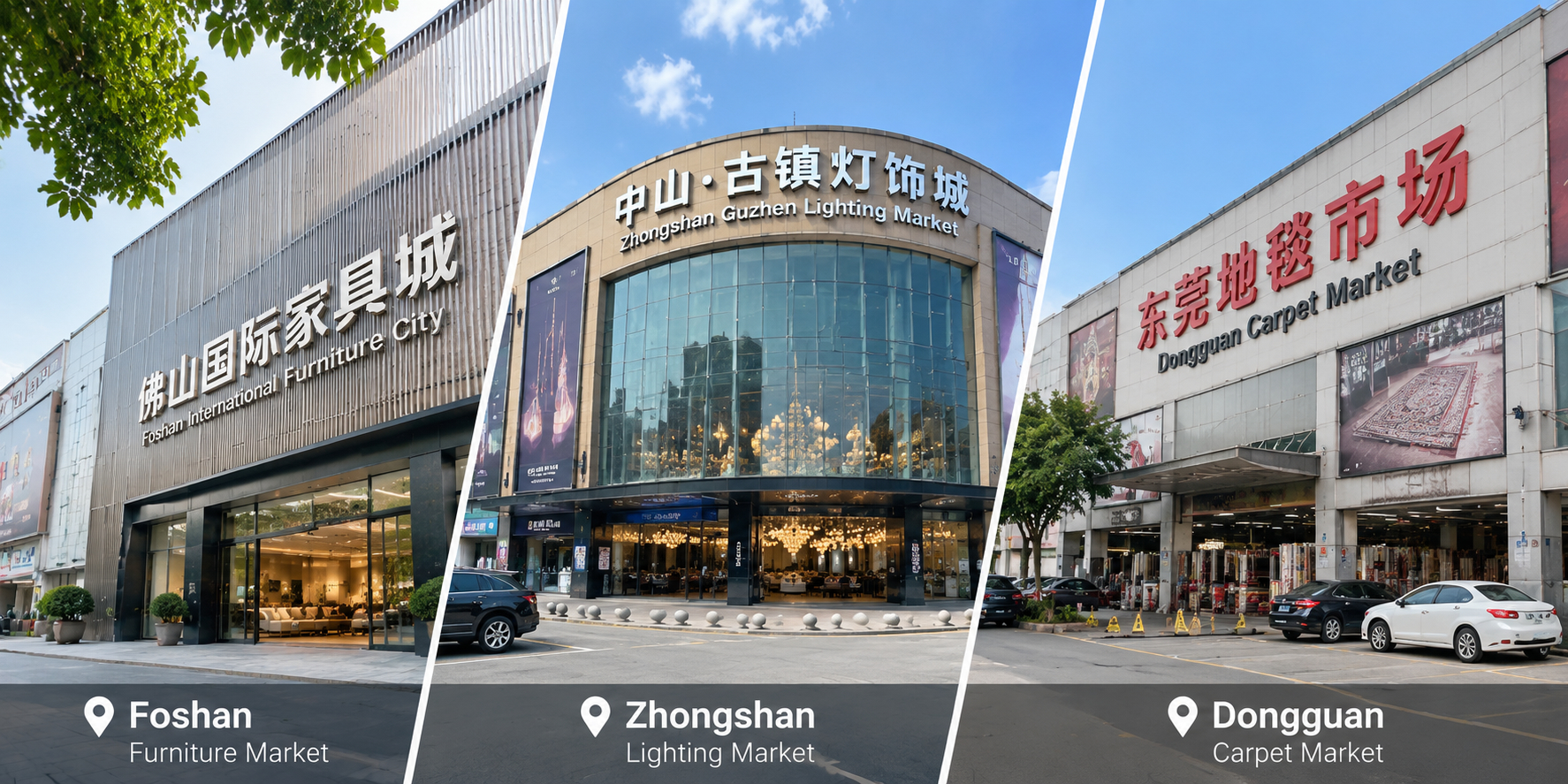
China has different manufacturing and sourcing clusters. It is usually more efficient to select locations according to product categories rather than visit cities randomly.
For villa projects in Guangdong, several areas are particularly relevant.
| Location | Main Sourcing Categories |
|---|---|
| Foshan | Furniture, tiles, bathroom products, and building materials |
| Zhongshan | Decorative lighting, residential lighting, and customized lighting |
| Dongguan | Furniture, carpets, and customized interior products |
| Guangzhou | Project coordination and access to surrounding sourcing areas |
These are practical examples, not exclusive sourcing locations. Suitable suppliers may also be found in other provinces depending on the product.
Why Foshan Is Important for Villa Buyers
Foshan is one of the main locations we use for residential sourcing projects.
It offers access to a wide range of furniture, tiles, sanitary ware, and other interior products.
Buyers can compare different furniture and material levels, visit showrooms, and arrange factory visits when more detailed customization is required.
Why Zhongshan Is Relevant for Lighting
Zhongshan is particularly useful when sourcing residential and decorative lighting.
It offers access to different lighting styles, manufacturers, and suppliers, including those handling customized products.
For international projects, technical requirements and destination-market compliance must be considered alongside design and price.
Why Dongguan Can Be Useful
Depending on the project, Dongguan can provide access to furniture manufacturers and customized interior products.
For example, in our completed French château renovation project, Dongguan was included in the sourcing itinerary for furniture, carpets, and customized interior products.
The correct sourcing route depends on what you need to buy.
7. How to Plan an Efficient China Sourcing Trip
A sourcing trip should be organized before you arrive.
Simply visiting as many showrooms as possible does not necessarily lead to better purchasing decisions.
The more useful approach is to prioritize the products that require physical evaluation, customization discussions, or supplier comparison.
For villa and renovation projects, a focused sourcing visit commonly takes around four to five days in our experience. Larger projects or those requiring more detailed comparisons may need longer.
An illustrative five-day schedule could look like this:
| Day | Main Focus | Key Activities |
|---|---|---|
| Day 1 | Cabinets and wardrobes | Factory visits, materials, hardware, design discussion |
| Day 2 | Tiles and surface materials | Tiles, sintered stone, wall panels, mosaics |
| Day 3 | Furniture | Showrooms, furniture factories, material comparison |
| Day 4 | Lighting and specialized products | Lighting, customized products, technical discussions |
| Day 5 | Final supplier review | Revisit suppliers, confirm specifications, collect samples |
The actual itinerary should depend on the client’s product list, supplier locations, and purchasing priorities.
Some products need more time than others. Cabinetry, for example, may require detailed design discussions, while standard furniture can sometimes be selected more quickly.
What Should You Decide During the Trip?
Try to complete the following where possible:
- Select preferred suppliers.
- Compare relevant product options.
- Confirm major material choices.
- Review customization possibilities.
- Record product dimensions and specifications.
- Collect physical samples.
- Discuss preliminary quotations.
- Agree on the next steps for drawings and production.
Not every customized product needs to enter production immediately.
Some items require detailed drawings, additional measurements, or remote approval after you return home.
The sourcing trip is one stage of the project, not the entire procurement process.
8. Managing Production After You Return Home
This is where many overseas buyers underestimate the amount of work involved.
After selecting products and suppliers, you still need to coordinate contracts, drawings, deposits, samples, production schedules, quality checks, and shipping.
If you are working with five or ten different suppliers, each one may have a different production schedule and communication style.
Without a clear management process, small problems can quickly become difficult to coordinate.
Confirm Specifications Before Production
Before a supplier starts manufacturing, make sure the important details are recorded.
Depending on the product, this may include:
- Final drawings
- Dimensions
- Materials
- Colors and finishes
- Hardware and accessories
- Quantity
- Packaging requirements
- Agreed production schedule
For customized products, written confirmation is particularly important.
If a design changes after production starts, the impact on cost and delivery should be discussed before the factory proceeds.
Samples Are Important, but They Do Not Eliminate Production Risk
A real example from our French château renovation project demonstrates this.
The clients wanted wooden furniture with a natural finish that would match the existing interior.
Color samples had been confirmed during the sourcing process.
However, after the full finishing process was applied to the actual furniture, the wood appeared darker than expected. Multiple finishing layers had changed its natural appearance.
The clients had already returned to France when the issue was identified.
Our team coordinated with the factory and discussed different finishing options with the clients remotely.
The final solution was to use a single layer of clear protective coating to protect the wood while minimizing the change in its natural color.
The revised approach was confirmed with the clients before completion.
This experience taught us something important: a sample should represent the actual production process as closely as possible.
For customized furniture, it is not enough to approve the raw wood or an unfinished color sample. The final coating, finishing layers, and surface treatment should also be considered.
The French château project involved a five-day sourcing trip across Guangzhou, Foshan, Zhongshan, and Dongguan. The project was completed and delivered, with a total purchasing and shipping cost of approximately USD 90,453. The goods were consolidated into one container.
For this particular shipment, the logistics route used Rotterdam in the Netherlands before inland delivery to France. This was a project-specific arrangement, not a standard recommendation for every shipment to France.
The case demonstrates why production management remains important even after the buyer has completed the product-selection stage.

9. How to Coordinate Multiple Suppliers for One Villa Project
A villa renovation often involves suppliers who have no direct working relationship with one another.
The cabinet factory may need information from the appliance supplier. The countertop supplier may need the final cabinet drawings. The lighting supplier needs to understand the electrical requirements.
These details can affect the whole project.
A practical way to manage this is to maintain one central purchasing and production schedule.
| Product Category | Supplier | Key Confirmation | Status |
|---|---|---|---|
| Kitchen cabinets | Cabinet factory | Drawings, dimensions, hardware | Design confirmation |
| Wardrobes | Furniture factory | Layout, materials, finish | Pending |
| Tiles | Tile supplier | Size, quantity, finish | Confirmed |
| Lighting | Lighting supplier | Voltage, specifications, design | Pending |
| Bathroom products | Sanitary ware supplier | Dimensions, plumbing, accessories | Pending |
| Furniture | Furniture factory | Materials, color, dimensions | Pending |
The exact status should be updated as the project progresses.
Pay Attention to Products That Depend on Each Other
Some products cannot be finalized independently.
For example:
Kitchen cabinets and appliances
The cabinet drawings should account for appliance dimensions, ventilation, electrical points, and installation space.
Cabinets and countertops
Countertop dimensions, thickness, sink positions, and support arrangements need to match the cabinet design.
Doors and finished openings
Door dimensions and frame details must be checked against the actual construction conditions.
Lighting and electrical systems
The lighting specifications should match the property’s electrical arrangements and intended controls.
A central project schedule makes these dependencies easier to identify before they cause delays.
It also gives the client one clear place to review which suppliers have completed their work and which items still need confirmation.
10. Quality Inspection Before International Shipping
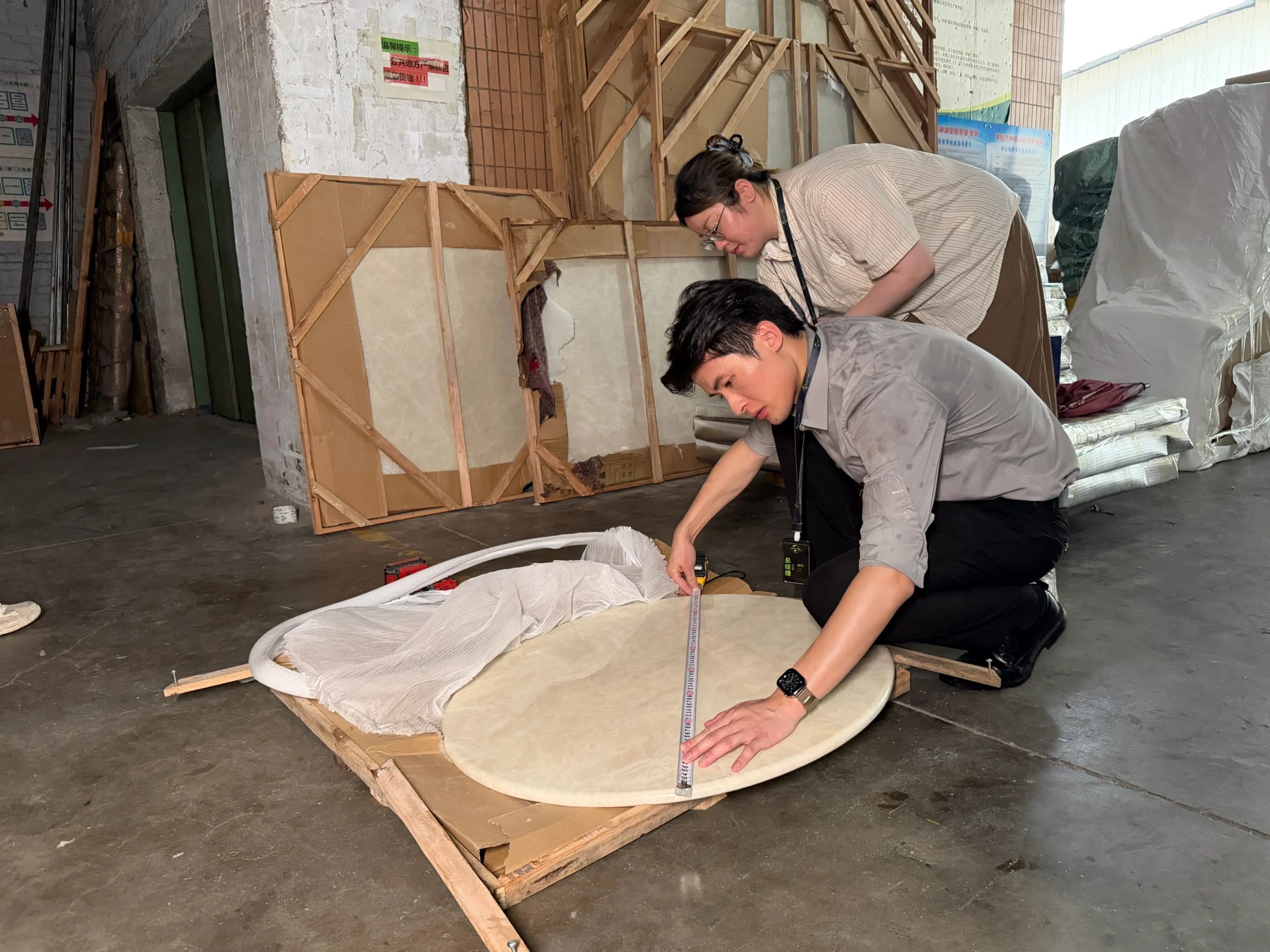
Once production is completed, products should be checked before shipment.
The inspection scope depends on the product and the client’s requirements.
For a villa project, checks may include:
- Product dimensions and specifications
- Materials and surface finishes
- Visible workmanship
- Color consistency
- Function and operation
- Quantity and accessories
- Packaging condition
- Product identification and labelling
For customized products, the approved drawings, samples, and order specifications should be used as the inspection reference.
Depending on the product and project, inspection may take place during production as well as before shipment.
This matters because some issues are easier to correct while the factory is still manufacturing the goods.
A final inspection can identify many problems, but it cannot guarantee that every possible defect will be detected or prevent every issue during transportation.
The objective is to identify and address as many relevant problems as possible before the goods leave China.
11. Warehouse Consolidation and International Shipping
When products come from multiple suppliers, shipping arrangements need to be considered early.
Sending each supplier’s goods separately may create unnecessary coordination and handling costs.
For suitable projects, products can be collected at a warehouse in China, checked, organized, and consolidated into one shipment.
Depending on the cargo volume and shipping requirements, buyers may consider:
- Full Container Load (FCL)
- Less than Container Load (LCL), or shared-container shipping
- Sea freight
- Air freight
- Rail or road transportation where suitable
- Port-to-port or door-to-door delivery
Why Consolidation Matters
Consolidation helps coordinate:
- Products from different suppliers
- Warehouse receiving and quantity checks
- Packaging and cargo identification
- Loading arrangements
- Packing lists
- Shipping documentation
For furniture, tiles, sanitary ware, lighting, and other renovation products, packaging requirements can differ significantly.
Fragile products need appropriate protection. Large furniture needs suitable packing and loading arrangements. Heavy materials require attention to cargo weight and distribution.
Choosing the Right Shipping Arrangement
There is no single shipping method suitable for every villa project.
The decision depends on:
- Total cargo volume
- Weight
- Product type
- Destination
- Budget
- Required delivery schedule
- Customs and import requirements
Shipping quotations should be updated closer to the actual shipment, when the cargo volume, packaging, and destination details are clearer.
An early freight estimate is useful for budgeting, but it should not automatically be treated as a guaranteed final shipping price.
You should also confirm who is responsible for destination customs clearance, import duties, taxes, and final delivery under the agreed shipping terms.
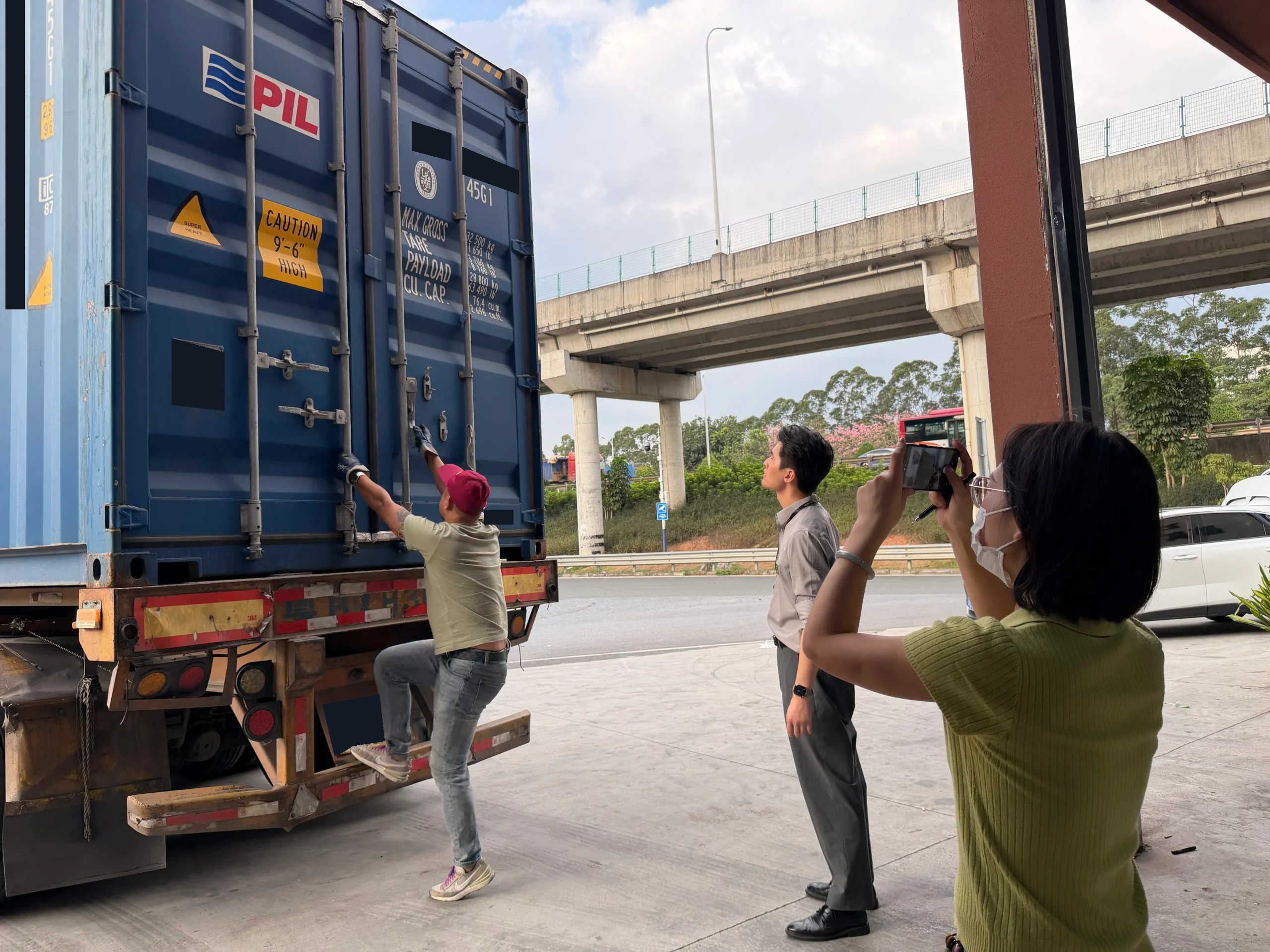
12. How Cody Sourcing Supports Villa Renovation Projects
A complex villa renovation requires more than finding several factories.
The important work is connecting the different stages of procurement so that product selection, supplier management, production, inspection, and shipping move in the same direction.
At Cody Sourcing, our role is to support overseas homeowners, builders, and contractors as their China-based sourcing and supply chain management team.
Our support can include:
1. Project Requirement Review
We review your product list, drawings, reference images, budget, and destination requirements.
2. Supplier Research and Comparison
We identify suitable suppliers and compare their product options, pricing, capabilities, and project suitability.
3. Factory Visits and Product Selection
If you visit China, we can organize your itinerary and accompany you to relevant factories and showrooms. If you cannot travel, we can provide remote sourcing support.
4. Contract and Order Coordination
We help coordinate specifications, quotations, supplier communication, and order confirmation.
5. Production Follow-Up
We communicate with suppliers, track production progress, and coordinate problems or changes.
6. Quality Inspection
We arrange or coordinate relevant inspections and provide product condition updates before shipment.
7. Consolidation and International Logistics
We coordinate warehouse receiving, consolidation, container loading, and shipping arrangements according to the project.
You can read more about our process here: How Our China Sourcing Process Works.
Our service is particularly useful when a villa project involves multiple product categories, customized manufacturing, different production schedules, and international shipping.
If you already have suppliers, you can still work with us. You do not need to replace your existing supplier relationships to receive China-side project management support.

Frequently Asked Questions About Villa Renovation Sourcing from China
1. Can I source an entire villa renovation from China?
Yes, many product categories for a villa can be sourced from China, including furniture, cabinets, wardrobes, tiles, flooring, lighting, doors, windows, sanitary ware, and outdoor products.
However, not every item needs to be imported. Some products may be more practical to purchase locally because of transportation costs, installation requirements, local regulations, or after-sales considerations.
The best approach is to evaluate each category according to the complete project cost and requirements.
2. How much does it cost to source villa renovation products from China?
There is no standard budget for every villa.
The cost depends on the property size, product categories, quantities, materials, customization, quality level, and shipping destination.
For reference, one completed French château renovation project managed by Cody Sourcing had a total purchasing and shipping cost of approximately USD 90,453.
This was a specific project and should not be treated as a standard budget for other villas.
3. Do I need to visit China to source products for my villa?
No. You can manage many sourcing activities remotely through product references, drawings, video communication, samples, and supplier coordination.
However, visiting factories and showrooms can be useful when you need to compare materials, furniture quality, finishes, and customized products in person.
A combination of an initial sourcing trip and remote production follow-up can be practical for many overseas buyers.
4. How many days do I need for a China villa sourcing trip?
For many villa and renovation projects, around four to five days can provide a useful starting point.
Larger projects involving more categories, supplier comparisons, or customized products may require seven days or longer.
The schedule should be prepared around your actual purchasing list rather than using a fixed number of factory visits.
5. Can I use suppliers I have already found myself?
Yes.
You can provide your existing supplier contacts, quotations, or product references.
A sourcing team can help communicate with those suppliers, arrange factory visits, compare alternative options, and evaluate whether the suppliers are suitable for your project.
You remain free to make the final purchasing decision.
6. How can I ensure the products meet my quality requirements?
Start with clear product specifications and approved samples.
Before production, confirm the materials, dimensions, colors, finishes, accessories, and other important details in writing.
Depending on the product, arrange production follow-up and pre-shipment inspection.
For customized products, the approved sample should reflect the actual production materials and finishing process as closely as possible.
7. Can products from different factories be shipped together?
Yes, where the product types, schedules, and shipping arrangements allow it.
Products can be collected at a China warehouse, checked, organized, and consolidated into a shared container or a full container.
The most suitable arrangement depends on cargo volume, supplier locations, packaging, and the required shipping schedule.
8. Can Cody Sourcing manage my project if I am not in China?
Yes.
We work with overseas clients who manage their renovation projects remotely.
Our team can coordinate supplier communication, production follow-up, quality inspection, warehouse consolidation, and shipping arrangements in China.
The client can review product information, approve important decisions, and receive project updates without remaining in China throughout the production period.
Planning Your Villa Renovation Sourcing Project?
A successful villa sourcing project does not begin with choosing the cheapest factory.
It begins with understanding what the property needs, identifying suitable suppliers, confirming the specifications, and planning how products from different manufacturers will be managed together.
China can offer valuable options for overseas homeowners, builders, and renovation companies, especially when the project involves multiple categories and customized products.
But the real difference comes from how the purchasing process is organized and managed.
At Cody Sourcing, we help overseas clients coordinate the complete China-side sourcing process, from supplier research and factory visits to production follow-up, quality inspection, consolidation, and international shipping.
If you are planning a villa renovation, you can share your purchasing list, drawings, or design references with our team.
We can review your requirements and discuss a practical sourcing plan based on your project.
🔗Learn More About Cody Sourcing
🔗See How We Manage Your Project
🔗Contact Cody Sourcing: WhatsApp
