


How to Source Lighting from China for Hotels, Villas and Commercial Projects

Lighting is an important part of every hotel, villa, restaurant, office and commercial project. It affects the atmosphere, safety, energy use and final presentation of the space.
For overseas buyers, sourcing lighting from China can provide more design options, competitive pricing and strong customization ability. China has a mature lighting supply chain, especially for decorative lighting, LED lighting, hotel lighting, outdoor lighting and commercial lighting.
However, buying lighting from China is not only about finding a supplier with good-looking products. Buyers also need to confirm specifications, voltage, installation method, certification requirements, packaging, quality inspection and shipping details.
This guide explains how to source lighting from China for hotels, villas and commercial projects more safely and efficiently.

Why Source Lighting from China?
China is one of the major manufacturing bases for lighting products. Overseas buyers can find many lighting categories, design styles and price levels in China.
Common advantages include:
- Wide product selection
- Competitive factory pricing
- Customization options
- Mature LED lighting supply chain
- Strong decorative lighting production
- Suitable options for hotels, villas and commercial spaces
- Ability to source lighting together with furniture, tiles, doors, windows and sanitary ware
For project buyers, China is not only useful for buying individual lighting products. It is also suitable for sourcing lighting as part of a complete building materials and renovation package.
What Types of Lighting Can You Source from China?
Different projects require different lighting solutions. Before contacting suppliers, buyers should clearly understand what type of lighting they need.
Common lighting categories include:
- Chandeliers
- Pendant lights
- Ceiling lights
- Wall lights
- Track lights
- Downlights
- Spotlights
- LED strip lights
- Outdoor lights
- Garden lights
- Hotel room lighting
- Restaurant lighting
- Commercial lighting
- Office lighting
- Landscape lighting
For hotels and villas, decorative lighting is often important for design and atmosphere. For commercial projects, buyers may focus more on brightness, energy efficiency, durability and installation requirements.

1. Prepare Your Lighting Plan or Reference Photos
Before sourcing lighting from China, buyers should prepare clear project information.
Useful materials include:
- Lighting plan
- Floor plan
- Ceiling plan
- Room layout
- Product list
- Reference photos
- Quantity requirements
- Installation location
- Budget range
- Destination country
If you do not have a complete lighting plan, reference photos can still help suppliers understand the design direction.
However, reference photos are not enough for final production. Buyers still need to confirm technical specifications before placing an order.
2. Confirm Key Lighting Specifications
Lighting products involve many technical details. A small mistake may affect installation, safety or final use.
Before placing an order, buyers should confirm:
- Size
- Material
- Finish color
- Wattage
- Voltage
- Color temperature
- Lumen output
- Beam angle
- Dimming function
- Driver type
- Installation method
- Plug type
- Indoor or outdoor use
- Waterproof rating if needed
For example, hotel lighting and villa lighting may require specific color temperature to match the design style. Outdoor lighting may need waterproof protection. Commercial lighting may need stronger brightness and better durability.
Clear specification confirmation can help reduce mistakes before production.

3. Choose the Right Lighting Supplier
China has many lighting suppliers, but not every supplier is suitable for every project.
Some suppliers focus on decorative lighting. Some focus on LED commercial lighting. Some focus on outdoor or landscape lighting. Some may only be traders instead of manufacturers.
When comparing suppliers, buyers should check:
- Main lighting category
- Factory or showroom capability
- Project experience
- Customization ability
- Export experience
- Technical support
- Quality control process
- Packaging standard
- Lead time
- Communication efficiency
For project orders, the right supplier is not always the cheapest one. It should be a supplier that matches your project quality level, technical requirements and delivery schedule.
4. Check Certification and Market Requirements
Lighting products may require different standards depending on the destination market and project type.
Buyers should check whether their local market or project requires specific certificates, such as electrical safety, energy efficiency or product compliance documents.
Common points to check include:
- Voltage compatibility
- Plug requirements
- Driver quality
- Indoor or outdoor rating
- Waterproof rating
- Fire safety requirements if applicable
- Local electrical standards
- Project-specific compliance requirements
Not every lighting product needs the same certification, and requirements may vary by country, project type and installation environment.
Before confirming an order, buyers should check local requirements with their contractor, importer or compliance consultant.
5. Confirm Samples Before Mass Production
For important lighting products, sample confirmation is very useful.
Samples can help buyers check:
- Actual size
- Material quality
- Surface finish
- Light color
- Brightness
- Installation structure
- Packaging method
- Overall appearance
For hotel, villa and commercial projects, a small difference in finish color, light color or size may affect the final design result.
If physical samples are not possible, buyers should request detailed photos, videos, product specifications and testing information before mass production.
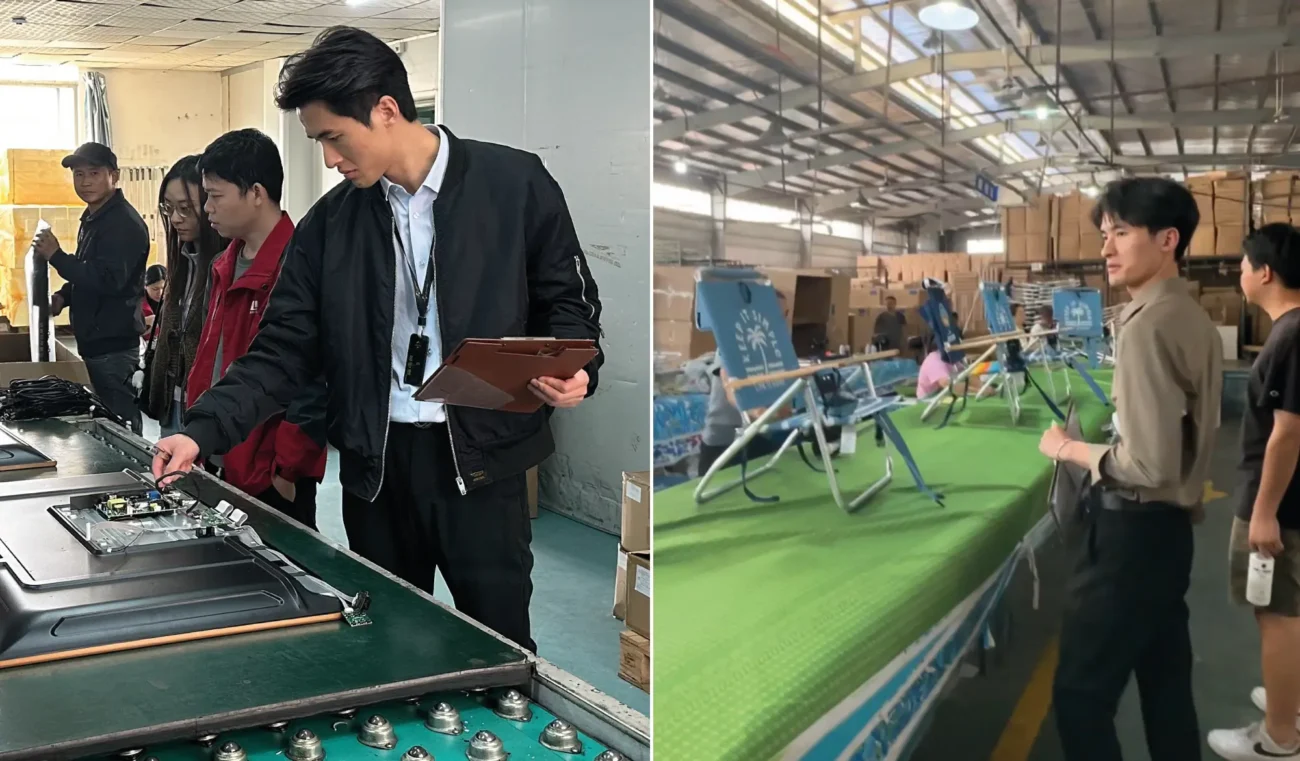
6. Inspect Lighting Before Shipping
Pre-shipment inspection is important before lighting products leave China.
Inspection may include:
- Quantity checking
- Model checking
- Appearance checking
- Size checking
- Color and finish checking
- Accessory checking
- Packaging checking
- Label checking
- Photo and video records
For lighting products, buyers should also pay attention to fragile parts, glass covers, metal finishes, wiring, drivers and installation accessories.
Inspection does not replace professional electrical testing or laboratory certification, but it can help reduce visible quality issues, wrong models and packaging problems before shipment.

7. Check Packaging and Shipping Details
Lighting products can be fragile, especially decorative lighting, glass lamps, chandeliers and outdoor fixtures.
Before shipping, buyers should confirm:
- Carton strength
- Foam protection
- Glass protection
- Accessory packaging
- Installation parts
- Label and marks
- Export packaging method
- Whether wooden crates are needed
- Whether products should be consolidated with other materials
For project buyers sourcing multiple categories, lighting can often be shipped together with furniture, sanitary ware, tiles, doors or other building materials through warehouse consolidation.
Good packaging and loading planning can reduce damage during international transportation.
8. Work with a China-Based Supply Chain Team
For simple lighting orders, buyers may communicate directly with suppliers.
But for hotels, villas and commercial projects, lighting is usually only one part of a larger procurement plan. Buyers may also need furniture, tiles, doors, windows, sanitary ware, cabinets and other renovation materials.
A China-based supply chain team can help with:
- Supplier comparison
- Specification confirmation
- Sample follow-up
- Production tracking
- Quality inspection
- Packaging checking
- Warehouse consolidation
- Container loading supervision
- Shipping coordination
The value is not only finding lighting suppliers. The real value is helping overseas buyers manage the China-side process before the goods leave China.
Common Mistakes When Buying Lighting from China
Overseas buyers should avoid these common mistakes:
- Choosing suppliers only by low price
- Not confirming voltage and wattage
- Ignoring color temperature
- Forgetting installation requirements
- Not checking waterproof rating for outdoor lights
- Not confirming certification needs
- Skipping sample confirmation
- Not checking packaging before shipment
- Forgetting spare parts or accessories
- Not arranging inspection before shipping
Most lighting problems can be reduced if specifications, supplier selection, inspection and packaging are managed properly from the beginning.
Final Thoughts
Sourcing lighting from China can be a good option for hotels, villas, restaurants, offices and commercial projects.
China offers many lighting styles, strong manufacturing capacity and competitive pricing. But successful lighting sourcing requires more than choosing beautiful designs.
Overseas buyers should confirm specifications, supplier reliability, certification needs, samples, packaging, inspection and shipping before the goods leave China.
For project buyers, lighting should be managed as part of the full supply chain, not as an isolated product.
