


Where Are Doors and Windows Made in China? 7 Key Clusters

Doors and windows made in China are not concentrated in one city. Different regions specialize in steel security doors, wooden interior doors, customized aluminum windows, high-performance windows and door hardware.
Steel security doors, wooden hotel doors, customized aluminum windows and high-performance passive windows rely on very different materials, equipment and technical capabilities. As a result, China’s door and window industry has developed into several specialized regional supply chains.
For overseas buyers, understanding these China door and window manufacturing clusters is more useful than simply searching for a generic “door and window factory.”
This guide explains the seven most important production regions, what each cluster does best and which type of buyer or project each area is most suitable for.

Doors and Windows Made in China: 7 Main Industry Clusters
| Manufacturing cluster | Main specialization | Best suited for |
|---|---|---|
| Yongkang, Zhejiang | Steel security doors, entrance doors, locks and fire doors | Apartments, villas and security-door importers |
| Jiangshan, Zhejiang | Wooden doors, engineered interior doors and project woodwork | Hotels, apartments and residential projects |
| Foshan, Guangdong | Customized aluminum doors, system windows and glass doors | Villas, hotels and high-end renovation projects |
| Linqu, Shandong | Aluminum profiles, engineering windows and large-volume production | Developers, contractors and project-window buyers |
| Anyi, Jiangxi | Standard aluminum windows, uPVC windows and value engineering | Distributors and cost-controlled projects |
| Gaobeidian, Hebei | Passive windows, triple glazing and high-performance systems | Cold climates and low-energy buildings |
| Jinli, Guangdong | Locks, hinges, closers, floor springs and window hardware | Hardware importers and complete project packages |
These doors and windows made in China come from specialized regional supply chains rather than one universal manufacturing center.
The main sourcing question should therefore not be “Which city in China makes doors and windows?”
A better question is:
Which manufacturing cluster is strongest for the exact product, performance level and project size required?
1. Yongkang: Steel Security and Entrance Doors
Yongkang in Zhejiang is one of China’s best-known production centers for steel doors, security doors and related lock systems.
The local industry developed from Yongkang’s strong metalworking and hardware base. Its supply chain includes sheet-metal forming, stamping, welding, powder coating, lock production, hinges, door frames and mass assembly.
Products commonly sourced from Yongkang include:
- steel security doors;
- armored entrance doors;
- steel apartment doors;
- stainless steel entrance doors;
- smart security doors;
- steel fire doors;
- locks and access-control hardware.
Representative companies such as Buyang and Wangli helped establish Yongkang’s reputation in the Chinese security-door industry.
However, buyers should not rely only on the brand name or exterior design. Two doors can look almost identical while using very different steel thicknesses, reinforcement structures and locking systems.
What Buyers Should Check
Compare:
- door-skin steel thickness;
- frame thickness;
- internal reinforcement;
- core or infill material;
- hinge quantity and load rating;
- lock body and cylinder;
- number of locking points;
- anti-pry structure;
- corrosion protection;
- surface coating;
- export packaging.
Yongkang is a strong starting point for steel security doors, but it is not the main cluster for premium wooden hotel doors or passive-house windows.

2. Jiangshan: Wooden and Interior Project Doors
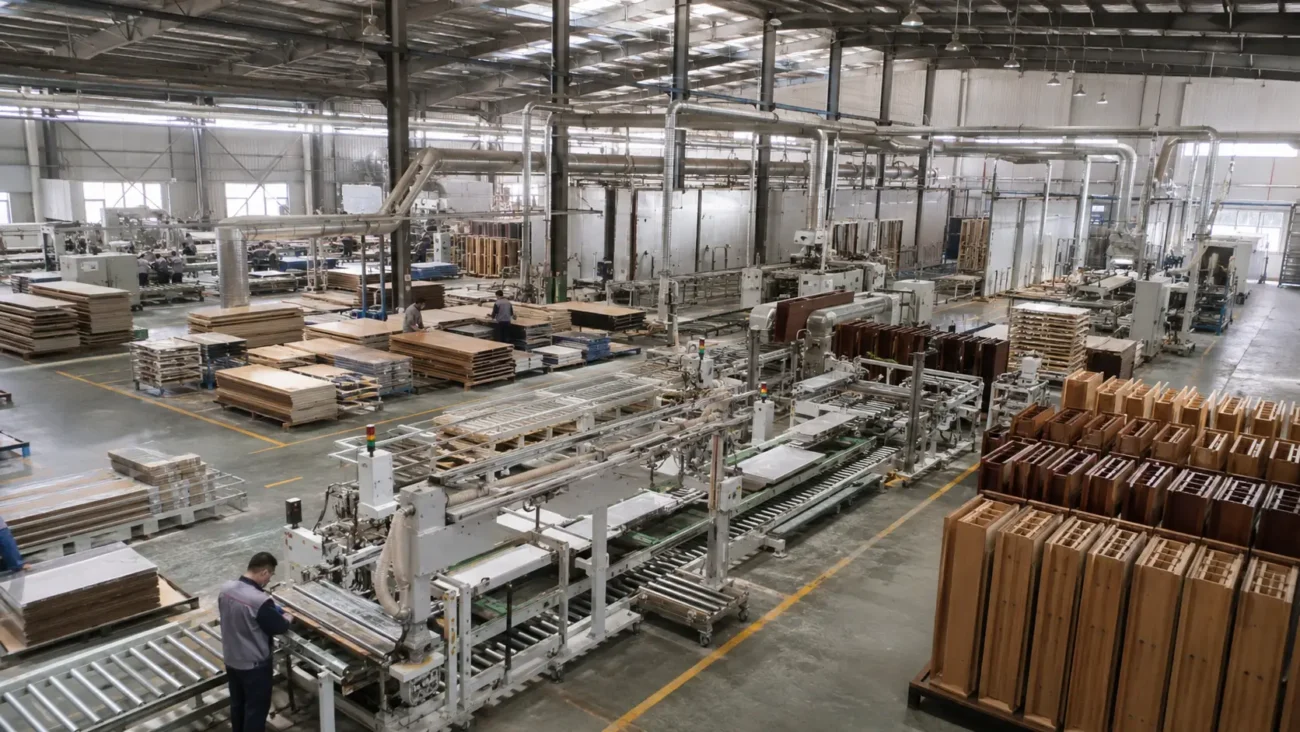
Jiangshan, also in Zhejiang, has developed a concentrated wooden-door and whole-house customization industry.
The local supply chain includes engineered door cores, MDF and plywood processing, veneer pressing, lacquer finishing, wooden frames, architraves, wall panels and other customized interior products.
Products commonly sourced from Jiangshan include:
- painted wooden doors;
- veneer doors;
- laminate and melamine doors;
- engineered wood doors;
- hotel room doors;
- apartment interior doors;
- fire-rated wooden doors;
- frames and architraves;
- coordinated wall panels and woodwork.
Jiangshan Oupai is one of the representative companies associated with the local door industry.
Why Jiangshan Matters for Project Buyers
For a hotel or apartment project, the door leaf is only one part of the order.
The complete package may also require:
- frames for different wall thicknesses;
- matching architraves;
- hotel lock preparation;
- hinges and closers;
- acoustic seals;
- fire-rated components;
- room-number labels;
- packaging by floor or room.
The most common risks are moisture content, warping, finish variation, inaccurate frame depth and incorrect lock or hinge machining.
Buyers should approve the door structure, finish sample and technical drawings before mass production.
3. Foshan: Customized Aluminum Doors and Windows
Foshan is often described as the center of China’s entire door and window industry. That description is too broad.
Foshan—especially Nanhai, Dali, Lishui and Shishan—is more accurately known for:
- customized aluminum doors and windows;
- system windows;
- thermal-break aluminum systems;
- slim-frame sliding doors;
- folding glass doors;
- pivot doors;
- aluminum-glass interior doors;
- lift-and-slide systems;
- sunrooms;
- whole-house door and window packages.
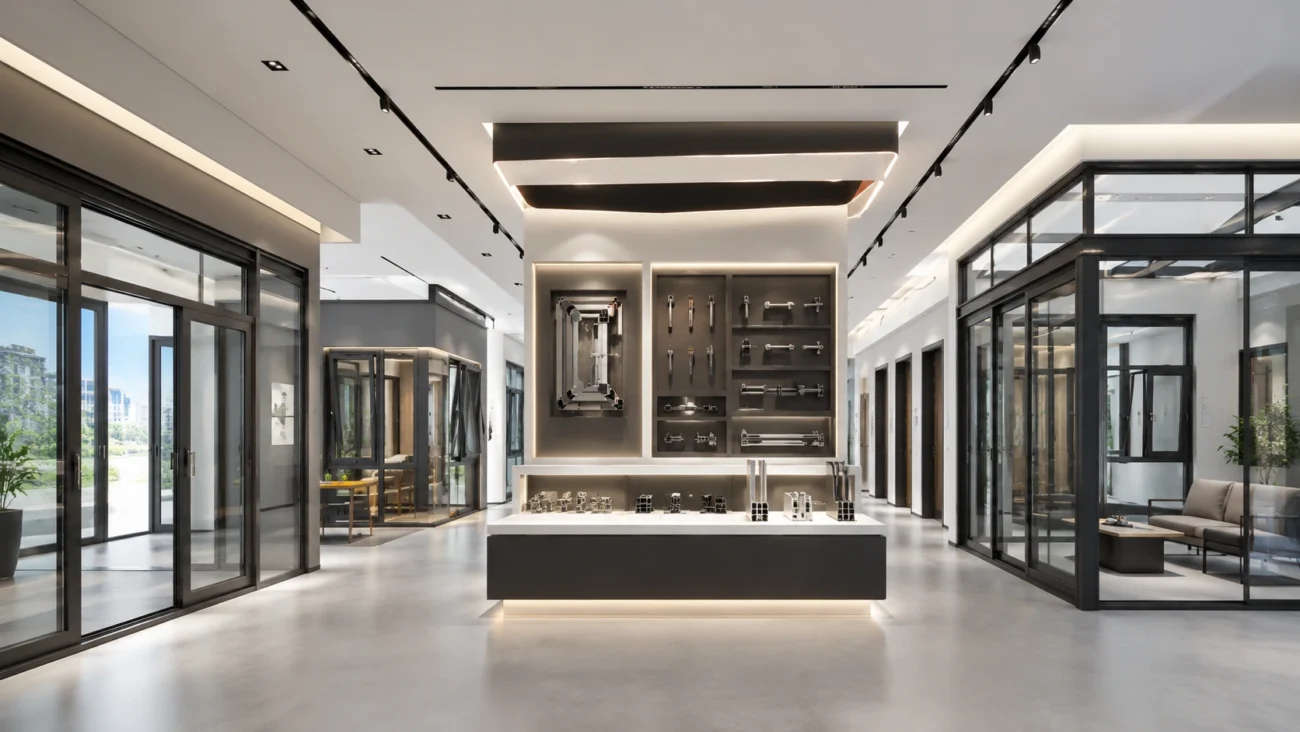
The region combines aluminum profiles, glass processing, sealing materials, hardware, manufacturing equipment and a large number of branded showrooms.
Foshan’s main advantage is not always the lowest price. Its strengths are design variety, flexible customization and the ability to coordinate doors and windows with furniture, cabinets, tiles and other renovation materials.
This makes Foshan particularly suitable for villas, hotels and design-led residential projects.
What Buyers Should Verify
A large showroom does not automatically mean that the company has strong manufacturing capabilities.
Confirm:
- the actual production factory;
- which processes are completed in-house;
- profile series and wall thickness;
- thermal-break material;
- glass structure;
- hardware brand and model;
- drainage design;
- maximum panel size;
- performance test reports;
- packaging for large glass units.
4. Linqu: Aluminum Profiles and Engineering Windows
Linqu in Shandong is another important aluminum and window-production cluster, but its market position differs from Foshan.
Linqu is stronger in:
- aluminum profile extrusion;
- die manufacturing;
- surface treatment;
- engineering window systems;
- large-volume project production;
- curtain-wall-related processing;
- technical testing.
Huajian Aluminum is a representative upstream enterprise associated with the local aluminum industry.
Buyers should distinguish between an aluminum profile manufacturer and a finished-window factory. A large extrusion company may provide the profile or system design, while another company cuts, assembles and glazes the finished windows.
Linqu is often more suitable for developers and contractors purchasing large quantities of standardized or project-based windows.
5. Anyi: Scale and Value-Engineered Windows
Anyi in Jiangxi has built a large aluminum-profile and door-window production base.
Its supply chain covers aluminum profiles, finished-window fabrication, glass, sealing materials, hardware and supporting processing.
Anyi is particularly competitive in:
- large-scale production;
- standardized aluminum windows;
- uPVC windows;
- cost-controlled configurations;
- distributor and engineering channels;
- high-volume orders.
However, large production capacity does not mean every supplier has the same quality level.
Buyers should compare:
- profile weight;
- aluminum wall thickness;
- alloy and temper;
- thermal-break configuration;
- glass specification;
- hardware brand;
- sealing structure;
- drainage design;
- test reports;
- packaging.
A low quotation may be based on thinner profiles, simpler glass, generic hardware or fewer seals. Quotations should therefore be compared using the same specification sheet.

6. Gaobeidian: Passive and High-Performance Windows
Gaobeidian in Hebei has a different role from the major cost-driven aluminum-window clusters.
It is associated with passive buildings, ultra-low-energy construction and high-performance window systems.
Products and technologies commonly found in this supply chain include:
- triple-glazed windows;
- Low-E insulated glass;
- multi-chamber thermal-break frames;
- PVC and wooden window systems;
- aluminum-wood composite windows;
- warm-edge spacers;
- airtight installation materials;
- laboratory-tested window systems.
Gaobeidian is relevant for cold-climate projects, Passive House developments and buildings requiring low U-values, strong airtightness and condensation control.
Performance Must Be Evaluated as a Complete System
A high-performance window is not defined only by its profile.
Buyers should verify:
- whole-window U-value;
- frame U-value;
- glazing configuration;
- Low-E coating;
- gas filling;
- spacer type;
- seal arrangement;
- hardware compression;
- airtightness;
- water resistance;
- installation connection.
A certificate for one tested window configuration may not automatically cover every customized size or glass option.
7. Jinli: Door and Window Hardware
Jinli in Zhaoqing, Guangdong, is not mainly a finished-door production center.
It is one of China’s important architectural and door-window hardware clusters.
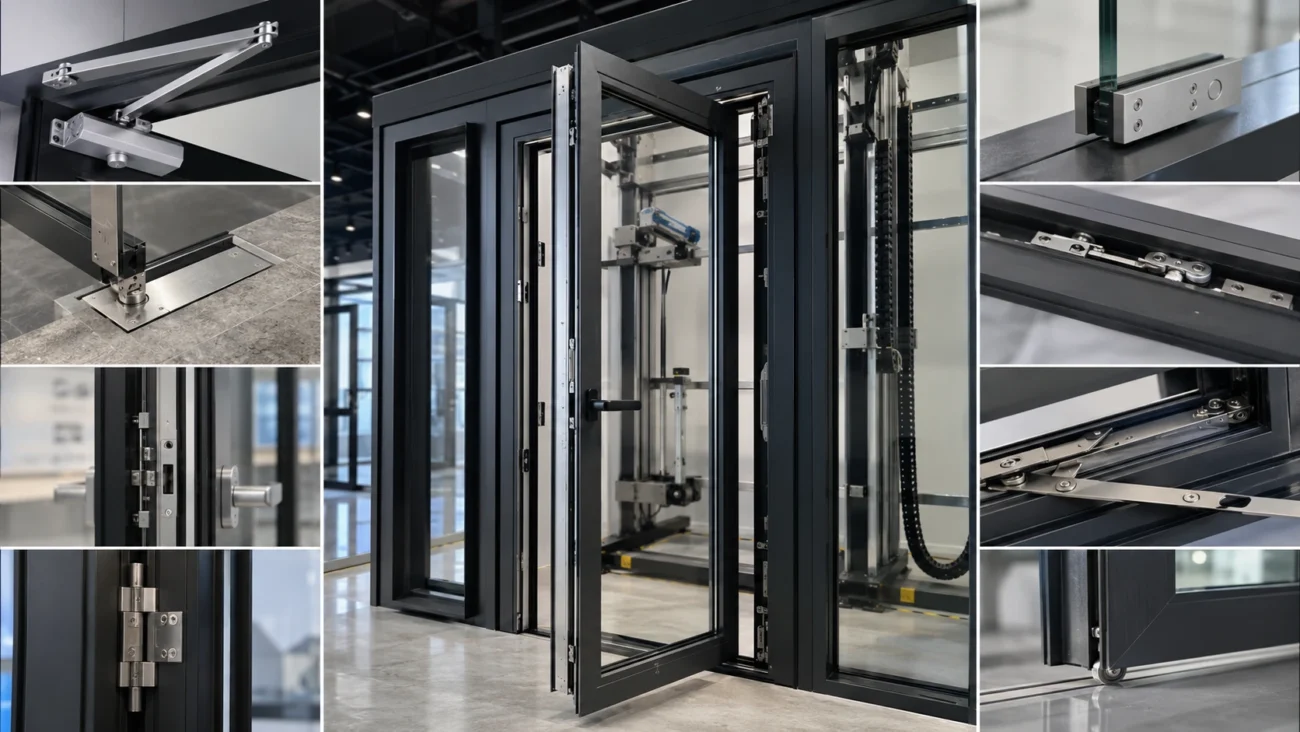
Products commonly sourced from Jinli include:
- door closers;
- floor springs;
- hinges;
- handles;
- sliding-door rollers;
- glass clamps;
- window stays;
- transmission rods;
- multipoint locks;
- other aluminum-window hardware.
Hardware must be selected according to the actual door or window size, weight, material and opening frequency.
For example, a heavy wooden hotel door requires hinges with sufficient load capacity. A large glass door requires compatible floor springs, pivots and glass fittings. Aluminum windows require locking components that fit the selected profile system.
Why China Is Competitive in the Global Door and Window Market
China’s strongest advantage is not simply low pricing.
It is the combination of specialized regional manufacturing, a complete material range and flexible configuration options.
Complete Product Range
China can supply:
- steel doors;
- wooden doors;
- fire-rated doors;
- aluminum glass doors;
- system windows;
- uPVC windows;
- passive windows;
- locks and hardware.
This allows overseas buyers to source different products for one project without expecting one factory to manufacture every category.
Flexible Customization
Many Chinese factories can customize:
- dimensions;
- colors;
- opening methods;
- glass structures;
- hardware;
- frame depths;
- lock cutouts;
- project packaging.
This is especially useful for villas, hotels and residential renovation projects with non-standard openings.
Different Cost and Performance Levels
China can provide basic standardized windows, high-end villa systems, engineering products and certified high-performance components.
The buyer can adjust the profile, glass, hardware and finish according to the project budget and destination requirements.
Coordination with Other Renovation Materials
Doors and windows can be sourced together with furniture, cabinets, tiles, lighting, sanitary ware and wall panels.
This makes it easier to coordinate colors, consolidate goods and organize container loading for complete renovation projects.
Main Risks When Buying Doors and Windows from China
The variety of factories and configurations also creates sourcing risks.
Common problems include:
- confusing profile suppliers with finished-window factories;
- assuming a famous profile brand guarantees fabrication quality;
- comparing quotations with different specifications;
- accepting certificates that do not cover the complete assembly;
- failing to confirm wall thickness and frame dimensions;
- selecting hardware that cannot support the actual door weight;
- ignoring installation requirements;
- using insufficient packaging for large glass units.
For fire-rated doors, buyers must confirm that the report covers the complete door leaf, frame, seals, hinges, lock and closer.
For windows, the factory should confirm the complete profile, glass, hardware, drainage and sealing configuration.
For wooden doors, moisture content, frame depth and finish consistency should be checked before shipment.
How to Choose the Right Manufacturing Cluster
Use the following process:
- Define the exact product category.
- Confirm the destination-country standards.
- Prepare sizes, quantities and drawings.
- Select the cluster that specializes in the required product.
- Compare complete assemblies, not only exterior appearance.
- Verify the actual factory and production processes.
- Approve samples and technical drawings.
- Inspect dimensions, operation, finish, accessories and packaging before shipment.
The best sourcing location depends on the project rather than the reputation of one city.
Frequently Asked Questions
Is Foshan the Main Door and Window Manufacturing Center in China?
Foshan is one of China’s leading clusters for customized aluminum doors, system windows and glass door products. It is not the main production center for every type of door.
Where Are Steel Security Doors Made in China?
Yongkang in Zhejiang is one of the most specialized clusters for steel security doors, entrance doors and lock systems.
Where Are Wooden Doors Made in China?
Jiangshan in Zhejiang is a major production cluster for wooden interior doors, engineered doors, hotel doors and coordinated project woodwork.
Where Should Buyers Source Aluminum Windows?
Foshan is suitable for customized and design-led residential systems. Linqu is stronger in profiles and engineering windows. Anyi is competitive for large-scale, cost-controlled production. Gaobeidian is more suitable for high-performance windows.
Final Thoughts
The most important point when sourcing doors and windows made in China is that there is no single manufacturing city suitable for every product.
Different clusters specialize in different products:
- Yongkang for steel security doors;
- Jiangshan for wooden and interior project doors;
- Foshan for customized aluminum doors and windows;
- Linqu for aluminum profiles and engineering systems;
- Anyi for scale and value engineering;
- Gaobeidian for passive and high-performance windows;
- Jinli for door and window hardware.
Understanding these differences helps buyers select more suitable suppliers, compare quotations accurately and avoid choosing a factory based only on a generic “China door and window manufacturer” description.
Planning to source doors and windows from China? Contact For Easy Home with your product list, drawings and destination market. We can help identify suitable manufacturing clusters, verify factories, compare quotations and inspect products before shipment.
