


How China’s Factories Power the Global Home & Building Materials Supply Chain

China plays a central role in the global supply chain for home and building materials. From furniture and lighting to tiles and sanitary ware, factories across China form an interconnected manufacturing network that supports residential, commercial, and large-scale construction projects worldwide.
Understanding how these factories operate—and how they work together—is essential for buyers, developers, and contractors who want cost efficiency, stable quality, and reliable delivery.
A Highly Specialized Manufacturing Ecosystem
China’s manufacturing strength does not come from one single industry cluster, but from a highly specialized and region-based ecosystem. Different cities focus on different product categories, creating efficiency through scale, experience, and specialization.
For example:
- Furniture and wood-based products are concentrated in regions with mature woodworking supply chains
- Lighting factories benefit from close access to electronic components and design resources
- Tile and sanitary ware factories operate near raw material sources and ceramic technology hubs
This specialization allows factories to continuously optimize production while maintaining competitive pricing and consistent quality.

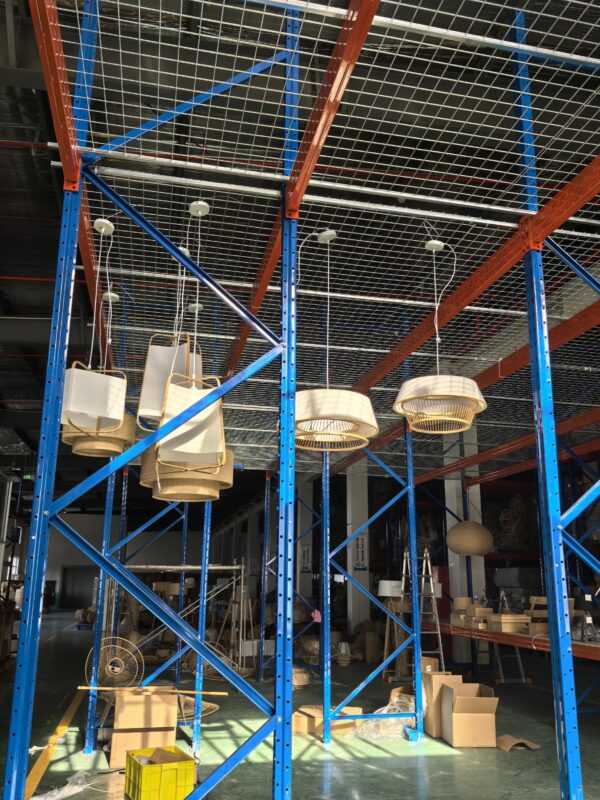

Factories Are the Core of Supply Chain Efficiency
At the center of the global home and building materials supply chain are the factories themselves. They are not only production sites, but also coordination points for materials, labor, quality control, and logistics.
Factories manage:
- Raw material sourcing and inventory planning
- Production scheduling for different markets
- Quality standards for export requirements
- Packaging and shipment preparation
Without strong factory-level coordination, the entire supply chain becomes fragmented and inefficient.
Scale and Flexibility Working Together
One of the key advantages of China’s factories is their ability to combine large-scale production with customization flexibility. This is especially important for international projects that require variations in size, finish, specifications, or compliance standards.
Factories can:
- Produce large quantities for standardized projects
- Adjust specifications for custom or project-based orders
- Handle mixed orders across multiple product categories
This balance between scale and flexibility is difficult to replicate in many other manufacturing regions.
Quality Control Integrated Into the Production Process
Quality control in China’s factories is deeply integrated into the production workflow. Instead of relying solely on final inspections, many factories implement checks at multiple stages:
- Incoming material inspection
- In-process quality monitoring
- Final inspection before packing and loading
This layered approach reduces risks, minimizes rework, and ensures products meet international standards before leaving the factory.

Logistics and Export as Part of Manufacturing
In the global home and building materials industry, logistics is not separate from manufacturing—it is part of it. China’s factories are designed with export in mind, from packaging methods to container loading strategies.
Factories coordinate closely with logistics providers to:
- Optimize container space
- Protect fragile products during long-distance shipping
- Meet delivery schedules for international projects
This integration allows global buyers to manage complex shipments more efficiently.
Why Global Buyers Rely on China’s Factory Network
Global buyers continue to rely on China’s factories not only because of cost advantages, but because of supply chain reliability. Long-term relationships with factories create stability in pricing, production timelines, and product consistency.
For large renovation, hospitality, and construction projects, this reliability is often more valuable than short-term cost savings.

Final Thoughts
China’s factories power the global home and building materials supply chain through specialization, scale, flexibility, and integrated logistics. They are the foundation that supports everything from individual residential projects to large international developments.
For buyers who understand how this factory-driven system works, sourcing from China becomes not just a purchasing decision, but a strategic supply chain advantage.
