


How to Pack and Ship Lighting from China Without Damage

Shipping lighting from China can be risky if packaging, inspection and loading are not managed properly.
Lighting products are often fragile, especially chandeliers, glass lamps, pendant lights, wall lights, outdoor lights and decorative fixtures. They may include glass parts, metal frames, drivers, screws, accessories and installation components. If these items are not packed and checked correctly before shipment, buyers may receive broken parts, missing accessories or damaged surfaces after arrival.
For overseas buyers sourcing lighting for hotels, villas, restaurants, offices and commercial projects, reducing shipping damage starts before the goods leave China.
This guide explains how to pack and ship lighting from China more safely, including packaging checks, accessory control, warehouse consolidation and shipping damage prevention.
If you are still learning the full lighting sourcing process, you may also read:🔗 How to Source Lighting from China for Hotels, Villas and Commercial Projects.

Why Lighting Is Easy to Damage During Shipping
Lighting products are different from many other building materials because they often combine fragile and delicate parts.
Common risk points include:
- Glass shades
- Crystal parts
- Thin metal frames
- Decorative finishes
- LED drivers
- Wires
- Screws and accessories
- Long or irregular product shapes
- Fragile surface coatings
- Multiple small installation parts
During international shipping, goods may face warehouse handling, truck loading, container loading, sea freight movement, unloading and local delivery.
If packaging is weak or accessories are not organized properly, damage can happen before the goods reach the project site.
1. Confirm Packaging Before Production Is Finished
Packaging should not be considered only at the last minute.
Before production is completed, buyers should ask the supplier how each lighting product will be packed.
Important packaging details include:
- Carton size
- Carton thickness
- Foam protection
- Bubble wrap
- Glass protection
- Metal frame protection
- Accessory packaging
- Label position
- Whether wooden crates are needed
- Whether fragile marks are used
For chandeliers, glass lamps and large decorative lighting, stronger packaging may be required.
Buyers should request packaging photos or videos before shipment, especially for project orders.
2. Check Fragile Parts Separately
Lighting products often include fragile components that need separate protection.
These may include:
- Glass covers
- Crystal parts
- Lampshades
- Decorative metal pieces
- LED strips
- Acrylic panels
- Remote controls
- Drivers
- Small accessories
If fragile parts are packed together without separation, they may scratch or break during transportation.
Each fragile part should be wrapped, separated and fixed properly inside the carton.
For expensive or customized lighting, buyers should confirm whether replacement parts are included or available if damage happens.
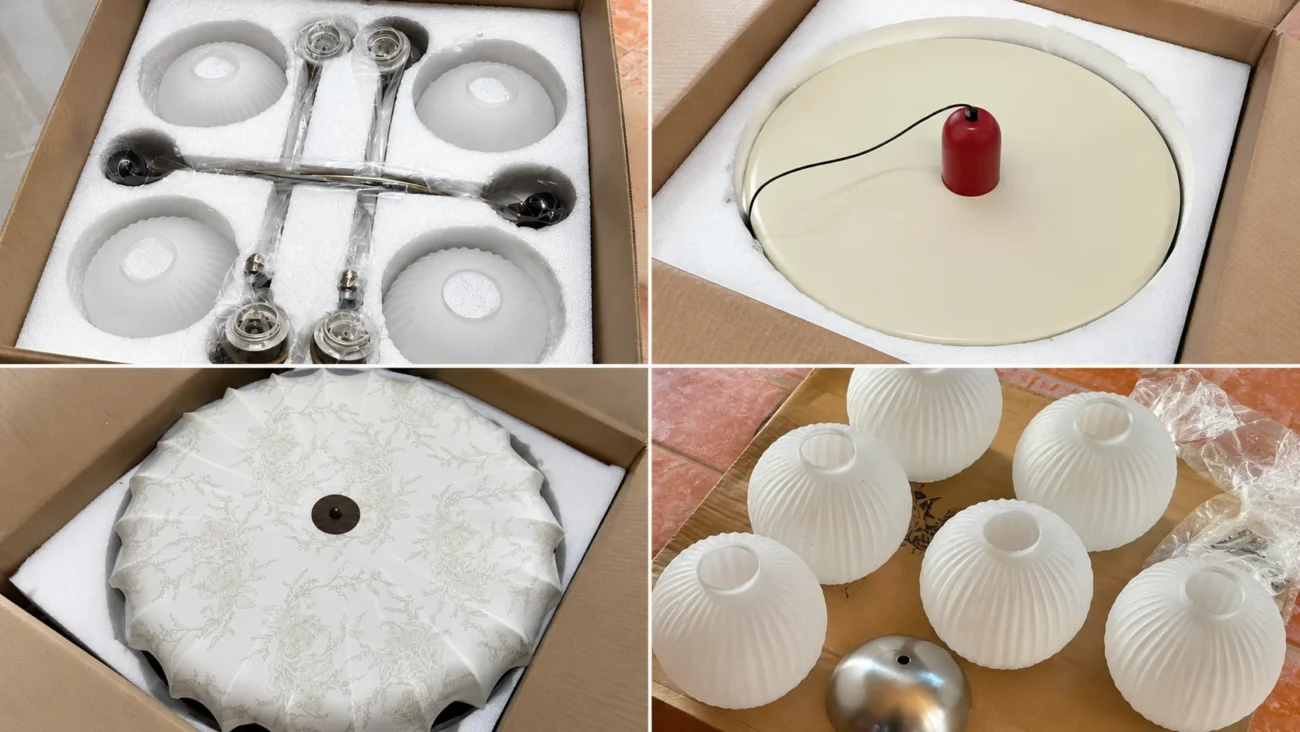
3. Make Sure Accessories Are Complete
Missing accessories can be as serious as broken products.
A lighting product may look fine, but installation may fail if screws, brackets, drivers, hanging parts or connectors are missing.
Before shipping, buyers should check:
- Screws
- Mounting brackets
- Drivers
- Wires
- Connectors
- Hanging chains
- Remote controls
- Installation manuals
- Spare parts if included
- Product labels
For hotel, villa and commercial projects, accessories should be packed clearly and labeled by item or room when needed.
This makes installation easier after the goods arrive.
4. Use Strong Cartons and Inner Protection
Good outer cartons and inner protection are both important.
A carton may look acceptable from outside, but if the inner protection is weak, the product can still move and break inside.
Buyers should check:
- Carton strength
- Foam thickness
- Corner protection
- Whether the product moves inside the carton
- Whether glass parts are separated
- Whether heavy parts press on fragile parts
- Whether carton labels are clear
For fragile lighting products, inner packaging should keep the product fixed and protected during handling and shipping.
5. Consider Wooden Crates for High-Risk Lighting
Not every lighting product needs wooden crate packaging, but some products may require stronger protection.
Wooden crates may be useful for:
- Large chandeliers
- Expensive decorative lighting
- Glass-heavy products
- Irregular-shaped lighting
- Large outdoor fixtures
- Customized lighting
- Project lighting with difficult replacement
Wooden crates increase packaging cost and shipping volume, so they should be used when necessary.
For project buyers, the decision should be based on product value, fragility, replacement difficulty and shipping risk.
6. Inspect Lighting Before Shipping
Pre-shipment inspection is important before lighting leaves China.
Inspection can help check:
- Quantity
- Model
- Appearance
- Surface finish
- Color
- Accessories
- Labels
- Packaging
- Fragile protection
- Photo and video records
Inspection cannot replace professional electrical testing or certification, but it can reduce visible mistakes, missing accessories and packaging problems before shipment.
For a full inspection process, read: 🔗How to Inspect Building Materials Before Shipping from China.

7. Label Cartons Clearly
Clear labeling helps warehouse teams, shipping teams and installers identify products correctly.
Useful label information may include:
- Product model
- Quantity
- Room number
- Project name
- Carton number
- Fragile mark
- This side up mark
- Accessory label
- Supplier name
- Packing list reference
For hotel and villa projects, room-based labeling can help reduce confusion during installation.
If lighting is shipped together with furniture, tiles, sanitary ware or other materials, clear labels become even more important.
8. Plan Warehouse Consolidation Carefully
For project buyers, lighting is often not shipped alone.
It may be consolidated with:
- Mobilier
- Tiles
- Doors and windows
- Sanitary ware
- Cabinets
- Decorative materials
- Hardware
Warehouse consolidation can save time and simplify shipping, but it must be managed carefully.
Lighting should not be placed under heavy goods. Fragile cartons should be separated from heavy tiles, stone, cabinets or furniture.
A China-based warehouse team should check carton condition, labels and loading order before shipment.
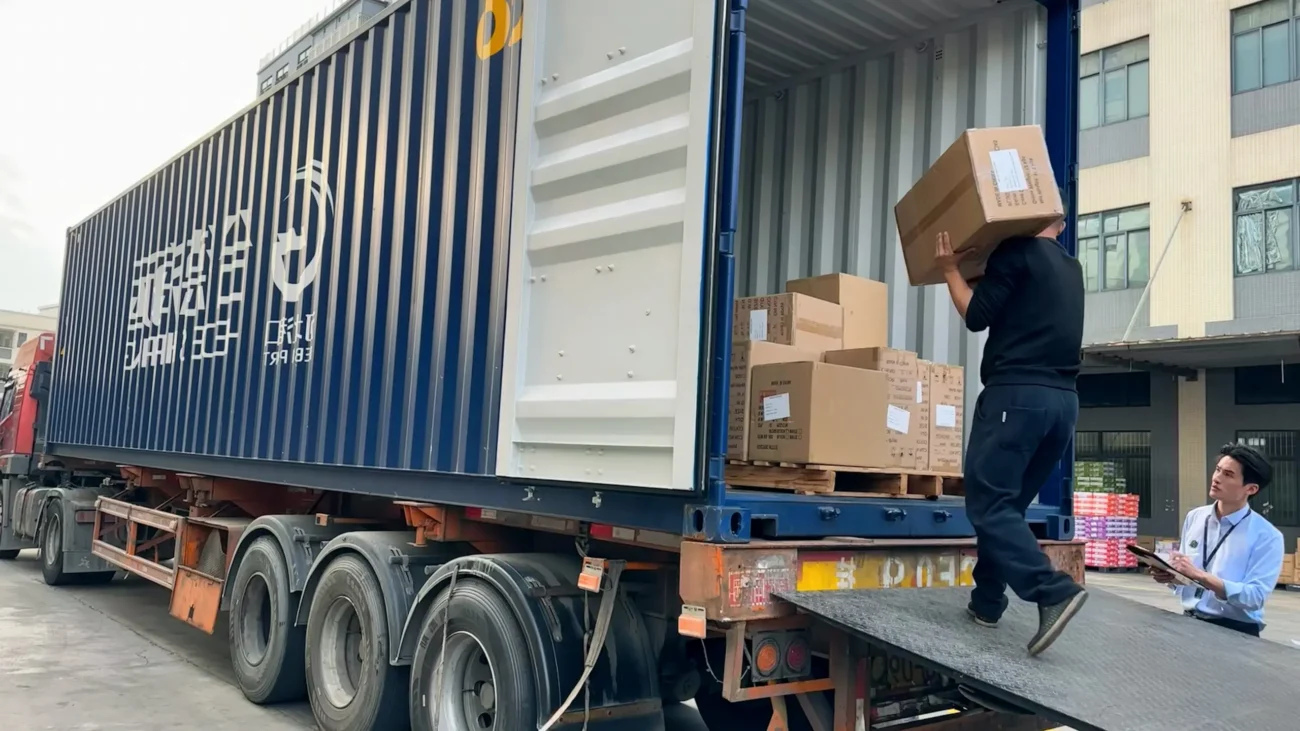
9. Control Container Loading
Container loading is one of the final steps before goods leave China.
Poor loading can damage lighting even if the packaging looks good.
During loading, buyers or their China-side team should check:
- Whether fragile goods are protected
- Whether heavy goods are placed properly
- Whether lighting cartons are squeezed
- Whether cartons are stacked safely
- Whether loading order is reasonable
- Whether photos and videos are recorded
- Whether the container is sealed properly
Container loading supervision helps buyers keep records of how goods were loaded before shipment.
10. Work with a China-Based Supply Chain Team
For simple lighting orders, buyers may communicate directly with suppliers.
But for hotel, villa and commercial projects, lighting usually involves multiple suppliers, different models, accessories, packaging requirements and shipping coordination.
A China-based supply chain team can help with:
- Supplier communication
- Packaging confirmation
- Accessory checking
- Contrôle de la qualité
- Warehouse receiving
- Label checking
- Consolidation planning
- Container loading supervision
- Shipping coordination
The value is not only finding lighting suppliers. The real value is reducing risks before goods leave China.
If your project includes multiple building materials, read: 🔗How to Buy Building Materials from China: One-Stop Sourcing Guide.
Common Lighting Shipping Problems to Avoid
Overseas buyers should avoid these common problems:
- Weak cartons
- No foam protection
- Glass parts not separated
- Accessories mixed together
- Missing labels
- No packaging photos before shipment
- No pre-shipment inspection
- Fragile lighting loaded under heavy goods
- No loading records
- No warehouse consolidation control
Most shipping damage can be reduced if packaging, inspection and loading are managed properly before shipment.
Final Thoughts
To pack and ship lighting from China without damage, overseas buyers should not focus only on product price.
Packaging quality, fragile part protection, accessory checking, carton labeling, warehouse consolidation and container loading all affect the final delivery result.
For lighting products used in hotels, villas, restaurants, offices and commercial projects, damage prevention should start before shipment, not after the goods arrive.
A structured supply chain process can help buyers reduce damage, avoid missing parts and manage lighting shipments from China more safely.
