


Bathroom Products Shipping from China: Packaging, Breakage and Container Loading Tips

Bathroom products shipping from China requires more attention than many buyers expect.
Toilets, basins, bathroom mirrors, shower enclosures, faucets, vanities and bathtubs may look fine in the showroom, but the real risk often appears during packaging, warehouse handling, container loading and sea shipping.
For global buyers, the goal is not only to buy bathroom products at a good price. The real goal is to make sure the products arrive safely, with correct accessories, proper packaging and clear shipping records.
This guide explains how buyers can reduce breakage risks when shipping bathroom products from China.
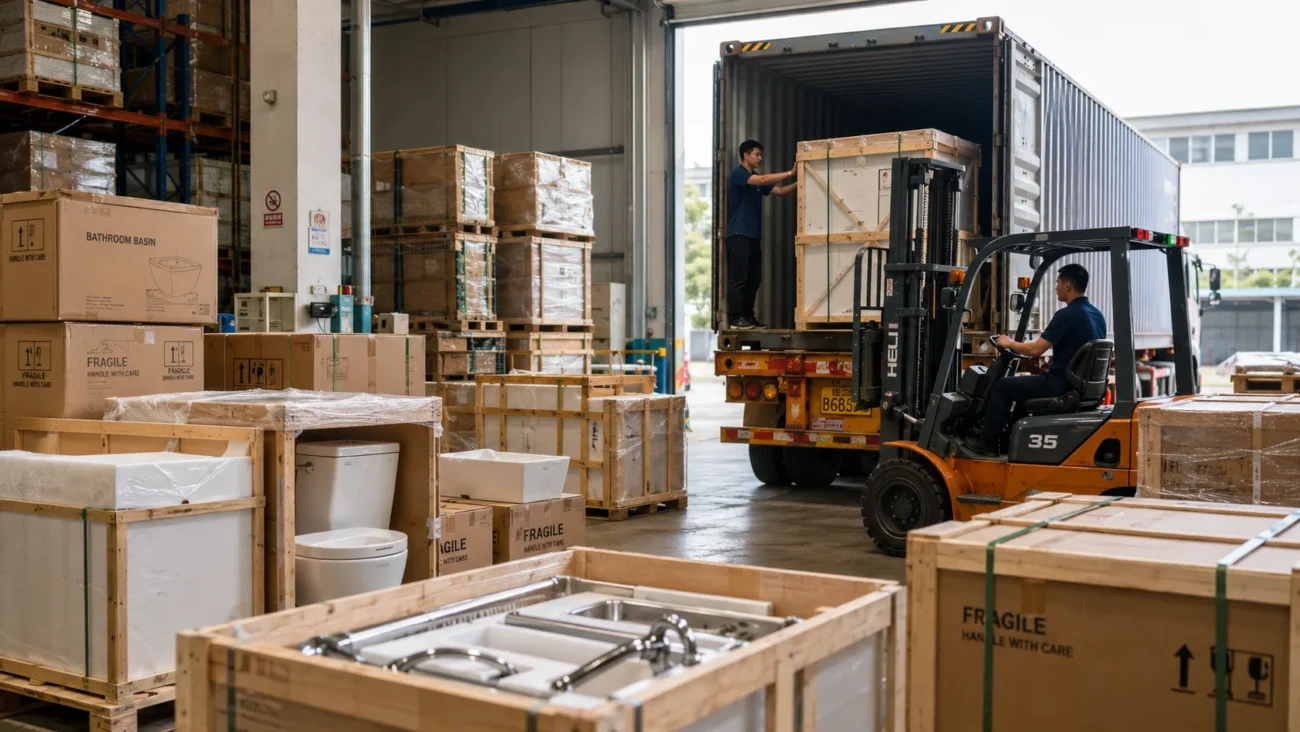
Why Bathroom Products Are High-Risk in Shipping
Bathroom products are not simple cargo.
Many products are fragile, heavy, irregular in shape or easy to scratch. Some products also contain glass, ceramic, metal finishes, electrical parts or installation accessories.
Common shipping risks include:
- Ceramic toilets cracking during transport
- Basins breaking at the edges
- Shower glass being damaged during loading
- Bathroom mirrors cracking under pressure
- Vanity cabinets being damaged by moisture or heavy cargo
- Faucets getting scratched or missing accessories
- Bathtubs being squeezed inside the container
- Cartons being crushed during mixed-container loading
This is why bathroom products shipping from China should be planned before the goods leave the factory, not only when the container arrives at the warehouse.
Which Bathroom Products Break Most Easily?
Different bathroom products have different shipping risks.
Ceramic Toilets and Basins
Toilets and basins are among the highest-risk bathroom products.
Common problems include:
- Broken toilet base
- Cracked water tank
- Damaged toilet lid
- Chipped glaze
- Broken basin edges
- Weak foam protection
- Carton damage during loading
For ceramic products, packaging must be checked carefully before shipment.
Shower Enclosures
Shower enclosures usually include tempered glass, aluminum profiles, hinges, handles and installation accessories.
Main risks include:
- Glass edge breakage
- Hardware missing
- Track deformation
- Weak wooden crate
- Glass panels loaded in the wrong direction
Glass products should never be loaded casually with heavy or loose cargo.
Bathroom Mirrors and LED Mirrors
Mirrors are sensitive to pressure, vibration and corner impact.
For LED mirrors, buyers also need to check:
- Wire protection
- Plug type
- Voltage
- LED function
- Mirror surface protection
- Corner protection
A mirror may look simple, but poor packaging can easily cause breakage.
Bathroom Vanities
Bathroom vanities are often damaged by moisture, pressure or poor handling.
Buyers should pay attention to:
- Cabinet board protection
- Countertop protection
- Basin and cabinet matching
- Drawer fixing
- Hinge protection
- Waterproof wrapping
Bathroom vanities should not be loaded under heavy tiles or ceramic products.
Faucets and Shower Hardware
Faucets are less fragile than ceramic products, but they still need careful packaging.
Risks include:
- Scratched plating
- Missing small accessories
- Crushed inner boxes
- Mixed finishes
- Wrong thread size
- Damaged product labels
For matte black, brushed gold, chrome or gunmetal finishes, surface protection is especially important.

Packaging Standards Buyers Should Confirm Before Shipping
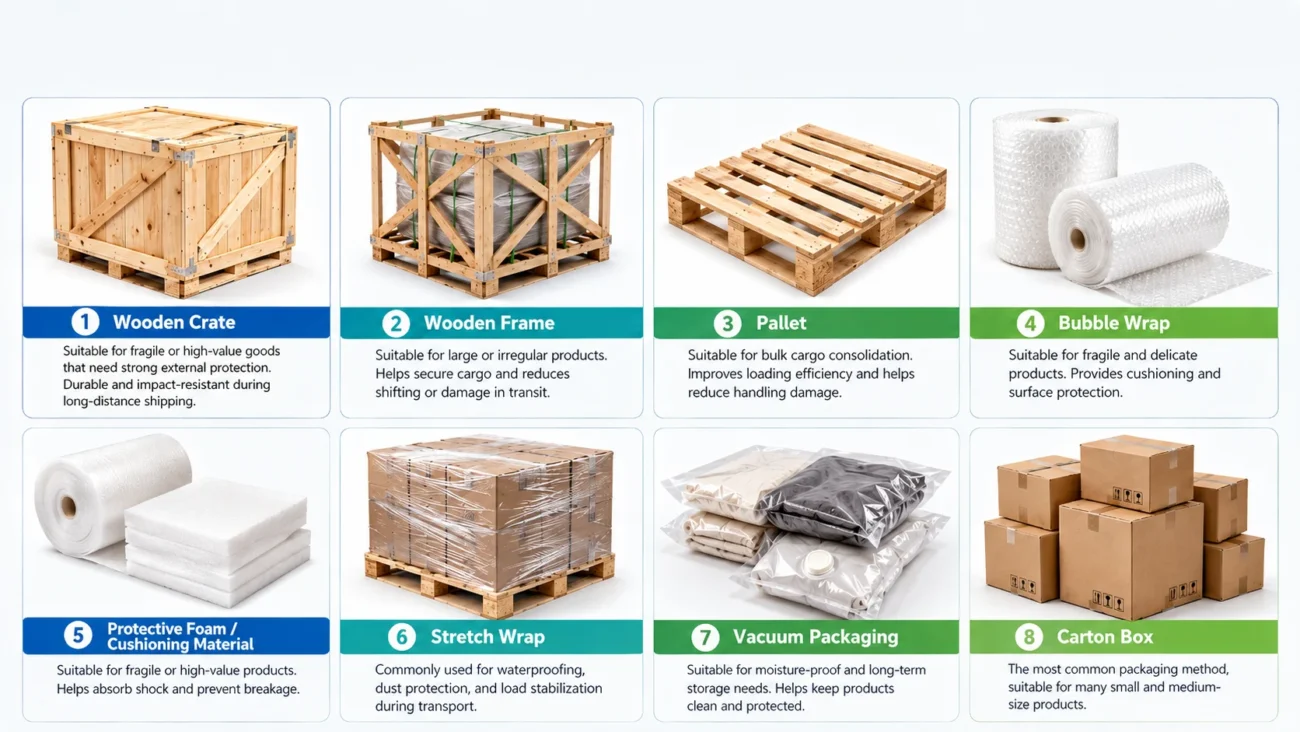
For fragile bathroom products, packaging should be confirmed before production, not after the goods arrive at the warehouse.
Buyers should ask suppliers to confirm:
- Inner foam protection
- Reinforced cartons
- Corner protectors
- Wooden crates for glass products
- Pallets for heavy or fragile cargo
- Waterproof wrapping
- Clear carton marks
- Fragile labels
- Installation manuals
- Accessory bags
- Spare parts packaging
A good packaging plan should answer one question:
Can this product survive factory handling, warehouse transfer, container loading, sea shipping and local delivery?
If the answer is not clear, the packaging is not ready.
Packaging Tips by Product Category
Toilets and Basins
For toilets and basins, buyers should request:
- Strong foam protection
- Separate protection for tank lids
- Reinforced outer cartons
- Clear fragile marks
- Product model labels
- Packaging photos before shipment
For large orders, it is useful to inspect random cartons and check whether the foam support is strong enough.
Shower Glass
For shower enclosures, buyers should request:
- Wooden crate or reinforced frame
- Edge protection
- Vertical storage if required
- Separate hardware packing
- Clear glass direction marks
- Accessories checklist
Glass products should be clearly separated from heavy items during loading.
Bathroom Mirrors
For mirrors, buyers should check:
- Mirror surface film
- Four-corner protection
- Strong carton or wooden frame
- LED wire fixing
- Plug and voltage marking
- No heavy cargo stacked on top
Mirrors should be treated as fragile products, even if they are packed in cartons.
Bathroom Vanities
For bathroom vanities, buyers should check:
- Moisture-resistant wrapping
- Countertop corner protection
- Basin protection
- Drawer and door fixing
- Hardware accessory bags
- Outer carton strength
If the vanity includes a ceramic basin or stone countertop, those parts should be protected separately.
Faucets and Shower Hardware
For faucets, packaging should include:
- Individual inner boxes
- Surface protection bags
- Accessories packed separately
- Finish labels
- Model labels
- Carton marks
- Protection from heavy pressure
Small accessories must be checked carefully because missing parts can create installation problems after delivery.
Container Loading: Why Loading Sequence Matters
Container loading is not only about filling space.
A container should be loaded by product risk, weight, shape and fragility.
For bathroom products, loading sequence matters because one wrong position can cause expensive damage.
Basic loading principles include:
- Heavy products should be placed at the bottom
- Fragile products should not be under pressure
- Glass products should be protected and fixed
- Mirrors should not be placed near unstable cargo
- Bathroom vanities should not be crushed by tiles or stone products
- Faucets and accessories should not be scattered
- Bathtubs need enough space and edge protection
- Cartons should be stacked according to strength
The goal is not only to load everything into the container. The goal is to make sure the products can arrive safely.
Mixed Container Loading with Furniture, Tiles and Bathroom Products
Many project buyers do not ship bathroom products alone.
Bathroom products are often loaded together with furniture, tiles, cabinets, lighting, doors, windows or kitchen products.
This makes loading more complicated.
For example:
- Tiles are heavy and should not crush bathroom vanities
- Shower glass and mirrors should be separated from unstable cargo
- Faucets and accessories should be packed and counted clearly
- Lighting and mirrors should not be mixed without protection
- Furniture should be protected from ceramic edges or hardware cartons
- Bathtubs should be positioned before smaller cartons fill the container
Mixed-container loading should be planned before all goods arrive at the warehouse.
For full project buyers, you may also read: 🔗How to Source Furniture and Building Materials in Guangzhou and Foshan.

Pre-Shipment Inspection Checklist
For bathroom products, inspection should not only check the product. It should also check packaging, accessories and loading condition.
Before shipment, buyers should check:
- Product model
- Quantity
- Color and finish
- Surface defects
- Ceramic cracks
- Glass edges
- Faucet accessories
- Installation parts
- Carton marks
- Packaging strength
- Wooden crate condition
- Fragile labels
- Pallet condition
- Loading photos
- Container number
- Seal number
For mixed orders, each supplier’s goods should be counted separately before consolidation.
For more quality control details, read: 🔗How to Inspect Building Materials Before Shipping from China.
Common Shipping Mistakes Buyers Should Avoid
Many shipping problems can be avoided before the goods leave China.
Common mistakes include:
- Checking products but not checking packaging
- Allowing suppliers to use weak cartons
- Shipping shower glass without wooden crates
- Loading bathroom mirrors under heavy goods
- Letting tiles or stone products crush bathroom cabinets
- Not checking faucet accessories
- Mixing products from several suppliers without a clear packing list
- Not taking loading photos
- Not recording container number and seal number
- Not keeping evidence for damage claims
The most dangerous mistake is assuming that the factory’s normal packaging is always suitable for export shipping.
For fragile bathroom products, export packaging must match the shipping method and destination risk.
How to Reduce Breakage Before the Goods Leave China
Breakage control should start before loading.
Buyers can reduce risk by:
- Confirming packaging standards before placing the order
- Asking for packaging photos before shipment
- Checking fragile products after they arrive at the warehouse
- Using wooden crates for glass and ceramic products when needed
- Inspecting accessories and installation parts
- Planning mixed-container loading in advance
- Taking photos during loading
- Recording container number and seal number
- Buying cargo insurance when necessary
- Keeping inspection and loading records
A clear record is important. If damage happens after arrival, photos and loading evidence help buyers understand whether the problem came from the factory, warehouse, loading, shipping or local delivery.
How a Local Sourcing Team Adds Value
For bathroom products shipping from China, a local sourcing team can help buyers control the process before the container leaves.
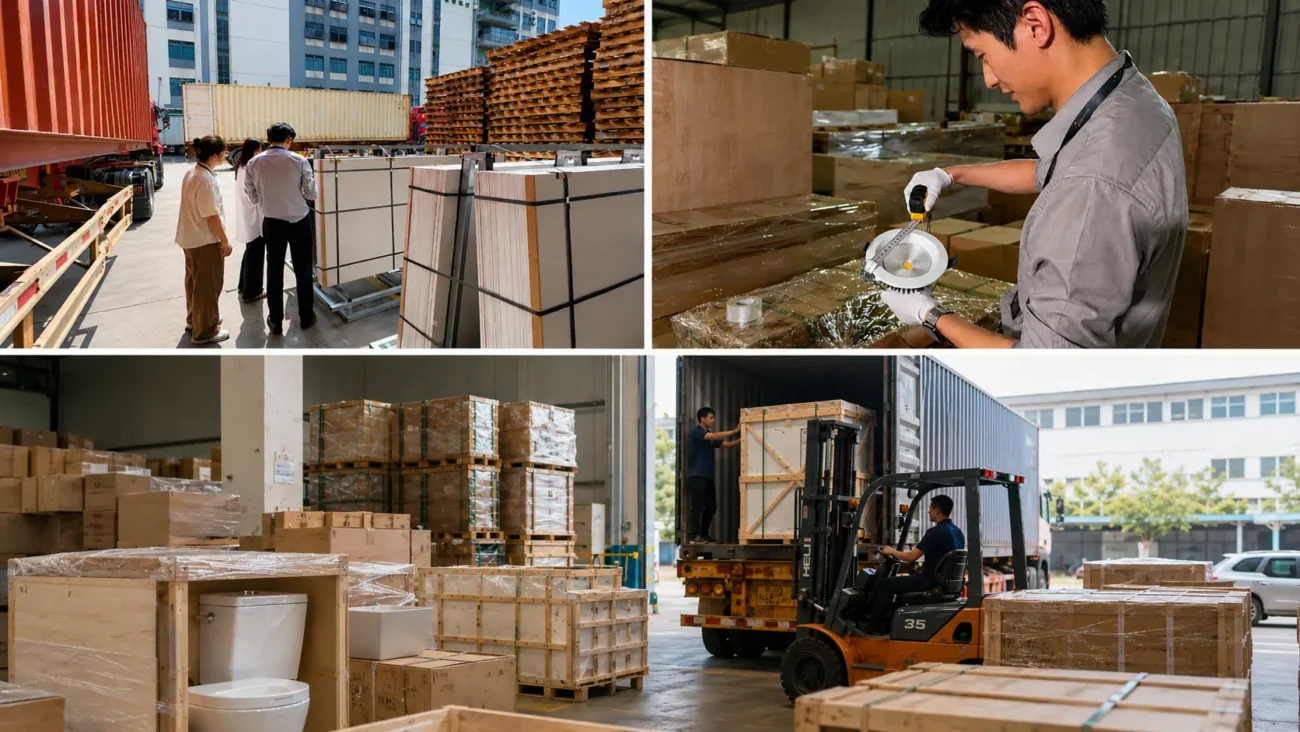
The value is not only finding suppliers. It is also coordinating factories, checking packaging, arranging warehouse consolidation, inspecting goods, supervising container loading and keeping shipping records.
Cody Sourcing supports global buyers with supplier coordination, product inspection, warehouse consolidation, container loading supervision and shipping coordination for bathroom products and other building materials.
This helps buyers reduce breakage risks, missing accessories and delivery disputes.
The real goal is simple: make sure the goods are not only purchased, but delivered safely.
Final Thoughts
Bathroom products shipping from China requires careful planning.
Toilets, basins, mirrors, shower enclosures, vanities, faucets and bathtubs all have different shipping risks. Good packaging, clear carton marks, proper inspection and careful container loading can reduce many problems before they happen.
For global buyers, the safest approach is to treat packaging and loading as part of the sourcing process, not as the last step after buying.
A bathroom product order is successful only when the products arrive safely, with the correct quantity, accessories and condition.
