


How to Buy Building Materials from China: One-Stop Sourcing for Furniture, Tiles, Lighting, Doors and Sanitary Ware

Buying building materials from China can help overseas buyers reduce costs, access more product options and customize products for different project needs.
But for builders, contractors, villa owners, hotel owners and project buyers, the real challenge is not simply finding suppliers. The bigger challenge is managing different product categories, multiple factories, quality standards, production timelines, packaging, consolidation and shipping.
This is why one-stop building materials sourcing from China is becoming a better option for many project buyers.
Instead of buying furniture, tiles, lighting, doors, windows and sanitary ware separately, one-stop sourcing helps buyers manage the full China-side supply chain in a more structured way.
If you are still learning the basic process, you can also read our guide: Comment s'approvisionner en matériaux de construction en Chine.
What Building Materials Can You Source from China?
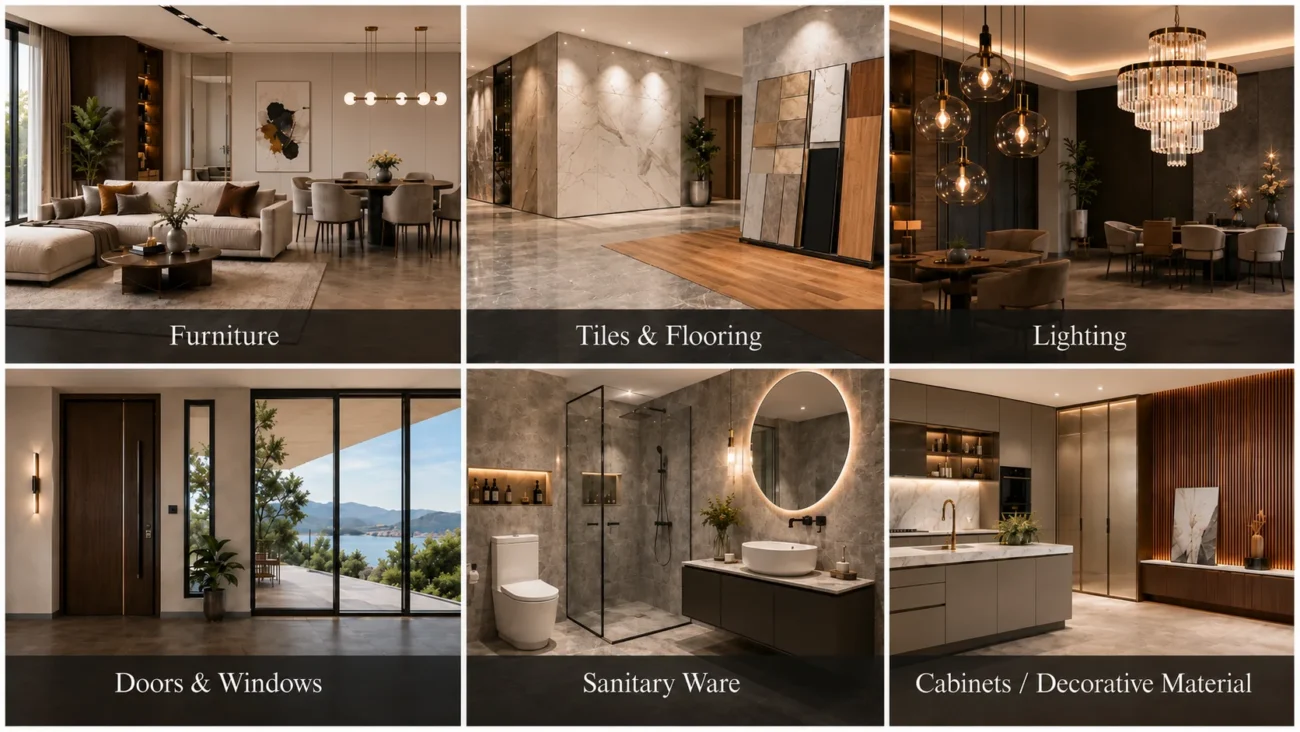
China has a complete supply chain for home, construction and renovation materials. Many product categories can be sourced together for villa, hotel, apartment, restaurant and commercial projects.
Common categories include:
- Mobilier
- Tiles and flooring
- Eclairage
- Doors and windows
- Sanitary ware
- Cabinets and wardrobes
- Decorative panels
- Hardware and accessories
For project buyers, sourcing these products together can save time, reduce communication costs and make shipment coordination easier.

Mobilier
Furniture is one of the most common categories overseas buyers source from China.
It can include beds, sofas, dining tables, chairs, wardrobes, cabinets, hotel furniture, office furniture and custom furniture.
When buying furniture from China, buyers should confirm the material, size, color, fabric, structure, packaging and production quality before placing an order.
For more details, read: Comment acheter des meubles en Chine en 2025 - Guide complet.
You may also find this article useful: Why Sourcing Directly From Furniture Factories Matters.
Tiles and Flooring
Tiles and flooring are important for renovation and construction projects.
Common products include floor tiles, wall tiles, porcelain tiles, marble-look tiles, sintered stone, SPC flooring and wood flooring.
Because tiles and flooring are heavy and fragile, buyers need to consider packaging, loading, breakage risk, container weight and shipping cost.
Read more: Wholesale Tiles & Flooring from China – Your Ultimate Guide.
Eclairage
Lighting affects both the design and function of a project.
Common lighting products include indoor lighting, outdoor lighting, decorative lighting, chandeliers, LED lighting, commercial lighting and hotel lighting.
When sourcing lighting from China, buyers should confirm size, voltage, wattage, color temperature, installation method, packaging and certification requirements if needed.
Lighting is especially important for hotels, villas, restaurants and commercial spaces.
Doors and Windows
Doors and windows are usually customized products, so accurate specifications are very important.
Common products include aluminum windows, sliding doors, folding doors, interior doors, wooden doors, glass doors and customized doors and windows.
Before production, buyers should confirm the size, frame material, glass type, profile thickness, color, hardware, opening direction, packaging and installation details.
If you are comparing suppliers, you can read: Top 10 Doors & Windows Manufacturers in China for Global Buyers.
For interior doors, read: Best Interior Doors Manufacturers in China for Global Buyers.
Sanitary Ware
Sanitary ware is often sourced together with tiles, bathroom cabinets, mirrors and bathroom accessories.
Common products include toilets, basins, faucets, shower rooms, bathroom cabinets, mirrors, bathtubs and floor drains.
When buying sanitary ware from China, buyers should check ceramic quality, flushing system, glaze finish, faucet plating, drainage size, installation method and packaging protection.
Read more: Top 10 Sanitary Ware Manufacturers in Foshan for Global Buyers.
Who Is One-Stop Sourcing Suitable For?
One-stop sourcing is most suitable for buyers who are working on projects with multiple product categories.
It is suitable for:
- Villa owners
- Builders
- Contractors
- Hotel owners
- Restaurant owners
- Property developers
- Renovation companies
- Interior designers
- Commercial project buyers
For example, a villa project may need tiles, furniture, lighting, doors, windows, sanitary ware, cabinets and decorative materials. Buying each category separately can create too much communication and coordination work.
If you only need one small item, buying directly from an online platform may be enough. But if your project involves multiple suppliers, customized products and international shipping, a one-stop sourcing process can save time and reduce risk.
For villa projects, you may also read: How to Buy Villa Renovation Materials from China – Complete 2025 Guide.
Main Challenges of Buying Building Materials from China
Buying from China offers many advantages, but overseas buyers often face several challenges during the process.
Different Suppliers Have Different Lead Times
Furniture, tiles, lighting, doors and sanitary ware may come from different factories. Each factory has its own production schedule.
If the timeline is not managed properly, some goods may be ready too early while others are delayed.
Specifications Can Be Misunderstood
Building materials often involve many details, such as size, color, material, voltage, glass type, opening direction and installation method.
A small mistake can create big problems during installation.
Quality Standards Are Different
Different suppliers may have different quality levels. Buyers should not compare products only by price.
Material, structure, finish, hardware, packaging and sample consistency should all be checked before mass production.
If you are concerned about quality, read: Are Chinese Building Materials Good Quality?.
Packaging and Shipping Need Careful Planning
Many building materials are large, heavy or fragile.
Tiles, glass, sanitary ware, lighting and furniture all need proper export packaging and loading plans to reduce damage during transportation.
How a China-Based Supply Chain Team Helps
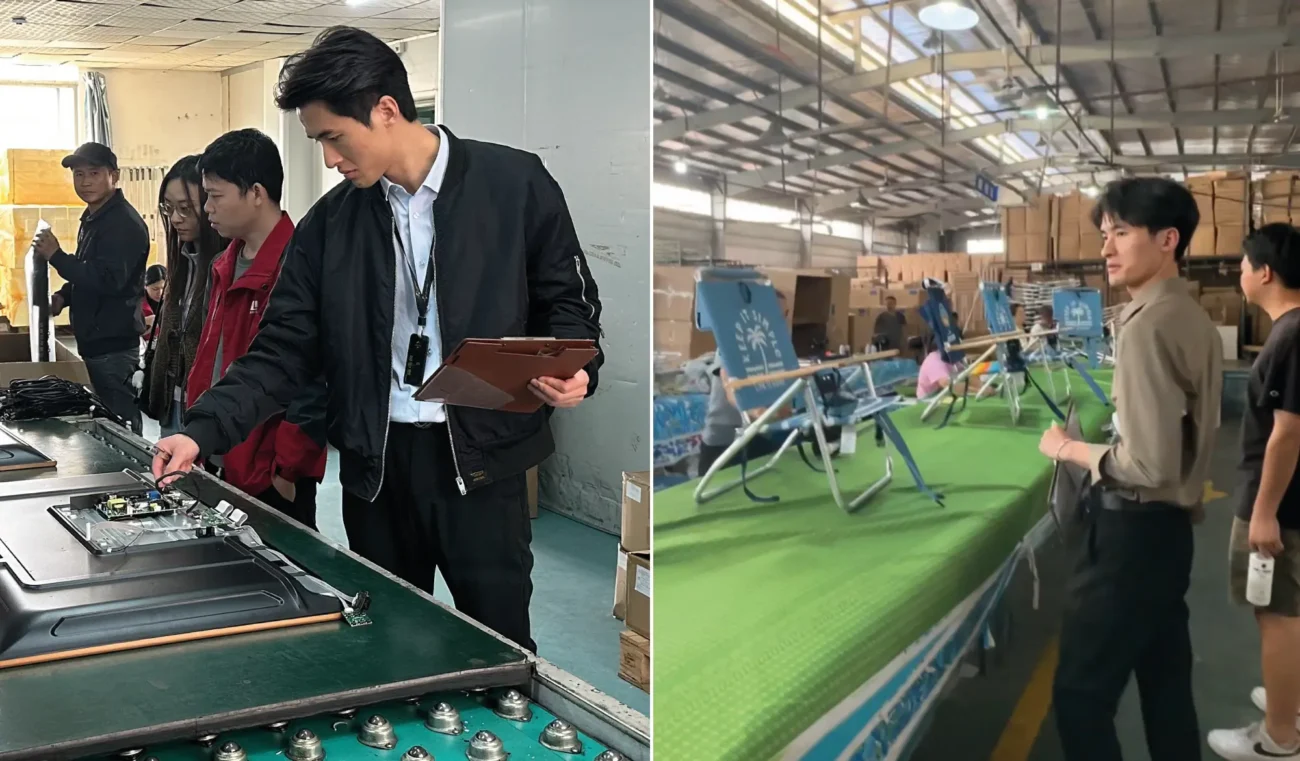
A China-based supply chain team helps overseas buyers manage the process from supplier selection to shipment.
The value is not only finding factories. The real value is managing the China-side execution.
A sourcing and supply chain team can help with:
- Product list review
- Supplier matching
- Factory comparison
- Quotation comparison
- Specification confirmation
- Sample confirmation
- Production follow-up
- Contrôle de la qualité
- Contrôle de l'emballage
- Warehouse consolidation
- Container loading supervision
- Shipping coordination
This is especially important when the project includes several product categories from different suppliers.
If your concern is avoiding unnecessary middlemen, read: How to Buy Renovation Materials from China Without Middlemen.
How the One-Stop Sourcing Process Works
A structured sourcing process helps reduce mistakes and makes the project easier to manage.
Step 1: Send Your Product List or Drawings
Buyers can send a product list, BOQ, floor plan, reference photos, quantity, budget range and destination country.
The more details you provide, the easier it is to match suitable suppliers.
Step 2: Review Categories and Match Factories
The sourcing team reviews the product categories and matches suitable factories according to budget, quality level, order quantity and delivery requirements.
Step 3: Compare Quotations and Confirm Details
Quotation comparison should include price, material, size, specification, packaging, lead time, MOQ, payment terms and customization ability.
The lowest price is not always the safest choice.
Step 4: Follow Production and Inspect Quality
After the order is placed, production should be followed regularly.
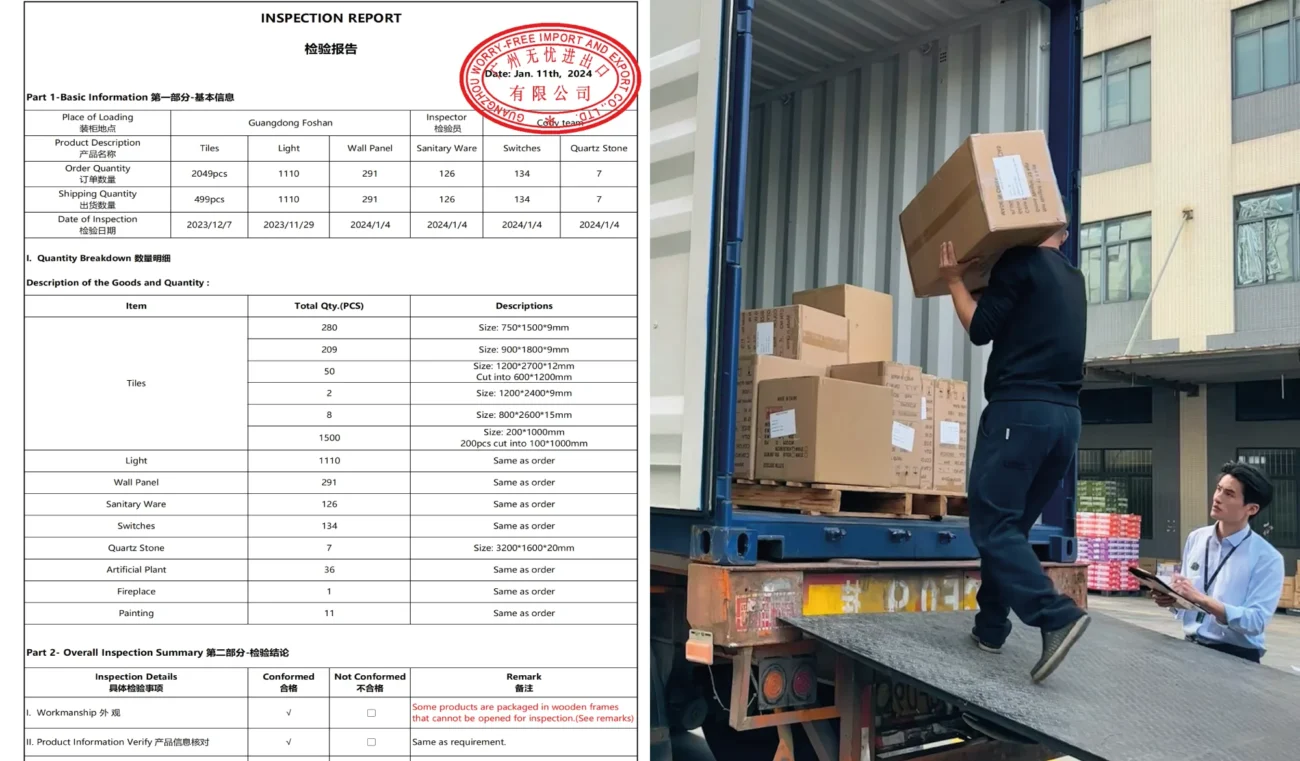
Before shipping, inspection can help check quantity, model, color, size, appearance, packaging, accessories and labels.
Step 5: Consolidate Goods and Arrange Shipping
When products come from different factories, they can be delivered to one warehouse for checking, sorting and consolidation.
After that, the goods can be loaded into containers and shipped together.
One-Stop Sourcing vs Buying from Separate Suppliers
| Item | Buying from Separate Suppliers | One-Stop Supply Chain Management |
|---|---|---|
| Supplier Communication | Buyer contacts many factories | One team coordinates suppliers |
| Quotation Comparison | Easy to focus only on low price | Compare price, quality and lead time |
| Specification Control | Higher risk of mistakes | Details are reviewed before production |
| Production Follow-Up | Buyer follows remotely | Local team follows in China |
| Quality Inspection | Difficult to check before shipment | Inspection can be arranged |
| Shipment | Multiple shipments or poor coordination | Goods can be consolidated |
| Risk Control | Buyer handles problems alone | Local team helps reduce risks |
For small orders, separate purchasing may be acceptable. But for villa, hotel, apartment or commercial projects, one-stop sourcing usually provides better control.
Why China Is Strong for Project-Based Building Materials Sourcing
China has a strong supply chain for building materials, furniture and renovation products.
Different cities and regions specialize in different categories:
- Foshan: tiles, sanitary ware and furniture
- Zhongshan: lighting
- Dongguan and Foshan: furniture
- Chaozhou: toilets, basins and sanitary ware
- Guangzhou: sourcing coordination and export services
This makes China suitable for project-based sourcing, especially when buyers need to purchase multiple categories together.
However, more choices also mean more supplier screening, specification checking and project coordination are required.
How to Reduce Risks When Buying Building Materials from China
To reduce risk, overseas buyers should not make decisions based only on price.
Before placing an order, it is important to:
- Confirm supplier reliability
- Check product specifications
- Confirm samples or reference details
- Use clear contracts
- Control payment milestones
- Follow production progress
- Inspect goods before shipment
- Check packaging before loading
- Keep photo and video records
- Confirm shipping documents
Buying from China can save costs, but unmanaged sourcing can create expensive mistakes.
The goal is not only to buy cheaper products. The goal is to buy the right products from suitable suppliers with proper quality control and shipping management.
Final Thoughts
Buying building materials from China can give overseas buyers more choices, better customization options and competitive pricing.
But for project buyers, the real value is not only finding factories.
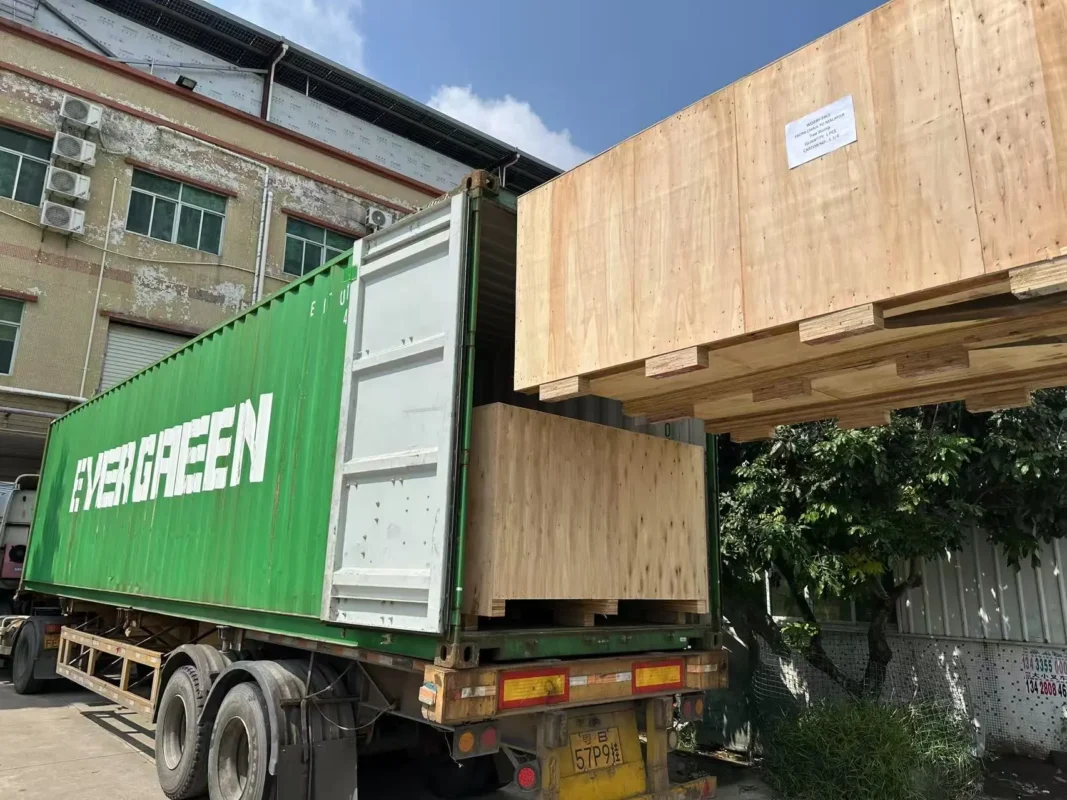
The real value is managing the full process, including supplier selection, quotation comparison, specification confirmation, production follow-up, quality inspection, packaging control, warehouse consolidation, container loading and shipping coordination.
If your project includes furniture, tiles, lighting, doors, windows, sanitary ware or other renovation materials, one-stop building materials sourcing from China can help you manage the process more efficiently and reduce unnecessary risks.
