


Outdoor Porcelain Pavers from China: 20mm Tiles, Slip Resistance, Frost Resistance and Project Use

Outdoor porcelain pavers from China are increasingly used for villa patios, pool decks, hotel walkways, rooftop terraces, garden paths, restaurant terraces and landscape projects.
They can offer a clean stone-look, cement-look or wood-look outdoor surface with lower maintenance than many natural materials. For buyers working on villas, hotels and commercial spaces, 20mm porcelain pavers can also make outdoor areas feel more connected to the indoor design.
But outdoor tiles should not be sourced only by appearance.
A 20mm porcelain paver may look strong in a showroom. The surface may feel textured. The supplier may describe it as anti-slip and frost resistant.
Still, the buyer needs to ask deeper questions.
Is the surface suitable for wet outdoor use? Does the tile body match the application? Is the product suitable for a freeze-thaw climate? Will the finish be easy to clean around a restaurant or pool area? Can the packaging protect heavier 20mm tiles during international shipping? Does the local installer plan to use concrete, gravel or pedestal installation?
This guide explains how global buyers can compare outdoor porcelain pavers from China by project use, thickness, slip resistance, frost resistance, water absorption, surface finish, packing and shipment risk.
For broader China tile sourcing background, read 🔗Foshan Tile Market Guide: How Global Buyers Source Tiles from China. For large-size tile topics, read 🔗Large Format Tiles from China: Sourcing Guide for Luxury Villas and Hotel Projects.
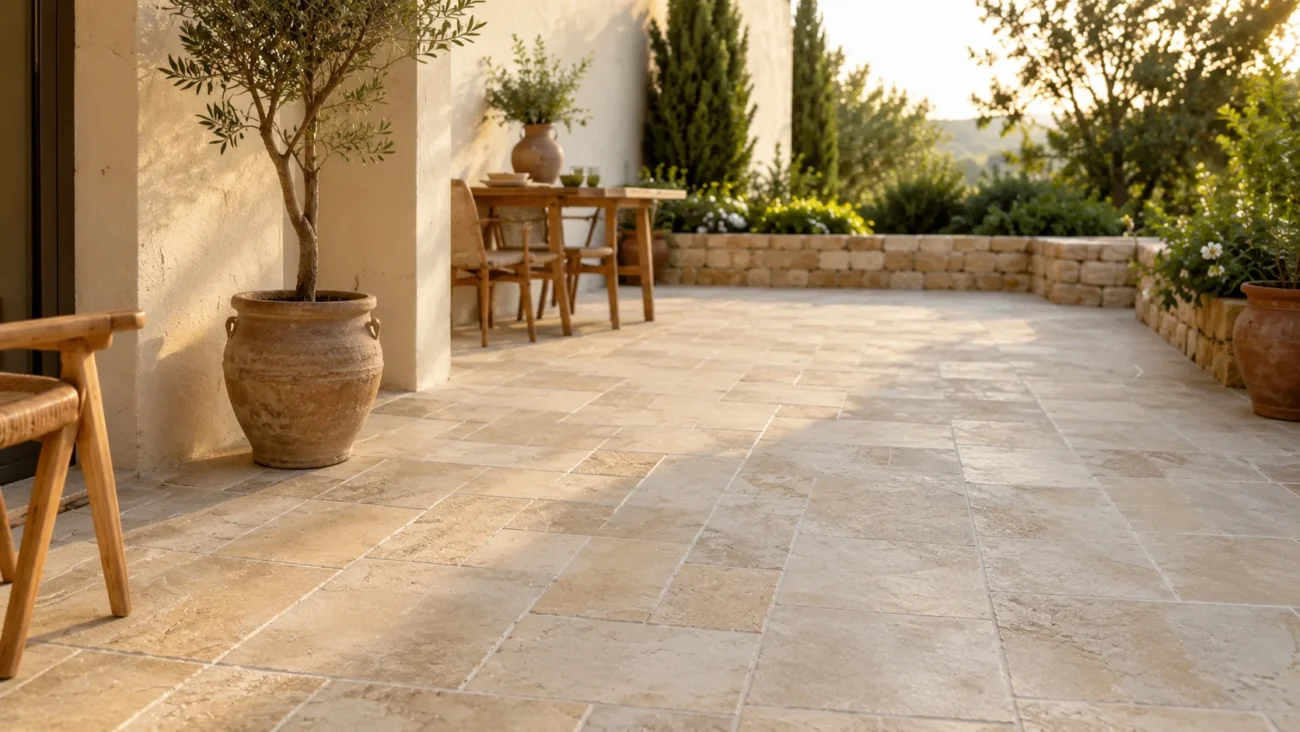
Why Outdoor Porcelain Pavers Are Different from Indoor Tiles
Not every porcelain tile is an outdoor porcelain paver.
This is one of the most important points for buyers to understand before comparing quotations.
Indoor floor tiles are usually selected for appearance, surface finish, wear, cleaning and installation inside a controlled environment. Outdoor porcelain pavers need to handle more variables: rain, sunlight, drainage, surface grip, possible freezing, soil or gravel contact, outdoor furniture, foot traffic and heavier handling during installation.
A villa patio may look calm and dry in a design rendering, but in real use it may face rain, dust, garden soil, furniture movement and outdoor cleaning.
A pool deck may look premium in a sample photo, but it must also consider wet surface use, barefoot comfort and edge finishing.
A hotel walkway may need a consistent appearance across public outdoor spaces while still being durable, safe and easy to maintain.
That is why buyers should avoid treating outdoor porcelain pavers as simply “thicker indoor tiles.”
The product should be reviewed as part of an outdoor system: tile body, surface texture, installation method, drainage, packing and long-term maintenance.
What 20mm Thickness Really Means for Project Buyers
20mm thickness is one of the reasons many buyers choose outdoor porcelain pavers.
Compared with ordinary indoor tiles, 20mm tiles often feel stronger and more suitable for patio, terrace, garden and outdoor walking areas. They can also be used in some raised floor or pedestal systems when the project design and installer allow it.
But thickness alone does not make a tile suitable for every outdoor project.
A 20mm paver still needs the right surface texture, low water absorption, suitable frost-resistance documentation, correct packing and a compatible installation method.
This matters because some suppliers use “20mm” as a simple selling point.
The buyer should not stop there.
A 20mm tile for a villa patio is not the same decision as a 20mm tile for a pool deck, restaurant terrace or rooftop installation. Each area has different risk. The tile may need to handle water, cleaning, sun exposure, footwear, barefoot use, grease, drainage or heavy furniture.
The practical question is not only:
Is this tile 20mm?
The better question is:
Is this 20mm paver suitable for this exact outdoor area and installation method?
That question leads to better sourcing decisions.
Slip Resistance: Why Anti-Slip Should Be Checked by Use Area
Slip resistance is one of the most important concerns for outdoor porcelain pavers.
But buyers should be careful with the word “anti-slip.”
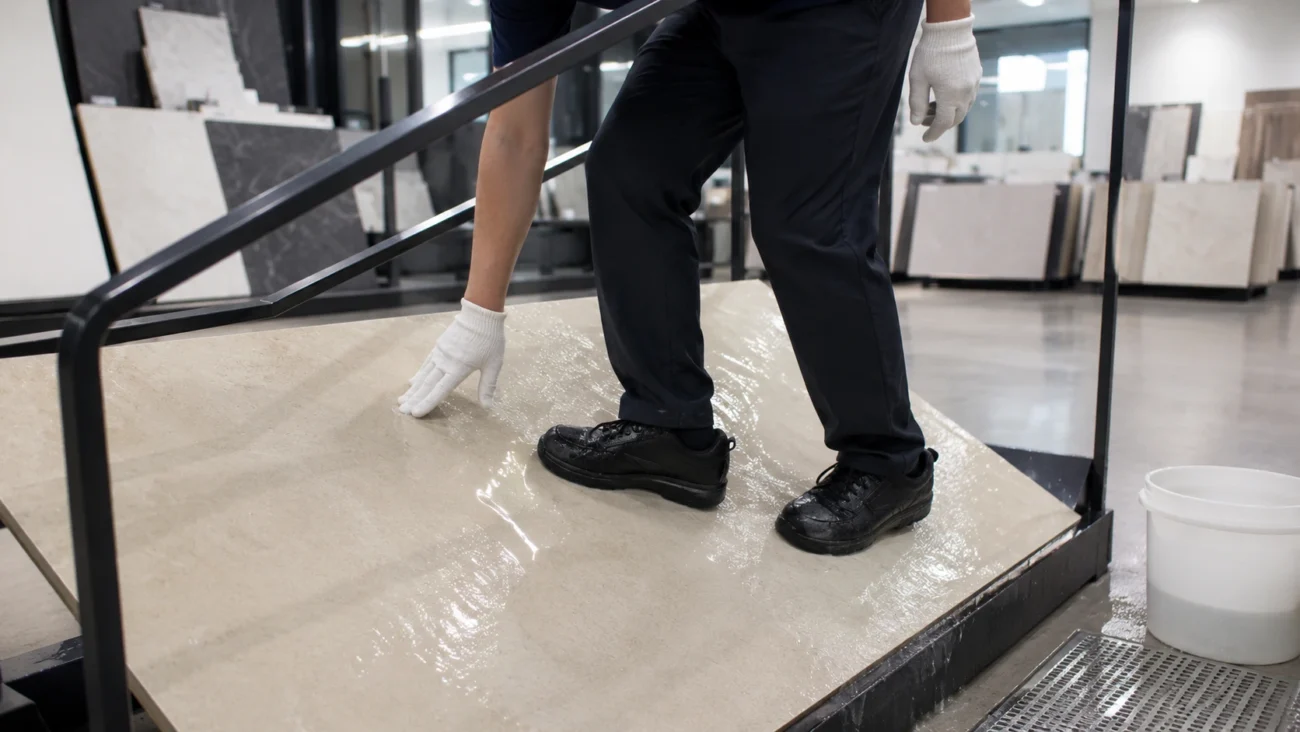
Many suppliers use it broadly. A rough surface may feel safer in a dry showroom, but outdoor projects are different. Rain, pool water, cleaning chemicals, dust, oil, footwear and maintenance can all affect how a surface performs in real use.
For a pool deck, the buyer should think about wet use and barefoot comfort. A surface that is too smooth may feel unsafe when wet, but a surface that is too rough may become uncomfortable or difficult to clean.
For a restaurant terrace, the surface should consider rain, food, drink spills, oil exposure, chair movement and frequent cleaning. The best finish is not always the roughest finish.
For a hotel outdoor walkway, buyers should consider guest safety, cleaning method, long-term maintenance and whether the surface will still look good after heavy traffic.
TCNA’s DCOF FAQ explains that DCOF can help compare surfaces, but it is not the same as predicting slip risk in every real situation. Buyers can review the official reference here: 🔗TCNA Dynamic Coefficient of Friction FAQ.
For sourcing, the main lesson is simple:
Slip resistance should be discussed by use area, not only by one marketing word.
A buyer should ask where the paver will be used, whether the supplier has suitable surface data, and whether the finish is practical for cleaning and maintenance.
Frost Resistance and Water Absorption: What Buyers Should Confirm
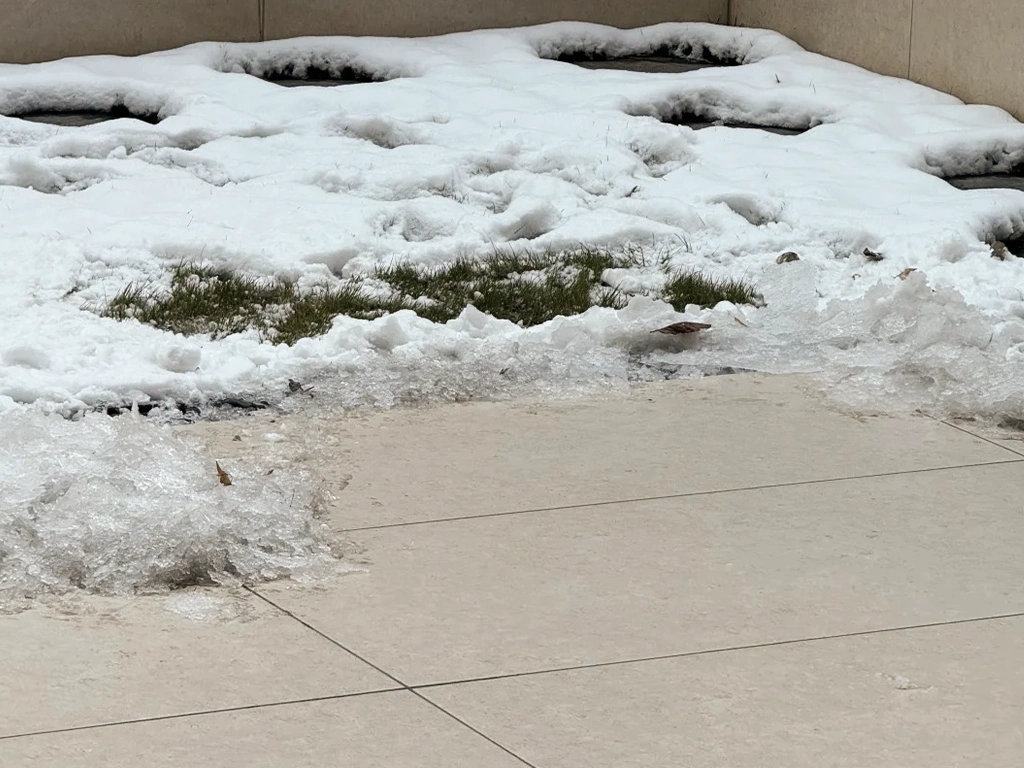
Frost resistance matters when outdoor porcelain pavers are used in climates where freezing can occur.
This is not only a cold-country concern. Even projects in areas with seasonal freezing, mountain climates or occasional freeze-thaw conditions should discuss it before ordering.
Porcelain tile is often associated with low water absorption. TCNA explains that standards define porcelain tile as an impervious tile with water absorption of 0.5% or less when measured by ASTM C373. Buyers can review the official reference here: 🔗TCNA Porcelain Tile Certification.
However, buyers should not rely only on the word “porcelain.”
The supplier’s water absorption information and test report should match the actual product model being ordered.
Frost resistance is also not just a sentence in a catalogue. ISO 10545-12 is the ceramic tile standard for determination of frost resistance, and buyers can use this kind of reference when discussing test documentation with suppliers: 🔗ISO 10545-12 Frost Resistance.
In real outdoor projects, frost resistance is connected to installation and drainage.
A tile may have suitable test data, but if water stays under the pavers, inside the setting bed, around joints or in poorly drained areas, the project can still face problems.
For buyers in Canada, northern Europe, northern US states or other freeze-thaw regions, the question should be broader than “Is it frost resistant?”
They should ask:
Does the tile body, water absorption data, frost-resistance documentation, installation method and drainage plan all match the project climate?
That is a safer way to review outdoor pavers.
Where Outdoor Porcelain Pavers Work Best
Outdoor porcelain pavers are often chosen because they can create a more finished outdoor space without the maintenance concerns of some natural stone or wood surfaces.
They are especially useful when the design needs a clean modern look, consistent sizing, stone-look texture or indoor-outdoor visual continuity.
But the best application depends on the project.
| Project Area | Why Buyers Use Outdoor Porcelain Pavers | What Buyers Should Confirm |
|---|---|---|
| Villa Patio | Stone-look surface with lower maintenance | 20mm thickness, slip resistance, drainage and batch consistency |
| Pool Deck | Clean outdoor surface around wet areas | Wet-use surface, barefoot comfort, edge finishing and spare quantity |
| Garden Path | Durable outdoor walking surface | Base preparation, size, edge strength and packing |
| Hotel Walkway | Consistent look for public outdoor spaces | Frost resistance, slip resistance, labels and replacement plan |
| Restaurant Terrace | Outdoor dining surface with easy cleaning | Surface texture, cleaning, oil exposure and heavy traffic |
| Rooftop Terrace | Raised outdoor floor over waterproofing | Pedestal compatibility, tile strength, drainage and installer experience |
This comparison helps buyers avoid one common mistake: using the same decision logic for every outdoor area.
A pool deck and a garden path are not the same. A restaurant terrace and a private villa patio are not the same. A rooftop pedestal system and a concrete-base walkway are not the same.
The paver should be selected by use condition, not only by visual style.
Patio, Pool Deck, Terrace and Hotel Walkway: Different Risks
A villa patio usually combines design and daily living.
The buyer may want a stone-look or cement-look paver that matches indoor floor tiles, outdoor furniture and garden design. In this case, shade control, surface finish, drainage and cleaning should all be considered.
A pool deck is different.
Wet use becomes the main concern. The surface needs to provide enough grip, but it should also be comfortable for bare feet and practical to clean. Edges, steps, drainage and spare pieces should be planned carefully.
A restaurant terrace has another kind of risk.
It may face rain, food spills, drink stains, oil exposure, chair movement and frequent cleaning. A very rough surface may look safe, but if it traps dirt and becomes difficult to maintain, the project may face long-term complaints.
A hotel outdoor walkway needs consistency and maintenance planning.
The buyer should think about public traffic, replacement pieces, carton labels, batch matching and how the pavers will be grouped by area before shipment.
Outdoor porcelain pavers from China can work well in all these areas, but the inspection and sourcing questions should change by project.
That is where many buyers make mistakes.
They choose one product from a showroom sample, but the actual project has several different outdoor conditions.
Installation Method Matters Before You Order
Installation method should be discussed before placing the order.
Outdoor porcelain pavers may be installed on a concrete base, on gravel or sand, or with a pedestal system, depending on the project design and local installer.
Each method changes the sourcing conversation.
A concrete base may need careful slope, drainage and suitable setting materials. A gravel or sand base may be more common for garden paths and landscape areas, but edge control and base preparation matter. A pedestal system may be useful for rooftops, terraces or balconies, but the buyer should confirm tile size, strength, edge quality, support points and installer experience.
The China supplier does not always control installation overseas.
But the supplier and sourcing team should still understand how the buyer plans to use the product.
This affects tile size, thickness, packing, edge protection, spare quantity and loading method.
A buyer should not wait until the goods arrive to ask whether the local installer can handle the pavers.
The installation plan should influence the purchase decision from the beginning.
Surface Finish, Cleaning and Barefoot Comfort
Surface finish is not only a design detail.
It affects comfort, cleaning and maintenance.
A textured paver may provide better grip in wet areas, but it may also hold dust, soil or grease more easily. This matters for restaurants, outdoor dining areas and pool decks.
A smoother outdoor surface may be easier to clean, but it may not be suitable for every wet-use area. A deep stone texture may look natural, but the buyer should think about furniture movement and cleaning after rain.
Barefoot comfort is another detail buyers sometimes forget.
For pool decks and residential outdoor spaces, users may walk without shoes. A surface that feels acceptable under dry hand touch may feel different under wet feet.
Color also matters.
Dark outdoor pavers may look elegant but can become visually heavy or hot under strong sunlight depending on the climate. Very light pavers may brighten the space but show dirt more easily.
This is why buyers should request real samples and review them in conditions closer to actual use.
Photos alone are not enough.
Packing, Pallets and Heavy Tile Shipping Risks
20mm outdoor porcelain pavers are heavier than ordinary indoor tiles.
That makes packing and container loading more important.
A supplier may quote an attractive square-meter price, but if the packing is weak, the order can become expensive later through breakage, repacking, claims or project delays.
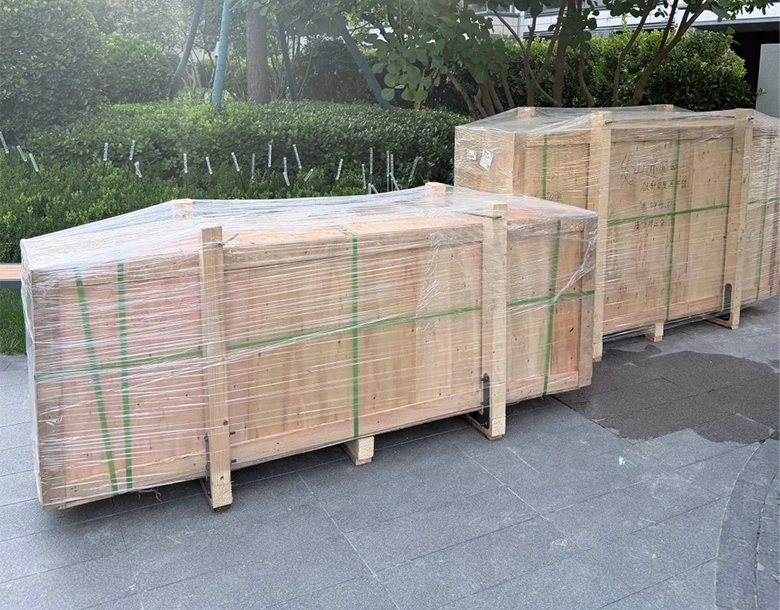
Buyers should check carton strength, pallet quality, corner protection, labels, weight per carton, total pallet weight and loading plan. For large pavers or special pieces, stronger support or wooden crates may be needed.
Packing should also help the project stay organized.
For villa projects, pavers may be separated by patio, pool area, garden path or terrace. For hotel projects, cartons may need area labels for walkways, pool decks or public outdoor spaces. For restaurant projects, spare pieces should be marked clearly.
If outdoor pavers are shipped together with bathroom products, cabinets, furniture, lighting or decorative wall panels, loading order must be planned carefully.
Heavy pavers should not damage fragile products.
A good paver can still fail as a shipment if the packing and loading plan are not controlled.
For more shipment-related tile checks, read 🔗Tile Quality Control in China: How to Check Shade, Caliber, Flatness, Water Absorption and Packing and 🔗Tile Shade Variation and Batch Consistency from China: How Project Buyers Avoid Color Mismatch.
A Realistic Villa, Hotel and Restaurant Sourcing Scenario
A villa buyer may choose a 20mm stone-look porcelain paver for a backyard patio.
The sample looks beautiful, and the price seems reasonable. But before ordering, the sourcing team should check whether the surface is suitable for wet outdoor use, whether the color batch is consistent, whether the packing can handle heavy tiles, and whether the local installer plans to use concrete, gravel or pedestal installation.
A hotel buyer may need outdoor porcelain pavers for a pool deck and walkway.
The buyer should not only ask for a beautiful stone texture. The more important questions are slip resistance under wet conditions, barefoot comfort, drainage, edge finishing, carton labels, spare quantity and replacement planning.
A restaurant buyer may need pavers for an outdoor dining terrace.
The surface must handle rain, cleaning, chair movement and possible food or drink spills. A very rough finish may feel safer, but it may also become harder to clean. The buyer should compare texture, maintenance and project use together.
These situations show why outdoor pavers should be sourced by application.
The same 20mm paver may not be suitable for every outdoor project.
How to Inspect Outdoor Porcelain Pavers Before Shipment
Outdoor paver inspection should focus on the project risk.
The team should compare bulk goods with the approved sample, check shade and batch labels, inspect surface consistency, review edges and corners, confirm thickness, and check whether the packing matches the quotation.
For wet-use areas, the buyer should review available slip-related documentation and make sure the surface finish matches the project use. For freeze-thaw climates, water absorption and frost-resistance information should be checked before shipment.
Packing inspection should include cartons, pallets, labels, corner protection and loading plan.
For heavy 20mm pavers, this step matters because damage may not happen at the factory. It may happen during trucking, warehouse handling, container loading, sea freight or unloading at the destination.
Photos and videos should show more than one beautiful sample.
They should show carton labels, opened boxes, pallet condition, product surface, batch information and loading preparation.
The goal is not to make inspection complicated.
The goal is to find problems while they can still be corrected in China.
How a China-Based Sourcing Team Helps
A China-based sourcing team can help buyers connect product selection with real project use.
For outdoor porcelain pavers, this may include supplier comparison, sample checking, surface review, report matching, batch confirmation, packing inspection and container loading supervision.
This is especially useful when buyers are sourcing more than one category.
A villa project may need outdoor pavers, indoor tiles, bathroom products, cabinets, lighting and furniture together. A hotel project may need pool deck pavers, bathroom tiles, slabs, sanitary ware and custom furniture. A restaurant project may need outdoor terrace pavers, indoor tiles, tables, chairs, lighting and kitchen equipment.
Cody Sourcing works with tile, slab, bathroom, furniture, cabinet, lighting and building-material suppliers across Foshan and other Chinese manufacturing regions.
For outdoor paver sourcing, the value is not only finding a supplier.
The value is helping buyers check whether the tile, surface, documentation, packing and shipping plan match the project before money and time are committed.
Common Mistakes to Avoid
One common mistake is assuming that every thick porcelain tile is suitable for outdoor use.
20mm thickness is helpful, but it does not replace slip resistance, water absorption, frost resistance, surface review or installation planning.
Another mistake is approving a product from dry showroom photos only. Outdoor pavers should be judged by actual use conditions, especially wet areas, pool decks, restaurant terraces and public walkways.
Some buyers also ignore packing because the tile itself looks strong. But 20mm pavers are heavy, and weak cartons or pallets can create serious shipping damage.
Another mistake is ordering no spare quantity. Outdoor projects often involve cutting, edge pieces, future repair and replacement. If spare pavers are ordered later, shade or batch matching may be difficult.
The final mistake is comparing suppliers only by square-meter price.
For outdoor porcelain pavers, the better comparison includes thickness, finish, reports, packing, pallet strength, loading plan and destination installation method.
Final Thoughts
Outdoor porcelain pavers from China can be a strong option for villas, hotels, restaurants, pool decks, terraces and landscape projects.
But buyers should not choose them only by appearance, price or 20mm thickness.
A successful outdoor paver project depends on surface suitability, slip resistance, water absorption, frost resistance, installation method, packing strength and loading control.
For global buyers, the safest approach is to connect the product with the real project area.
A patio, pool deck, hotel walkway, restaurant terrace and rooftop system each have different needs.
When buyers understand those differences before ordering, outdoor porcelain pavers from China can support both design quality and project control.
