


10 Common Mistakes When Sourcing Building Materials from China

Sourcing building materials from China can help overseas buyers reduce costs, access more product options and work directly with a strong manufacturing supply chain.
But many buyers also make costly mistakes during the process.
For builders, contractors, villa owners, hotel owners and project buyers, buying building materials from China is not only about finding a supplier. The real challenge is managing supplier selection, product specifications, quality control, production timelines, packaging, consolidation and shipping.
If these steps are not managed properly, buyers may face wrong products, poor quality, delivery delays, damaged goods or unexpected costs.
This guide explains the most common mistakes overseas buyers make when sourcing building materials from China — and how to avoid them.

1. Only Comparing the Lowest Price
One of the most common mistakes is choosing suppliers only based on the lowest quotation.
A lower price may look attractive at the beginning, but it can also mean lower material quality, weaker packaging, unstable production capacity or hidden cost differences.
When comparing quotations, buyers should check:
- Product material
- Size and specification
- Finish quality
- Hardware or accessories
- Packaging method
- Production lead time
- Payment terms
- Warranty or after-sales support
- Supplier reliability
For building materials, the cheapest option is not always the safest option. A small saving in product cost may create bigger losses later if the goods are not suitable for the project.
2. Not Checking Supplier Reliability
Many overseas buyers assume that a supplier with nice photos or a low price is reliable. This can be risky.
Before placing an order, buyers should check whether the supplier has real business qualifications, production ability and export experience.
Important points include:
- Business license
- Factory or showroom verification
- Product category experience
- Export experience
- Ability to provide invoices or documents
- Communication efficiency
- Willingness to cooperate with inspection
- Previous project experience
For project-based orders, supplier reliability is just as important as product price.
If a supplier cannot provide basic company information or avoids important questions, buyers should be careful.
3. Not Confirming Product Specifications Clearly
Building materials often involve many details. A small misunderstanding can cause serious problems during installation.
Common specification issues include:
- Wrong size
- Wrong color
- Wrong material
- Wrong voltage
- Wrong opening direction
- Wrong glass type
- Wrong hardware
- Wrong drainage size
- Wrong packaging requirement
This is especially important for customized products such as doors, windows, cabinets, wardrobes, furniture, lighting and sanitary ware.
Before production, buyers should confirm product details in writing. Reference photos are useful, but they are not enough. The final order should include clear specifications, sizes, materials and agreed standards.

4. Ignoring Samples or Reference Confirmation
Some buyers place orders directly after seeing catalog photos or online images. This is risky because photos may not show real material quality, color difference, finish details or structure.
For important products, buyers should confirm samples, material boards, color samples or detailed product photos before mass production.
Sample confirmation is especially useful for:
- Furniture fabric and leather
- Tile color and texture
- Wood finish
- Cabinet panels
- Door and window profiles
- Lighting finish
- Faucet plating
- Bathroom cabinet materials
If a physical sample is not possible, buyers should at least request close-up photos, videos and detailed specification documents.
5. Not Planning Quality Inspection Before Shipping
Many problems are discovered too late — after the goods arrive at the destination country.
At that point, fixing the issue is difficult and expensive.
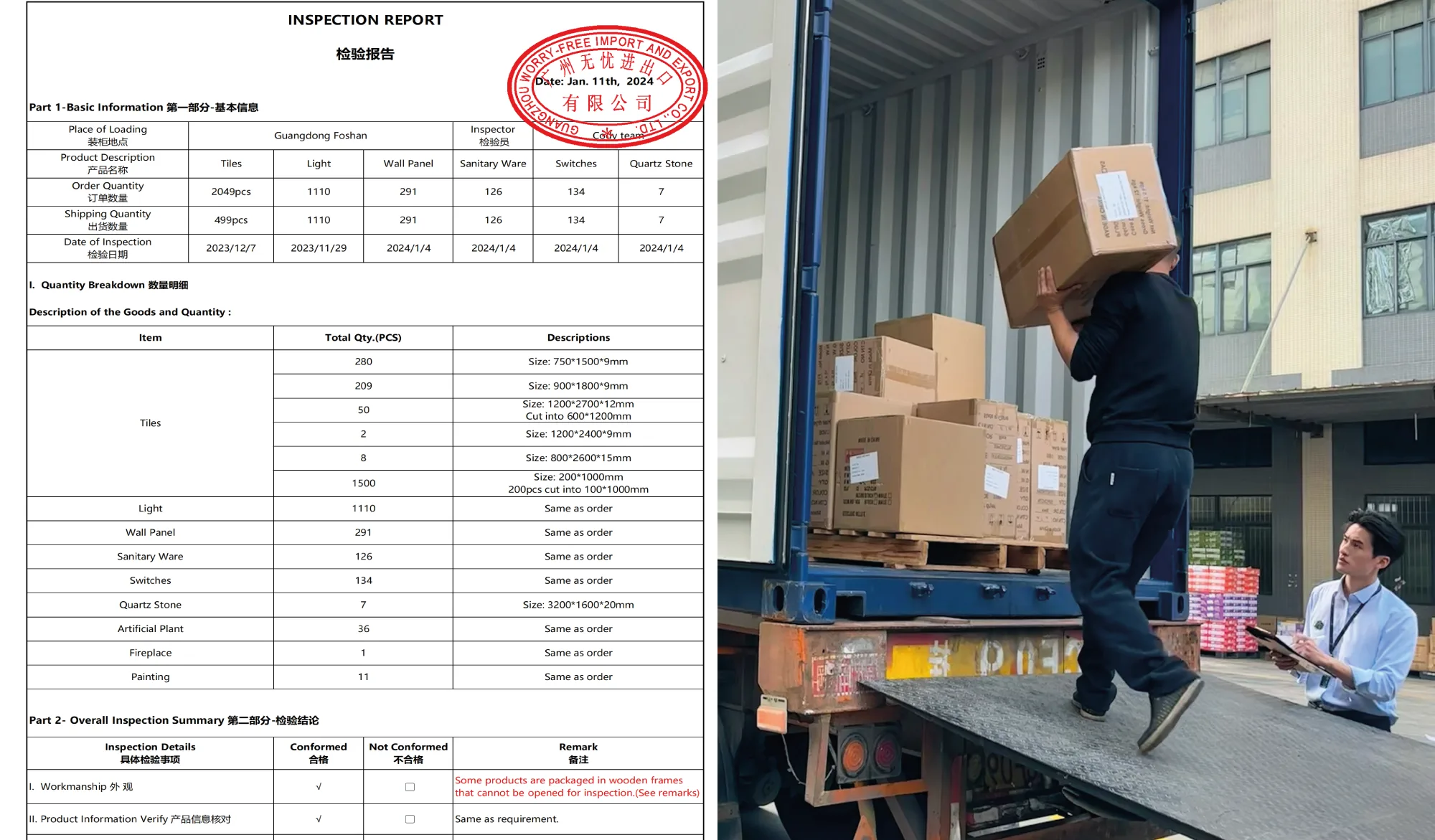
Pre-shipment inspection can help reduce visible and manageable risks before the goods leave China.
Inspection may include:
- Quantity checking
- Model checking
- Size checking
- Color checking
- Appearance checking
- Packaging checking
- Accessory checking
- Label and mark checking
- Photo and video records
Quality inspection does not mean every problem can be 100% avoided. But it helps buyers identify obvious mistakes before shipping.
For building materials, inspection should be planned before the goods are loaded into the container, not after shipment.
6. Underestimating Packaging and Loading Risks
Many building materials are large, heavy or fragile. Good packaging and loading plans are very important.
Common damage risks include:
- Broken tiles
- Scratched furniture
- Broken glass
- Damaged sanitary ware
- Cracked mirrors
- Deformed cartons
- Missing accessories
- Damaged corners
Products such as tiles, glass doors, windows, sanitary ware, lighting and furniture need export-level packaging.
Buyers should confirm packaging before shipment and request photos or videos when necessary.
Container loading should also be supervised when different product categories are shipped together.
7. Buying from Too Many Suppliers Without Coordination
For villa, hotel, apartment or commercial projects, buyers often need many product categories at the same time.
For example:
- Мебель
- Tiles
- Освещение
- Doors and windows
- Sanitary ware
- Cabinets
- Decorative panels
- Hardware
If each supplier is managed separately, the buyer may face different timelines, different payment schedules, different packaging standards and different delivery dates.
This creates communication pressure and increases the risk of delays.
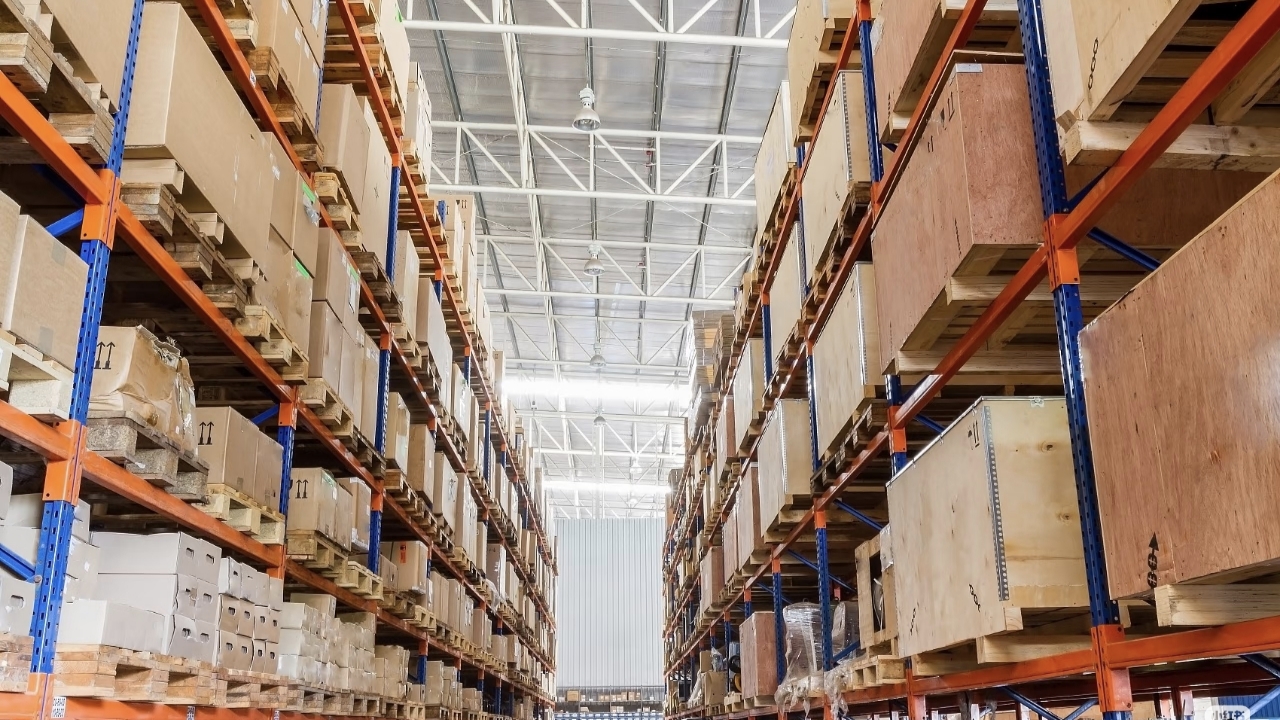
For multi-category projects, warehouse consolidation and local coordination in China can help reduce these problems.
8. Not Considering Shipping Early Enough
Some buyers focus only on product price and think about shipping later. This is a mistake.
Shipping cost, packaging volume, container loading, delivery schedule and import documents can all affect the final cost and project timeline.
Before placing orders, buyers should consider:
- Product volume
- Product weight
- Container loading plan
- Shipping method
- Destination port or address
- Delivery timeline
- Экспорт документов
- Customs requirements
- Whether goods should be consolidated
For building materials, logistics is part of the sourcing strategy, not just the final step.
9. Not Controlling Payment Milestones
Another common mistake is paying too much too early without clear order details or protection.
Before payment, buyers should confirm:
- Supplier identity
- Product specifications
- Payment terms
- Production timeline
- Inspection arrangement
- Delivery responsibility
- What happens if there is a delay or quality issue
For larger project orders, payment should be connected to production progress and shipment preparation when possible.
A clear contract and payment structure can help reduce risk.
10. Not Working with a Local Supply Chain Team
Some buyers believe sourcing from China only means finding factory contacts. But for project-based building materials, the process is much more complex.
A China-based sourcing and supply chain team can help buyers:
- Compare suppliers
- Check supplier reliability
- Confirm specifications
- Follow production
- Inspect goods
- Check packaging
- Consolidate goods
- Supervise container loading
- Coordinate shipping
- Reduce communication problems
The value is not just finding suppliers. The real value is managing the China-side process before the goods leave China.
For overseas buyers who cannot stay in China to manage every supplier, local supply chain support can reduce risks and improve project execution.
Final Thoughts
Sourcing building materials from China can be a smart choice for overseas buyers, especially for villa, hotel, apartment and commercial projects.
However, successful sourcing requires more than finding a low price.
Buyers should avoid choosing suppliers only by price, ignoring specifications, skipping quality inspection, underestimating packaging risks or managing too many suppliers without coordination.
The key is to build a structured sourcing process.
With proper supplier selection, clear specifications, production follow-up, quality inspection, warehouse consolidation and shipping coordination, overseas buyers can reduce mistakes and manage building materials sourcing from China more efficiently.
