


How to Read a China Tile Quotation: Size, Thickness, Finish, Grade, MOQ and Packing

A China tile quotation is not only a price list.
For global buyers, it is often the first document that shows whether two suppliers are really offering the same product, or only products that look similar in photos.
A buyer may receive three quotations for what appears to be the same tile: 600x1200mm porcelain tile, marble look, matte finish. One supplier may offer a much lower price than the others. At first, the cheapest quotation looks attractive.
But after a closer look, the difference may not be only price.
One quotation may be based on 9mm stock tiles. Another may be based on 10.5mm first-grade production tiles. One may include export cartons and pallets. Another may not include pallet cost. One may use the same production batch. Another may be mixed from warehouse inventory.
This is why a China tile quotation should be read as a project risk document, not only a unit-price document.
For broader tile sourcing background, read🔗 Foshan Tile Market Guide: How Global Buyers Source Tiles from China and 🔗Tile Factory vs Trading Company in China: How Global Buyers Choose the Right Supplier.
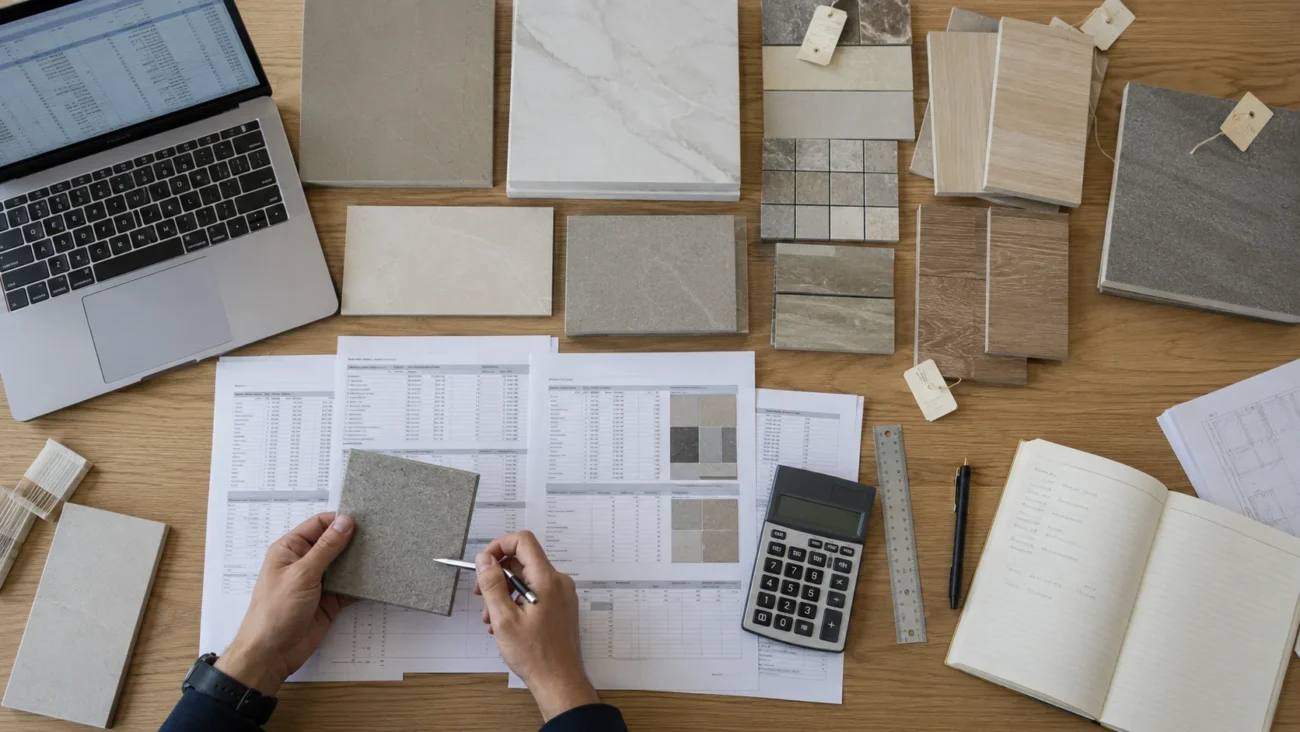
Why a China Tile Quotation Is More Than a Price List
Many overseas buyers focus first on the square-meter price.
That is understandable. Tile projects can involve large areas, and even a small price difference can change the budget.
But tile price only makes sense when the quotation scope is clear.
A supplier may quote a very low price, but the quotation may not clearly mention tile grade, batch condition, packing method, pallet cost, MOQ, delivery term or whether the goods are suitable for export shipment.
Another supplier may look slightly more expensive, but the quotation may already include stronger cartons, pallets, warehouse delivery, batch checking and more export support.
These two quotations should not be compared as if they were the same.
A useful tile quotation should help the buyer understand what is being purchased, how it will be packed, when it can be shipped, and what risks still need to be managed before placing the order.
This is especially important for villas, hotels, restaurants and commercial renovation projects, where tiles are often shipped together with slabs, bathroom products, cabinets, lighting and furniture.
Why Similar-Looking Tile Quotations Can Be Very Different
Two tile quotations can look similar on the surface.
They may both say porcelain tile, 600x1200mm, matte finish, marble look. But the real difference may be hidden in details that are easy to skip.
| Quotation Item | Why It Matters | What Buyers Should Confirm |
|---|---|---|
| Size | Affects installation, packing, weight and breakage risk | Exact mm size, tolerance and application area |
| Thickness | Affects weight, price and project suitability | Thickness, use area and whether suppliers quote the same spec |
| Finish | Affects cleaning, slip feel and visual effect | Polished, matte, textured, anti-slip or other finish |
| Grade | Affects defect rate and batch consistency | First grade, project grade, stock tile or mixed grade |
| MOQ | Shows production flexibility | MOQ per model, per color, per size or per container |
| Packing | Affects breakage and shipping cost | Cartons, pallets, wooden crates, labels and loading support |
This table is not meant to turn sourcing into paperwork.
It shows why buyers should slow down before choosing the lowest price.
When suppliers quote different thicknesses, different grades, different packing and different trade terms, the price is not directly comparable.
A good quotation should make comparison easier, not more confusing.
Size and Thickness: What They Change Beyond Appearance
Tile size is usually one of the first items in a quotation.
Buyers may see sizes such as 300x600mm, 600x600mm, 600x1200mm, 750x1500mm, 900x1800mm or larger.
At first, size looks like a design choice. In reality, it also affects packing, weight, breakage risk, installation difficulty and loading quantity.
Large format tiles may create a premium look, but they require better flatness control, stronger packaging and more careful handling. If the tile is too large for the local installer, building entrance, elevator or staircase, the project may face problems after the container arrives.
For large-size project materials, read 🔗Large Format Tiles from China: Sourcing Guide for Luxury Villas and Hotel Projects.
Thickness is another detail that buyers often underestimate.
A 9mm tile and a 10.5mm tile may look similar in photos, but they may not be the same in weight, cost, project suitability and installation feeling. For wall tiles, floor tiles, outdoor tiles and slabs, thickness should be judged by use area rather than by the idea that thicker is always better.
The key question is simple:
Are all suppliers quoting the same size and thickness for the same application?
If not, the buyer is not comparing the same product.
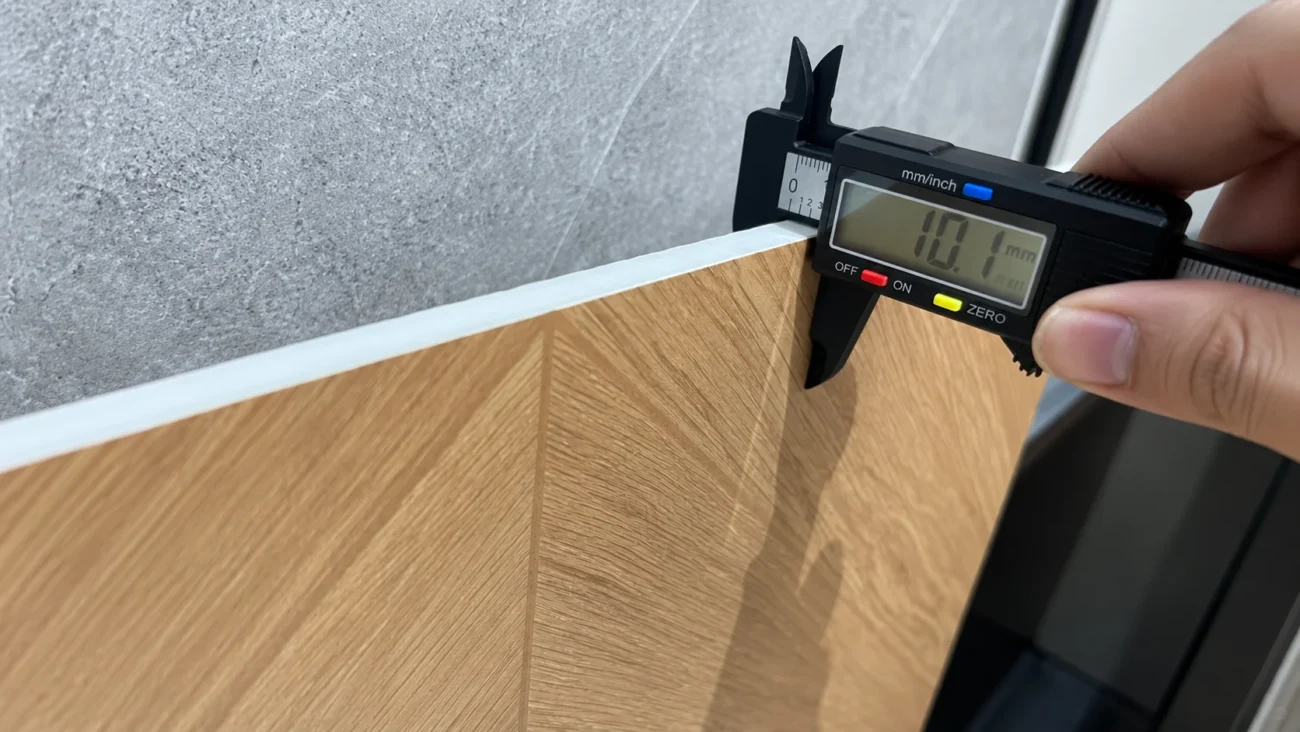
Finish: Why Photos Are Not Enough
Finish is one of the most misleading parts of a tile quotation.
A supplier may write polished, matte, textured, anti-slip, lappato, rustic, honed or glazed. These words are useful, but they do not fully describe how the tile feels and performs in real use.
A polished marble-look tile may look elegant in a showroom photo, but it may not be the best choice for a wet bathroom floor or a busy restaurant area.
A textured outdoor tile may be safer under wet conditions, but it may be harder to clean in a restaurant or commercial space.
A matte tile may look soft and modern, but buyers should still check stain resistance, cleaning difficulty and how the surface looks under natural and artificial light.
Finish should always be connected to the project area.
For a villa living room, visual continuity may be more important. For a hotel bathroom floor, slip feel and cleaning matter more. For a restaurant, traffic, cleaning and maintenance should be discussed before ordering.
A quotation should not only show the finish name.
It should help the buyer understand whether the finish is suitable for the intended use.
Grade and Batch: Where Low Prices Often Hide Risk
Grade is one of the most important items in a China tile quotation.
It is also one of the easiest places for confusion.
Buyers may see words such as first grade, AAA, AA, project grade, commercial grade, stock tiles, clearance stock or mixed inventory. These terms are not always used in exactly the same way by every supplier.
A low quotation may be based on stock tiles or lower-grade goods. That does not mean the product is always bad, but the buyer must know what is being purchased.
Stock tiles can be useful for budget projects or urgent orders, but batch consistency and future replacement may be difficult. First-grade production tiles may cost more, but they are usually easier to manage for projects requiring consistent appearance.
Batch is especially important for villas and hotels.
If a villa living room uses tiles from different batches, slight color differences can become visible after installation. If a hotel needs the same bathroom tile across many rooms, mixed batches can create a serious project problem.
China’s national standard platform lists GB/T 4100-2015 Ceramic tiles as a ceramic tile standard. Buyers can use this kind of standard reference when discussing product categories with suppliers, but they should still confirm the exact grade, batch condition and inspection method for the actual order: GB/T 4100-2015 Ceramic tiles.
In real sourcing, the quotation should answer one practical question:
Will the bulk tiles match the approved sample closely enough for the project?
MOQ and Lead Time: What They Tell You About the Supplier
MOQ is not only a minimum quantity.
It also tells the buyer how flexible the supplier is.
For factory production, MOQ may depend on tile size, surface finish, color, mold, production line and whether the supplier already has stock. For standard items, the MOQ may be lower. For custom colors, special finishes or less common sizes, MOQ may be higher.
For project buyers, this matters because a villa or hotel may need several tile types, but not always a full container of each model.
A factory may offer a good price for one model, but may not want to produce small quantities across many different designs. A trading company or sourcing team may be more flexible when the buyer needs different tile categories from different suppliers.
Lead time also needs careful reading.
A quotation may say 15 days, but that may only apply to stock tiles. Fresh production may need more time. Special sizes, large slabs or custom finishes may take longer. If the tile order needs to be shipped together with bathroom products, furniture, lighting or cabinets, the slowest product may affect the whole container schedule.
MOQ and lead time are not only operational details.
They show whether the supplier’s structure matches the buyer’s project.
Packing, Pallets and Container Loading: The Hidden Cost
Packing is where many cheap tile quotations become expensive later.
Tiles are heavy and fragile. If cartons are weak, pallets are not included, labels are unclear, or container loading is careless, the buyer may face breakage, warehouse confusion or installation delays.
A quotation should make packing clear.
How many pieces are in each carton? How many square meters per carton? What is the carton weight? Are pallets included? Are export labels included? Are wooden crates needed for large slabs? Will the supplier provide batch labels or item labels?
For ordinary porcelain tiles, strong cartons and pallets may be enough. For large format tiles, slabs or sintered stone, wooden crates or stronger support may be needed.
For slab and countertop materials, read 🔗Sintered Stone Manufacturers in China: Countertop and Interior Project Guide.
Packing should also be read together with container loading.
If tiles are shipped alone, the loading plan is more straightforward. But if tiles are shipped with cabinets, lighting, bathroom products, furniture or decorative wall panels, heavy tile cartons must be arranged carefully to avoid damaging other goods.
A quotation without packing details is not complete.
It only gives the buyer part of the cost.
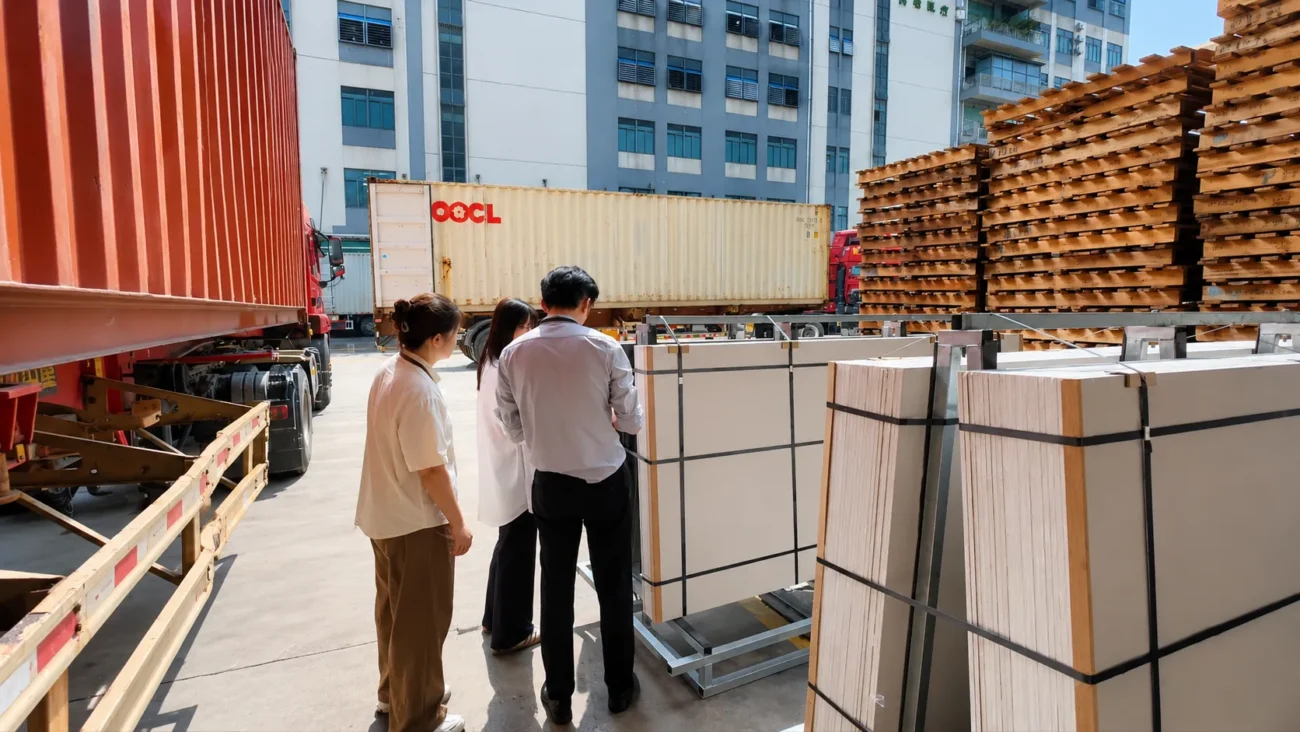
Factory Price, Trading Company Price and Total Project Cost
Many buyers compare a factory quotation with a trading company quotation and immediately choose the lower number.
That can be a mistake.
A factory may quote a lower EXW price, but the buyer may still need to arrange domestic trucking, export clearance, warehouse receiving, inspection, pallet checking, loading supervision and ocean freight.
A trading company or sourcing company may quote a higher price, but the scope may include supplier communication, sample comparison, warehouse consolidation, packing checking and shipment coordination.
The price is not the only difference.
The responsibility is different.
This is why buyers should understand trade terms such as EXW, FOB, CIF, DAP and DDP. The International Chamber of Commerce publishes Incoterms® rules that explain how international trade terms allocate responsibilities between buyer and seller. Buyers can review the official source here: 🔗ICC Incoterms® Rules.
For tiles, the difference between EXW and FOB can be very practical.
An EXW price may look cheaper because it only covers goods at the supplier’s place. A FOB price may already include delivery to port and export procedures. A DDP quotation may include much more, such as international shipping, customs and delivery, depending on the agreed scope.
Buyers should not compare EXW, FOB and DDP prices as if they were the same.
The real comparison is total project cost, not only tile unit price.
A Realistic Villa, Hotel and Restaurant Quotation Scenario
A villa buyer may compare two quotations for living room tiles.
Supplier A is cheaper, but the quotation does not mention pallet packing, batch control or spare quantity. Supplier B is slightly higher, but includes export cartons, pallets and delivery to the consolidation warehouse.
If the villa project also includes bathroom products, lighting and furniture, Supplier B may reduce the total project risk even if the tile price is not the lowest.
A hotel buyer faces another problem.
The buyer needs the same bathroom tile for many rooms. The quotation cannot only show price per square meter. It should also confirm batch consistency, spare tiles, package labels, delivery schedule and whether the same model can be supplied later.
For a restaurant project, the quotation should not only show style and price.
The buyer needs to know whether the finish is suitable for cleaning and traffic, whether anti-slip performance is required, and whether tiles can be loaded safely together with lighting, chairs, tables and kitchen equipment.
In each case, the quotation is not just a purchasing document.
It is the beginning of the project control process.
How to Compare Tile Quotations Before Placing an Order
Before placing an order, buyers should put quotations side by side and check whether the main conditions are the same.
The comparison should start with the tile itself: exact size, thickness, surface finish, grade, color, batch and use area.
Then the buyer should compare the order conditions: MOQ, lead time, payment terms, sample approval, stock condition and whether the supplier can provide the required quantity from the same batch.
After that, the buyer should look at packing and shipment: carton strength, pallets, wooden crates, labels, warehouse delivery, loading port and trade term.
The important point is not to make the quotation look complicated.
The point is to avoid comparing different scopes.
A clear quotation helps the buyer make a better decision. A vague quotation may create arguments later, especially when damage, color difference, missing pallets or delayed shipment occurs.
Good suppliers do not only quote quickly.
They quote clearly.
How a China-Based Sourcing Team Helps
A China-based sourcing team can help buyers read quotations from a practical project perspective.
For tile sourcing, this means checking whether suppliers are quoting the same size, thickness, grade, finish, packing and trade term. It also means comparing samples, confirming batch availability, checking packaging before shipment and coordinating warehouse consolidation when multiple suppliers are involved.
For villa, hotel and restaurant projects, the value becomes bigger because tiles are rarely the only product.
Tiles may need to be shipped with bathroom products, cabinets, doors, lighting, furniture, decorative wall panels or kitchen equipment. In this case, quotation review should also consider delivery timing, container loading and product protection.
Cody Sourcing works with tile, slab, bathroom, furniture, cabinet, lighting and building-material suppliers across Foshan and other Chinese manufacturing regions.
For global buyers, the goal is not simply to find the lowest tile price. The goal is to understand what each quotation really includes and whether the supplier can support the project from sample approval to final shipment.
Common Mistakes to Avoid
One common mistake is comparing only square-meter price.
A lower price may hide weaker packing, lower grade, mixed batch, missing pallets or unclear shipping responsibility.
Another mistake is trusting photos too much. Tile finish, surface feel, gloss, flatness and color tone should be checked with real samples whenever possible.
Some buyers also forget spare quantity. For villas and hotels, it is safer to plan extra tiles because replacement from the same batch may not be easy later.
Packing is another common blind spot. Tiles are heavy, and weak cartons or missing pallets can cause real shipping problems.
The final mistake is ignoring trade terms. An EXW price, FOB price and DDP price are not the same scope. Comparing them directly can create a false idea of savings.
Most quotation problems can be avoided when buyers remember one simple principle:
A cheap quotation is only useful when it is also clear.
Final Thoughts
A China tile quotation should help global buyers understand much more than price.
It should show what tile is being quoted, what grade it belongs to, whether the batch is controlled, how it will be packed, what MOQ applies, when it can ship and who is responsible for logistics.
For villas, hotels, restaurants and commercial projects, quotation details can affect design consistency, breakage risk, installation schedule and total project cost.
The safest approach is to compare quotations by full scope, not only by unit price.
When buyers understand size, thickness, finish, grade, MOQ, packing and shipping terms, they can make better decisions and reduce sourcing risk before the order is placed.
