


Tile Shade Variation and Batch Consistency from China: How Project Buyers Avoid Color Mismatch

Tile shade variation is one of the most common problems project buyers face after importing tiles from China.
A sample can look perfect on a showroom table. A supplier can send clear product photos. The quotation can show the right size, finish and price.
But the real test begins when hundreds or thousands of square meters are installed side by side.
That is when buyers may notice the problem: one area looks slightly warmer, another area looks grayer, one bathroom wall looks different from another, or replacement tiles do not match the original floor.
For villas, hotels, restaurants and commercial projects, color mismatch is not only a visual issue. It can delay installation, create disputes with contractors, affect client acceptance and make future repair work more difficult.
This guide explains how project buyers can understand tile shade variation, control batch consistency, check shade codes and labels, and reduce color mismatch risk before tiles leave China.
For wider tile inspection topics, read 🔗Tile Quality Control in China: How to Check Shade, Caliber, Flatness, Water Absorption and Packing. For quotation-stage checks, read 🔗How to Read a China Tile Quotation: Size, Thickness, Finish, Grade, MOQ and Packing.
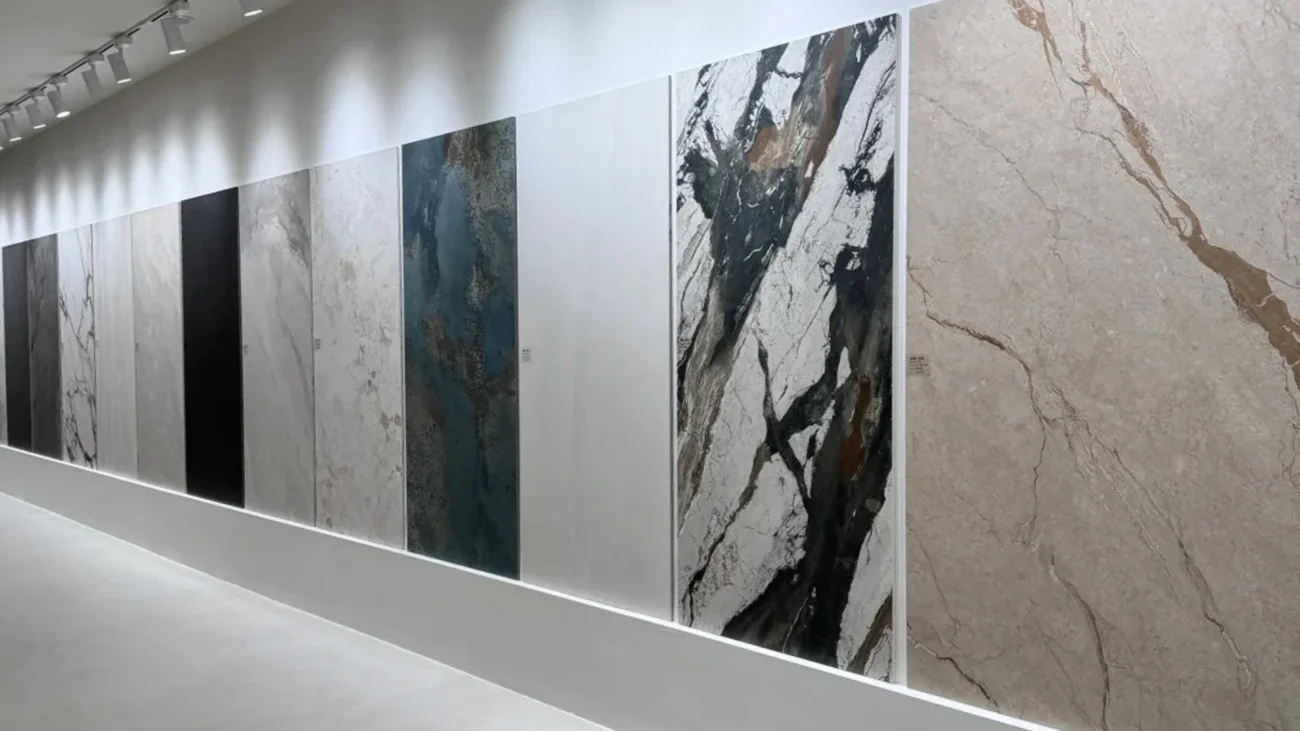
Why Tile Shade Variation Matters More in Real Projects
Tile shade variation is easy to underestimate when buyers only look at one sample.
A single tile piece may look beautiful. The pattern, tone and surface finish may all match the design reference.
But tiles are not installed one by one in isolation.
They are installed across floors, walls, corridors, bathrooms, lobbies, restaurants and large open areas. Once many pieces are placed together, even a small color difference can become more visible.
This is especially true for large-format tiles, marble-look tiles, stone-look tiles, beige floor tiles, gray bathroom tiles and hotel project tiles.
A slight difference may not matter in a small sample board. But across a villa living room under natural light, it can look like two different batches. In a hotel project, room-to-room color difference can make the property feel inconsistent. In a restaurant, mixed tones can make the floor look unplanned.
This is why shade control should start before the order is shipped.
Once tiles arrive overseas and installation begins, color mismatch becomes much harder to solve.
Shade Variation vs Batch Inconsistency: Not the Same Problem
Many buyers use “color difference” to describe every shade issue.
But in tile sourcing, there is an important difference between expected shade variation and uncontrolled batch inconsistency.
Some tiles are designed to have natural color movement. Stone-look tiles, wood-look tiles, rustic tiles, handmade-look tiles and cement-look tiles may intentionally show different tones or patterns from piece to piece. This kind of variation can be part of the design.
Batch inconsistency is different.
It happens when tiles from different production batches, shade codes, stock sources or replacement lots are mixed without control.
The problem is not that the product has natural variation. The problem is that the shipment is not organized consistently for the project.
| Issue | What It Means | Real Project Risk |
|---|---|---|
| Expected Shade Variation | Natural color or texture movement within the product design | Usually acceptable if the buyer understands the effect before ordering |
| Batch Inconsistency | Different production batches or shade codes mixed without control | Can create visible color mismatch after installation |
| Sample vs Bulk Difference | Approved showroom sample does not match the shipped goods | Buyer may reject goods or face installation complaints |
| Replacement Mismatch | Later replenishment comes from a different batch | Repair areas may look different from original installation |
| Poor Carton Label Control | Shade and batch labels are missing or mixed | Installers may use the wrong boxes in the wrong area |
The key point is simple:
Expected design variation is acceptable. Uncontrolled batch mismatch is the real risk.
V1, V2, V3 and V4: When Variation Is Part of the Design
Not all tile variation is a defect.
Many modern tiles are made to imitate natural materials. Marble-look tiles may have stronger veining. Wood-look tiles may show different plank tones. Stone-look tiles may include movement, cloudy patterns or random texture.
In international tile discussions, buyers may see V1, V2, V3 and V4 used to describe the expected level of visual variation.
A more uniform tile may have very little visible change from piece to piece. A highly varied tile may be designed to show strong movement across the installed area.
This matters because project buyers should not judge all variation the same way.
A V3 or V4 stone-look tile may look more natural because the surface is not perfectly repetitive. But buyers still need to control batch, shade code and installation layout. Natural design variation does not mean different production batches can be mixed freely.
For project buyers, the best approach is to ask the supplier what level of variation is expected and to review several pieces together before approval.
One sample tile is not enough.
The buyer should see how multiple pieces look as a group.
Why China Tile Orders Can Have Shade Differences
China has a large and flexible tile supply chain.
That is a strength, but it also means buyers must ask more detailed questions.
In places like Foshan, buyers may see tiles in showrooms, factory displays, distributor warehouses and project supplier catalogs. The sample may come from a showroom board, while the bulk goods may come from fresh production, factory stock, distributor inventory or mixed warehouse stock.
These sources can all be useful.
But they are not the same.
Fresh production may allow better batch control if the order quantity is large enough. Warehouse stock may be faster, but the available quantity may come from one batch or several batches. Stock tiles may be cost-effective, but future replenishment may be difficult.
If a buyer does not ask about shade code, batch condition and available quantity, the supplier may focus only on price and delivery speed.
That can create problems later.
In real sourcing, a buyer should ask whether the goods are fresh production or stock, whether all cartons come from the same shade, whether the required quantity is available from one batch, and whether spare tiles can be included.
For buyers comparing suppliers in Foshan, read 🔗Foshan Tile Market Guide: How Global Buyers Source Tiles from China.
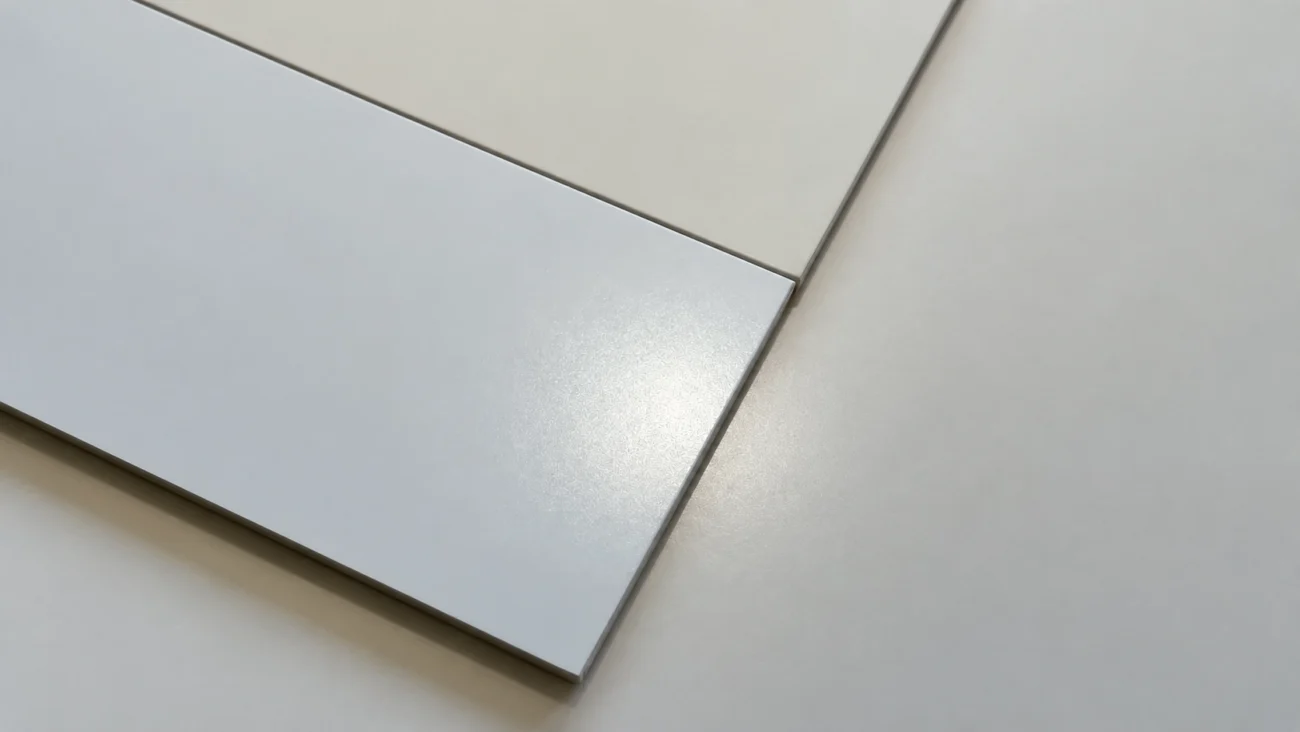
How Color Mismatch Affects Villas, Hotels and Restaurants
Color mismatch affects different projects in different ways.
For villas, the most visible risk is usually large open areas. A beige marble-look tile may look perfect as one sample, but if 200 square meters are installed across a living room, dining room and hallway, mixed shade codes can become obvious under natural light.
For hotels, consistency is often more important than one dramatic design effect. A hotel buyer may order the same bathroom wall tile for many rooms. If different batches are mixed without room-area planning, some bathrooms may look colder or darker than others.
For restaurants, the issue is often a mix of design and operation. A textured stone-look tile may naturally have variation, but if one batch is more yellow and another batch is more gray, the dining area may look uneven after installation.
The problem is not always that the supplier sent a “bad tile.”
Sometimes the problem is that the product, batch and installation plan were not controlled together.
That is why tile shade variation should be discussed before shipment, not after installation.
What Buyers Should Confirm Before Placing an Order
Shade control should start before the purchase order is confirmed.
At the quotation stage, buyers should ask whether the tiles are fresh production or warehouse stock. They should also ask whether the required quantity can be supplied from one shade code or one controlled production batch.
For project orders, spare quantity should be discussed early.
A villa, hotel or restaurant may need extra tiles for cutting loss, breakage, future repair or replacement. If spare tiles are ordered later, they may not match the original batch.
Buyers should also confirm how the approved sample will be used.
A showroom sample is useful, but the buyer should ask whether bulk production will match that sample closely. If the sample is old and the current production batch has changed, the buyer should know before confirming the order.
The purchase confirmation should also make shade expectations clear.
For one installation area, the supplier should not mix shade codes without approval. If replacement stock or another batch must be used, the buyer should be informed before shipment.
This does not need to become complicated legal language.
It simply needs to prevent surprise.
What to Check Before Shipment
Pre-shipment inspection is the best time to catch shade and batch issues.
The inspection should compare the approved sample with bulk goods, but it should not stop there.
The team should open cartons from different pallets or different warehouse areas. Several tiles should be placed together under consistent light. Carton labels should be checked for shade code, batch code, caliber code, item number and quantity.
For large areas, a simple layout photo can be useful.
Placing multiple pieces together helps buyers see whether the tone looks consistent enough for the intended project area. This is especially useful for beige, gray, marble-look and stone-look tiles.
For hotel projects, labels should also match room, floor or area planning if the shipment is divided by project zone.
If the inspection finds different shade codes, the buyer should not panic immediately.
The first question is whether those cartons will be used in the same installation area. If they are separated by room, area or floor, the risk may be manageable. If they are mixed randomly, the risk is higher.
Shade control is not only about rejecting goods.
It is about organizing goods intelligently before shipment.
How to Use Shade Codes, Batch Labels and Approved Samples
Shade codes and batch labels are practical tools.
They help the buyer, supplier, warehouse team and installer understand which cartons belong together.
A carton label may include item code, size, color, shade code, caliber, production batch and quantity. The exact label format depends on the supplier, but the purpose is the same: to avoid mixing products that should not be mixed.
Approved samples are also important.
Before mass shipment, the buyer should keep a clear reference sample. During inspection, the bulk tiles should be compared with that approved sample under reasonable lighting conditions.
However, buyers should not expect every piece to be visually identical.
For natural-look products, the goal is not zero variation. The goal is controlled variation that matches the product design and project expectation.
For very uniform commercial tiles, a tighter shade match may be expected. For rustic, stone-look or wood-look tiles, the buyer may need to review several pieces together to understand the intended effect.
The sample tells the buyer what was approved.
The labels tell the buyer what is being shipped.
Both are needed.
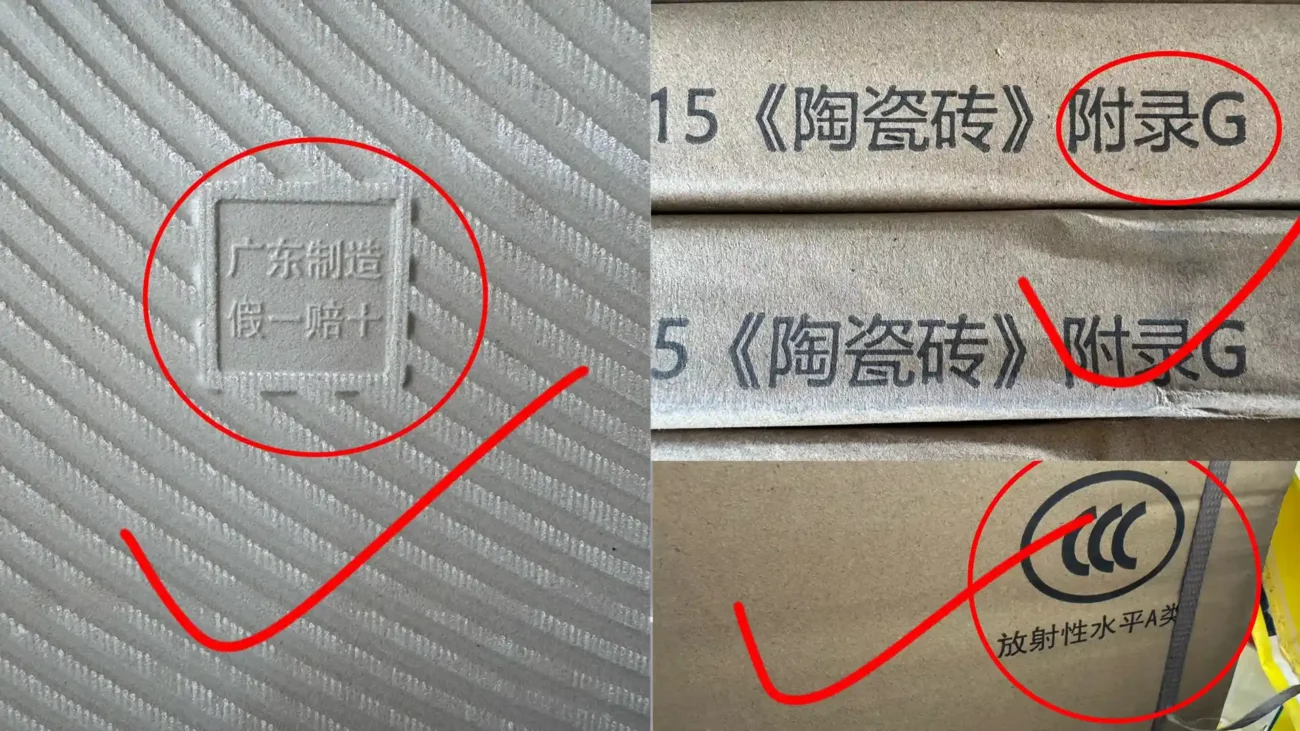
Why Replacement Tiles Are Difficult to Match Later
Many buyers only think about shade control during the first shipment.
But replacement is often where color mismatch becomes most painful.
If tiles are damaged during installation, if more cutting loss occurs than expected, or if the buyer wants to extend the same material later, the new tiles may come from a different production batch.
Even if the supplier can still produce the same model, the color tone may not be exactly the same.
This is why spare quantity should be planned from the beginning.
For villas, extra tiles may help with future repair. For hotels, spare cartons are especially important because the same bathroom or corridor tile may need maintenance later. For restaurants and commercial spaces, replacement tiles can reduce downtime when repair is needed.
Buyers should also store spare tiles properly and keep label information.
A spare carton without shade code, item code or batch record may be difficult to identify later.
A small spare quantity can save a large problem.
How Installation Planning Can Reduce Visible Color Mismatch
Shade control does not end when goods arrive.
Installation planning also matters.
For tiles with natural variation, installers often open several boxes and mix pieces during installation. This can create a more balanced appearance and prevent one area from looking too dark or too light.
But blending only works when the variation is part of the product design.
It cannot solve a serious batch mismatch.
If one batch is clearly warmer and another is clearly cooler, mixing boxes may only spread the mismatch across a larger area. In that case, it is better to separate batches by area, use them in different rooms, or ask the supplier for a solution before installation begins.
Project buyers should communicate this with contractors before work starts.
For hotels, tiles may be assigned by floor, room type or area. For villas, large open areas should use the most consistent batch available. For restaurants, highly visible dining areas should not receive mixed uncertain stock.
Good installation planning does not replace sourcing control.
It supports it.
A Realistic Hotel and Villa Sourcing Scenario
A hotel buyer orders bathroom wall tiles for 80 rooms.
The approved sample looks clean and warm. The supplier confirms the model and price. But before shipment, the inspection team finds that the cartons include two different shade codes.
This does not automatically mean the order is unusable.
But the buyer needs to know how the cartons will be used.
If the two shades are mixed randomly across every room, room-to-room color difference may become visible. If one shade is assigned to one floor and the other shade to another area with clear labels, the project risk may be lower.
A villa buyer faces a different situation.
The owner selects a beige marble-look tile for a large living room. One sample piece looks beautiful, but the real risk appears when many square meters are installed under natural light. If the shipment includes mixed shade codes, the open floor may show patches of different tone.
For a restaurant, the issue may be more subtle.
A stone-look tile can naturally have variation. But if one batch looks more yellow and another batch looks more gray, the dining area may feel inconsistent.
These situations show why shade variation should not be treated as a small detail.
It is part of project delivery.
How a China-Based Sourcing Team Helps
A China-based sourcing team can help buyers control shade variation before the goods leave China.
This starts with asking the right questions during quotation: fresh production or stock, same shade availability, batch condition, spare quantity and replacement possibility.
During sample approval, the team can compare multiple pieces instead of only one showroom sample. Before shipment, the team can check carton labels, open cartons from different pallets, compare bulk tiles with the approved sample and organize photos or videos for the buyer.
For project shipments, the team can also help separate goods by room, floor or area.
This is useful when tiles are shipped together with bathroom products, cabinets, lighting, furniture, decorative wall panels or other building materials.
Cody Sourcing works with tile, slab, bathroom, furniture, cabinet, lighting and building-material suppliers across Foshan and other Chinese manufacturing regions.
For tile shade variation from China, the value is not only checking color.
The value is connecting supplier information, sample approval, batch labels, warehouse organization and project shipping into one controlled process.
Common Mistakes to Avoid
Many buyers approve only one tile sample and assume the full shipment will look exactly the same.
That is risky, especially for large project areas.
Another mistake is ignoring carton labels. Shade code, batch code and caliber information may be more useful than surface photos alone.
Some buyers also mix all cartons together after arrival. This can create color mismatch during installation, especially if the shipment includes different shade codes.
Another mistake is ordering no spare tiles. If replacement is needed later, matching the original batch may be difficult.
The final mistake is misunderstanding natural variation. A V3 or V4 style product may intentionally show movement, but uncontrolled batch mismatch should still be avoided.
The buyer should not try to eliminate every natural difference.
The buyer should control the differences that can damage the project result.
Final Thoughts
Tile shade variation is not only a color issue.
For project buyers sourcing tiles from China, it is a batch control, inspection, labeling, installation and replacement issue.
A beautiful sample does not guarantee a consistent installed result. Buyers should ask whether goods come from the same shade, whether batch labels are clear, whether the bulk matches the approved sample, and whether spare quantity is planned before shipment.
For villas, hotels, restaurants and commercial projects, color mismatch can become expensive after installation starts.
The safest approach is to control shade variation before the container leaves China.
That is where real sourcing value appears.
